Educational Holidays as a Way to Learn Outside the Classroom
Gusti Ayu Tita P
1 September 2026
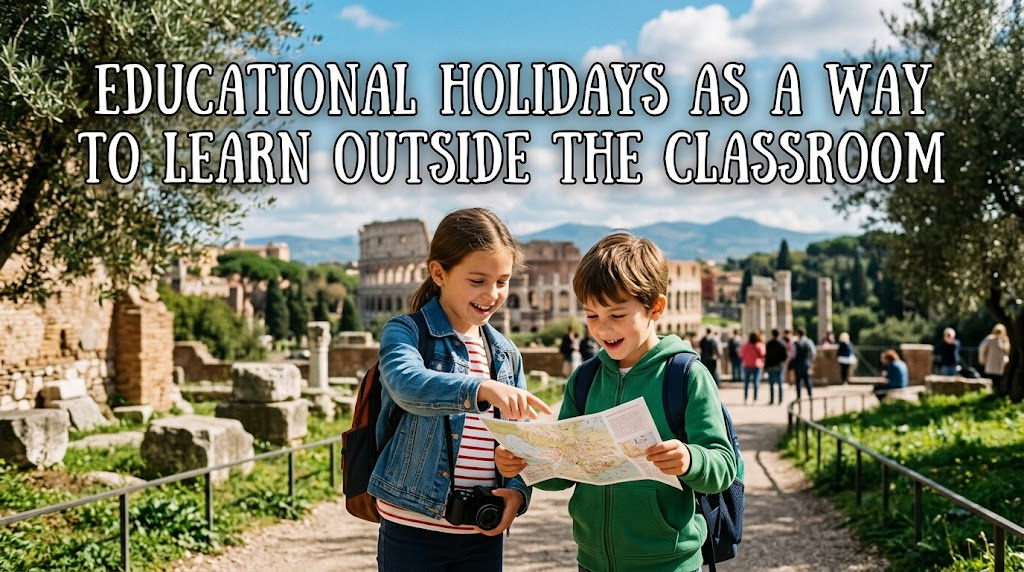
Learning does not always have to happen inside a classroom. Educational holidays give children opportunities to discover new knowledge through real-world experiences, exploration, and direct observation. Visiting museums, nature areas, cultural sites, or science centers can help children connect what they learn at school with everyday life. This approach can make learning more enjoyable and meaningful.
LEARNING THROUGH REAL EXPERIENCES
Educational holidays allow children to experience things that may be difficult to understand through books alone. A visit to a historical site, for example, can help children see buildings or objects connected to the past. A trip to a nature area can introduce them to plants, animals, ecosystems, and environmental conditions. Direct experiences can make abstract information easier to understand.
Parents can support learning by asking children about what they observe. Simple questions can encourage children to think about why something happens or how it works. They can also discuss interesting information they discover during the trip. Real-world experiences can help children connect knowledge with situations they can actually see and understand.
EXPANDING KNOWLEDGE OUTSIDE SCHOOL
Educational holidays can introduce children to subjects that may not be fully explored during regular school activities. Depending on the destination, children can learn about history, culture, science, technology, nature, and local communities. Each place can offer different information and experiences. This makes learning outside the classroom more varied and engaging.
Parents can choose destinations that relate to subjects children are currently studying. For example, a science center can complement lessons about scientific concepts, while a cultural site can provide additional insight into history. This connection can help children understand why certain subjects are relevant to everyday life. Learning outside school can strengthen knowledge through meaningful experiences.
DEVELOPING CURIOSITY AND QUESTIONS
New environments naturally encourage children to ask questions. During an educational holiday, they may wonder how something works, why a place is important, or what causes a particular natural event. These questions can become opportunities to explore information together. Parents should encourage children to express their curiosity rather than simply giving all the answers.
If the answer is not immediately known, parents and children can search for reliable information together. This process teaches children that learning involves asking questions and looking for evidence. It can also encourage them to become more active learners. Curiosity can turn an ordinary trip into a valuable learning experience.
BUILDING SOCIAL AND PRACTICAL SKILLS
Learning outside the classroom can also help children develop practical and social skills. During a family trip, children can practice communication, cooperation, following rules, managing personal belongings, and making simple decisions. These skills are useful in everyday life and may not always be developed through academic lessons alone. Travel provides natural situations for children to practice them.
Parents can give children small responsibilities according to their age. They might help organize personal items, follow a simple schedule, or choose between suitable activities. Parents should continue providing guidance and supervision when needed. Practical experiences can help children become more confident and responsible.
MAKING LEARNING MORE ENJOYABLE
One of the main advantages of learning outside the classroom is the opportunity to combine education with recreation. Children can learn while exploring, playing, observing, and enjoying time with their families. This can make educational activities feel less formal and reduce the monotony of traditional learning. Positive experiences may also encourage children to become more interested in discovering new topics.
However, educational holidays should not be filled with lessons from morning to night. Children need time to rest, play, and enjoy the destination without specific learning goals. A flexible schedule can help prevent fatigue and maintain their enthusiasm. A balance between education and recreation can make learning outside the classroom more enjoyable.
CONCLUSION
Educational holidays provide an effective way to learn outside the classroom through real experiences, expanded knowledge, curiosity, practical skills, and enjoyable activities. Children can connect school subjects with the world around them while spending quality time with their families. Parents should choose destinations that match children's ages, interests, and abilities. With a balanced approach, learning outside the classroom can become an enjoyable and meaningful part of a holiday.
Tentang Penulis
Gusti Ayu Tita P
Penulis — Universitas STEKOM
Penulis aktif yang berfokus pada isu-isu akademik, teknologi pendidikan, dan pengembangan sumber daya manusia di lingkungan kampus.