
Effective Live Streaming Strategies to Build Stronger Customer Engagement
Gusti Ayu Tita P
26 Agustus 2026
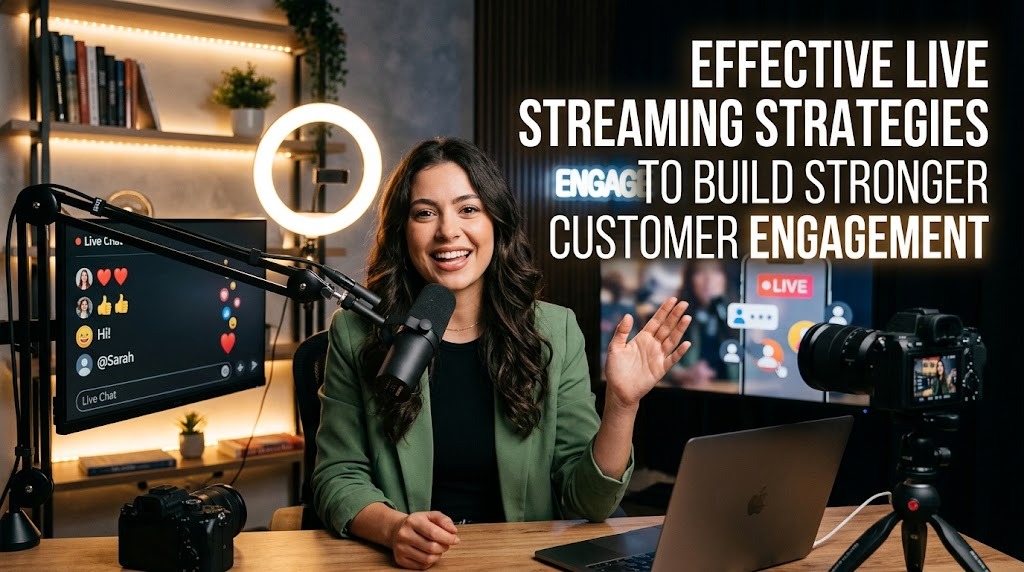
Live streaming has become an effective way for businesses and creators to communicate directly with their audiences. Unlike traditional digital content, live streaming allows viewers to interact with brands in real time through comments, questions, reactions, and discussions. This creates a more personal communication experience and can help businesses understand what their customers actually need.
When managed properly, live streaming can do more than attract viewers. It can strengthen relationships, encourage participation, increase brand familiarity, and create opportunities for long term customer loyalty. Therefore, businesses need a clear strategy to make every live session useful, engaging, and relevant to their target audience.
UNDERSTAND YOUR TARGET AUDIENCE
The first step in creating successful live streaming content is understanding the target audience. Businesses should identify customer interests, common problems, preferences, and online habits before deciding what topics to discuss. Knowing the audience helps businesses create content that feels relevant rather than simply promotional. It also makes it easier to choose the right language, presentation style, and streaming schedule.
Audience understanding should also be developed through feedback. Businesses can review questions, comments, reactions, and engagement patterns from previous sessions to discover what viewers want to see next. Customer feedback can become a valuable source of ideas for future broadcasts. When viewers feel that their interests are being considered, they are more likely to participate and return to future live sessions.
CREATE CONTENT THAT ENCOURAGES PARTICIPATION
Good live streaming content should give viewers a reason to stay and participate. Instead of delivering a one way presentation, hosts can ask questions, conduct polls, respond to comments, demonstrate products, or invite viewers to share their experiences. These activities make the audience feel involved in the conversation. Interactive content can turn passive viewers into active participants.
The topic should also provide clear value. Businesses can use live sessions for product demonstrations, tutorials, educational discussions, behind the scenes content, or question and answer sessions. A useful combination of information and entertainment can make a broadcast more memorable. The most important point is to ensure that the content matches the audience's needs rather than focusing only on selling products.
CHOOSE THE RIGHT HOSTING STYLE
The person presenting the live stream has an important influence on audience engagement. A good host should be confident, friendly, responsive, and comfortable communicating in real time. The host does not need to sound overly formal because a natural communication style can make the session feel more authentic. Viewers are generally more comfortable participating when they feel they are having a genuine conversation.
Preparation is still necessary even when the presentation style is casual. Hosts should understand the topic, prepare important points, anticipate common questions, and know how to respond when unexpected situations occur. However, they should avoid reading a rigid script from beginning to end. Authentic communication allows the host to respond naturally while keeping the discussion focused.
RESPOND TO VIEWERS IN REAL TIME
One of the biggest advantages of live streaming is direct communication. Businesses can use the session to answer questions, acknowledge comments, and address concerns while viewers are watching. Responding quickly demonstrates that the audience is being heard. This can help establish customer trust and create a stronger relationship between viewers and the brand.
Hosts should also recognize useful contributions from the audience. Mentioning viewers by name when appropriate, answering their questions clearly, and encouraging additional discussion can make people feel valued. However, responses should remain respectful and professional, especially when viewers raise complaints or criticism. A thoughtful response can turn a difficult interaction into an opportunity to demonstrate good customer service.
MAINTAIN CONSISTENCY AND MEASURE ENGAGEMENT
A single successful live stream is useful, but consistent broadcasting can provide greater long term benefits. Businesses should establish a realistic schedule that their audience can remember and follow. Consistent live streaming helps create familiarity and gives viewers a reason to return. The schedule should be based on audience availability and the resources that the business can maintain over time.
After each session, businesses should evaluate performance instead of relying only on the number of viewers. Important indicators can include watch time, comments, reactions, shares, questions, new followers, and conversions when relevant. These engagement metrics can reveal which topics and presentation methods work best. Businesses can then use the findings to improve future live sessions and gradually build a stronger content strategy.
CONCLUSION
Effective live streaming strategies focus on building meaningful communication rather than simply attracting a large number of viewers. Businesses can strengthen customer engagement by understanding their audience, creating interactive content, choosing an appropriate hosting style, and responding to viewers in real time. Consistency and performance measurement are also important for improving future broadcasts.
The strongest live streaming strategy is one that provides genuine value while allowing customers to participate in the conversation. When businesses consistently listen to their audiences and improve their content based on feedback, live streaming can become a powerful channel for customer engagement, brand relationships, and business growth.
Tentang Penulis
Gusti Ayu Tita P
Penulis — Universitas STEKOM
Penulis aktif yang berfokus pada isu-isu akademik, teknologi pendidikan, dan pengembangan sumber daya manusia di lingkungan kampus.















