Effective Regent Leadership to Advance Regional Development
Gusti Ayu Tita P
12 Agustus 2026
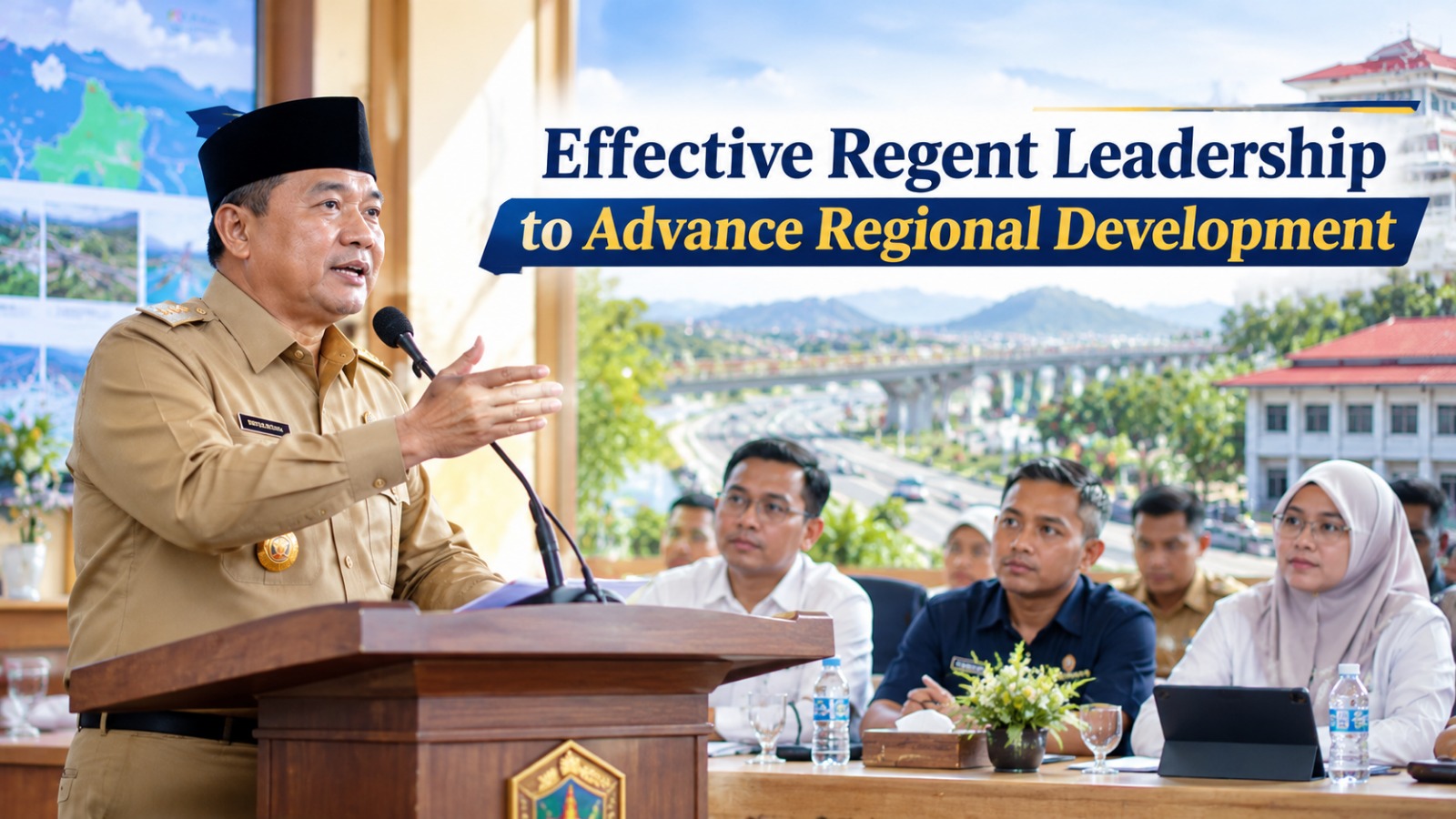
Effective leadership is essential for creating successful and sustainable regional development. A regent has an important responsibility to coordinate regional government, manage public resources, and respond to the needs of local communities within the authority provided by law. Strong leadership can help ensure that development programs are focused, transparent, and beneficial to residents. Regent leadership should not only focus on short-term achievements but also consider the long-term future of the region. With clear strategies and responsible decision-making, a regent can help build a prosperous, competitive, and resilient region.
UNDERSTANDING EFFECTIVE REGENT LEADERSHIP
A regent is responsible for leading the administration of a regency and coordinating regional development programs. Effective leadership requires more than making decisions because a regent must also communicate priorities, coordinate government agencies, and monitor implementation. Effective regent leadership should be based on clear objectives, reliable information, and an understanding of local conditions. Decisions should also follow applicable laws, regulations, and regional development plans.
Every region has different strengths and challenges. Some regions may have strong agricultural potential, while others may depend on tourism, industry, fisheries, trade, or creative businesses. A successful regent needs to recognize these characteristics when establishing development priorities. Understanding local conditions can help ensure that regional development strategies are relevant and realistic.
ESTABLISHING CLEAR DEVELOPMENT PRIORITIES
Regional resources are limited, while community needs can be extensive. A regent therefore needs to determine which development issues require the greatest attention. Priorities may include infrastructure, education, healthcare, economic growth, employment, poverty reduction, environmental protection, and public services. Clear development priorities can prevent government programs from becoming scattered and ineffective.
Development priorities should be based on reliable data and community needs. Government agencies can use economic, social, demographic, and infrastructure information to identify important challenges. Public consultation can also provide valuable insight into problems experienced by residents. When priorities are clearly established, government agencies can work toward shared regional development goals.
STRENGTHENING GOVERNMENT COORDINATION
Regional development involves many government agencies with different responsibilities. Without effective coordination, programs can overlap, experience delays, or fail to address problems comprehensively. A regent can strengthen communication between regional agencies and encourage them to work toward common objectives. Government coordination is essential for ensuring that development programs complement each other.
Coordination should continue throughout planning, implementation, monitoring, and evaluation. Government agencies need clear responsibilities and communication channels. Regular coordination can help identify obstacles and develop solutions before problems become more serious. Strong coordination can improve the efficiency of regional government performance.
MANAGING PUBLIC RESOURCES RESPONSIBLY
Public resources must be managed carefully because they come from public funds and are intended to support community needs. A regent should encourage responsible planning, budgeting, implementation, monitoring, and reporting. Responsible resource management can help maximize the benefits of government programs while reducing unnecessary spending.
Resource management should also consider long-term sustainability. A development project may require future maintenance, staffing, or operational costs after completion. Government officials should therefore evaluate not only the initial cost but also the long-term impact. Proper management can strengthen public trust and regional development outcomes.
IMPROVING PUBLIC SERVICES
Citizens experience government directly through public services. Administrative services, healthcare, education, infrastructure, social assistance, and public information all affect daily life. A regent can encourage improvements in service quality, accessibility, efficiency, and transparency. Quality public services can increase citizen satisfaction and strengthen trust in regional government.
Improvement should be based on actual service performance. Government agencies can monitor processing times, complaints, accessibility, and other relevant indicators. Citizen feedback can also reveal problems that may not appear in administrative reports. Continuous evaluation can help create a more responsive regional government.
DEVELOPING LOCAL ECONOMIC POTENTIAL
Economic development is an important part of regional progress. A regent can support sectors that have strong local potential, including agriculture, fisheries, tourism, manufacturing, trade, services, and creative industries. Local economic development can create employment, increase household income, and strengthen regional competitiveness.
Small and Medium Enterprises can also receive appropriate support through business training, market access, digital skills, infrastructure, and business information. Partnerships with businesses, financial institutions, educational organizations, and communities can strengthen local economic ecosystems. Economic policies should encourage productivity and innovation rather than creating long-term dependence on government assistance. A strong local economy can become a foundation for sustainable regional growth.
INVESTING IN HUMAN RESOURCE DEVELOPMENT
People are one of the most important resources for regional development. Education, vocational training, digital literacy, and professional development can help residents acquire skills needed by the economy. A regent can support programs that improve human resources within regional authority and coordinate with educational institutions and other stakeholders. Human resource development can increase productivity and employment opportunities.
Training should be connected to real opportunities. Local businesses can help identify skills needed in the labor market, while schools and training institutions can provide appropriate learning programs. Young people can also be encouraged to develop entrepreneurship and digital skills. A skilled population can make the region more attractive to responsible investment and support long-term economic competitiveness.
DEVELOPING QUALITY INFRASTRUCTURE
Infrastructure provides the physical foundation for economic and social activity. Roads, bridges, water systems, public facilities, transportation networks, and digital connectivity can improve access to markets and essential services. A regent can prioritize infrastructure projects based on urgency, community needs, development plans, and available resources. Quality regional infrastructure can improve connectivity and reduce barriers to development.
Infrastructure should also be maintained after construction. Without proper maintenance, facilities may deteriorate and require expensive repairs. Development planning should consider safety, accessibility, environmental impact, and long-term operational needs. Well-managed infrastructure can support economic growth and community welfare.
PROMOTING DIGITAL GOVERNMENT
Digital technology can improve government administration and public services. Online services, digital information systems, electronic documents, and complaint platforms can make some government processes more efficient. A regent can support appropriate digital government transformation while ensuring that services remain accessible to people who have limited digital skills or internet access.
Digital development also requires attention to data security, system reliability, and staff capabilities. Employees need sufficient training to operate digital systems effectively. Citizens should receive clear information about how digital services work. Responsible digitalization can improve government efficiency, transparency, and accessibility.
STRENGTHENING TRANSPARENCY AND ACCOUNTABILITY
Trust is an important element of effective leadership. Citizens need confidence that government decisions and public resources are managed responsibly. A regent can promote transparency through clear public information, appropriate reporting, monitoring, and accessible communication. Transparent regional government can make citizens better informed about development programs.
Accountability requires government agencies to evaluate their performance and respond appropriately when problems occur. Programs should have clear objectives and measurable indicators where possible. Feedback and complaint mechanisms can also help identify weaknesses. Strong accountability can support good governance and improve the credibility of regional leadership.
INVOLVING THE COMMUNITY IN DEVELOPMENT
Regional development should not be carried out without considering the people who will be affected by it. Residents can provide important information about local needs, challenges, and potential solutions. A regent can encourage appropriate public consultations, community discussions, surveys, and other participation mechanisms. Community participation can make development programs more relevant and inclusive.
Public participation can also encourage citizens to take ownership of development. However, participation should be meaningful and supported by clear communication. Government agencies should explain development objectives and consider feedback according to applicable planning mechanisms. Collaboration between government and communities can strengthen regional development outcomes.
PREPARING FOR FUTURE CHALLENGES
Effective leadership must look beyond current problems. Regions may face economic changes, technological disruption, environmental pressures, demographic changes, and natural disasters. A regent should encourage planning that considers potential future risks and opportunities. Future-oriented regional planning can help communities become more adaptable and resilient.
Long-term strategies should remain flexible because regional conditions can change. Government agencies should monitor important trends and adjust programs when evidence shows that changes are necessary. Investment in education, infrastructure, technology, and environmental protection can strengthen future resilience. Preparing early can help a region respond more effectively to future development challenges.
EVALUATING DEVELOPMENT PROGRAMS
A development program should not be considered successful simply because it has been implemented. Government needs to determine whether the program actually achieves its intended objectives. A regent can encourage regular monitoring and evaluation of regional programs using appropriate indicators. Program evaluation can identify successful approaches as well as areas that need improvement.
Evaluation can also help government use public resources more effectively. If a program produces limited results, officials can investigate the causes and adjust the approach. Successful practices can be expanded when appropriate. Continuous learning can make regional government more responsive and effective. This creates a culture of continuous improvement in regional development.
CONCLUSION
Effective regent leadership requires clear priorities, responsible resource management, strong coordination, quality public services, economic development, human resource improvement, and meaningful community participation. A regent must also promote transparency, accountability, digital transformation, infrastructure development, and long-term planning. Regional development cannot depend on one government leader alone because it requires cooperation between government institutions, businesses, communities, educational organizations, and other stakeholders. With strategic and responsible leadership, a regent can help transform regional potential into meaningful opportunities. Ultimately, effective leadership can become a powerful foundation for building a prosperous, inclusive, competitive, and sustainable region.
Tentang Penulis
Gusti Ayu Tita P
Penulis — Universitas STEKOM
Penulis aktif yang berfokus pada isu-isu akademik, teknologi pendidikan, dan pengembangan sumber daya manusia di lingkungan kampus.