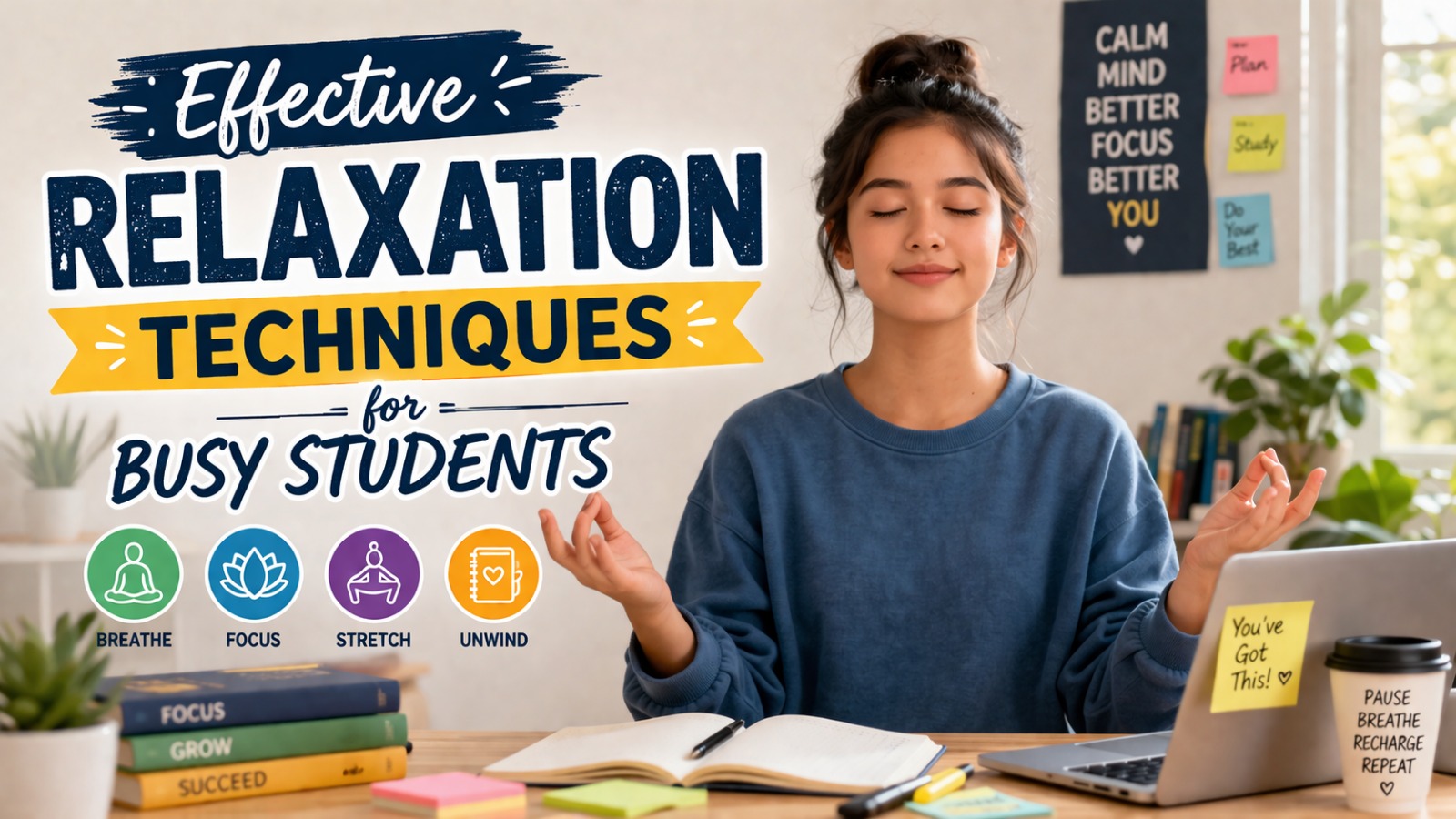
In today’s fast-paced academic environment, students are constantly juggling lectures, assignments, exams, and social responsibilities. This demanding routine often leads to stress and mental fatigue. Without proper relaxation, productivity can decline and overall well-being may suffer. That is why learning effective relaxation techniques is essential for busy students who want to stay focused, energized, and mentally healthy.
UNDERSTANDING STUDENT STRESS
Student stress is a common issue caused by academic pressure, tight deadlines, and high expectations. When left unmanaged, stress can lead to burnout, anxiety, and decreased academic performance. Recognizing the early signs of stress—such as difficulty concentrating, irritability, and constant fatigue—is the first step toward managing it effectively.
THE IMPORTANCE OF RELAXATION
Relaxation is not a luxury; it is a necessity for maintaining both mental and physical health. Taking time to relax helps the brain recover, improves focus, and enhances problem-solving abilities. For students, even short breaks can make a significant difference in maintaining consistent academic performance.
SIMPLE BREATHING TECHNIQUES
One of the easiest ways to reduce stress is through controlled breathing. Deep breathing exercises can calm the nervous system and reduce tension almost instantly. Students can practice inhaling slowly through the nose, holding the breath for a few seconds, and exhaling gently. This technique can be done anywhere, making it highly practical during study sessions or before exams.
MINDFULNESS AND MEDITATION
Mindfulness and meditation are powerful tools for relaxation. By focusing on the present moment, students can reduce overthinking and anxiety. Even a few minutes of daily meditation can improve concentration and emotional stability. Apps or guided sessions can help beginners develop a consistent practice.
PHYSICAL ACTIVITY FOR STRESS RELIEF
Exercise is an effective way to release built-up stress. Activities such as walking, jogging, or stretching can boost mood and increase energy levels. Physical movement stimulates the release of endorphins, which naturally improve mood and reduce stress. Students do not need intense workouts; even light activity can be beneficial.
TIME MANAGEMENT AND BREAKS
Proper time management plays a crucial role in reducing stress. Creating a balanced schedule that includes study time and breaks helps prevent mental exhaustion. Techniques like the Pomodoro method—studying for a set period followed by short breaks—can improve focus while allowing time for relaxation.
ENGAGING IN HOBBIES
Taking time to enjoy hobbies can refresh the mind and provide a healthy escape from academic pressure. Whether it is reading, listening to music, drawing, or playing games, engaging in enjoyable activities helps students recharge and return to their tasks with renewed motivation.
CONCLUSION
Relaxation is a key component of academic success for busy students. By incorporating simple techniques such as breathing exercises, mindfulness, physical activity, and effective time management, students can maintain balance in their daily lives. Consistent relaxation not only reduces stress but also enhances focus, productivity, and overall well-being.
Tentang Penulis
Gusti Ayu Tita P
Penulis — Universitas STEKOM
Penulis aktif yang berfokus pada isu-isu akademik, teknologi pendidikan, dan pengembangan sumber daya manusia di lingkungan kampus.