Effective Strategies for Instilling Pancasila Values from an Early Age
Gusti Ayu Tita P
4 Agustus 2026
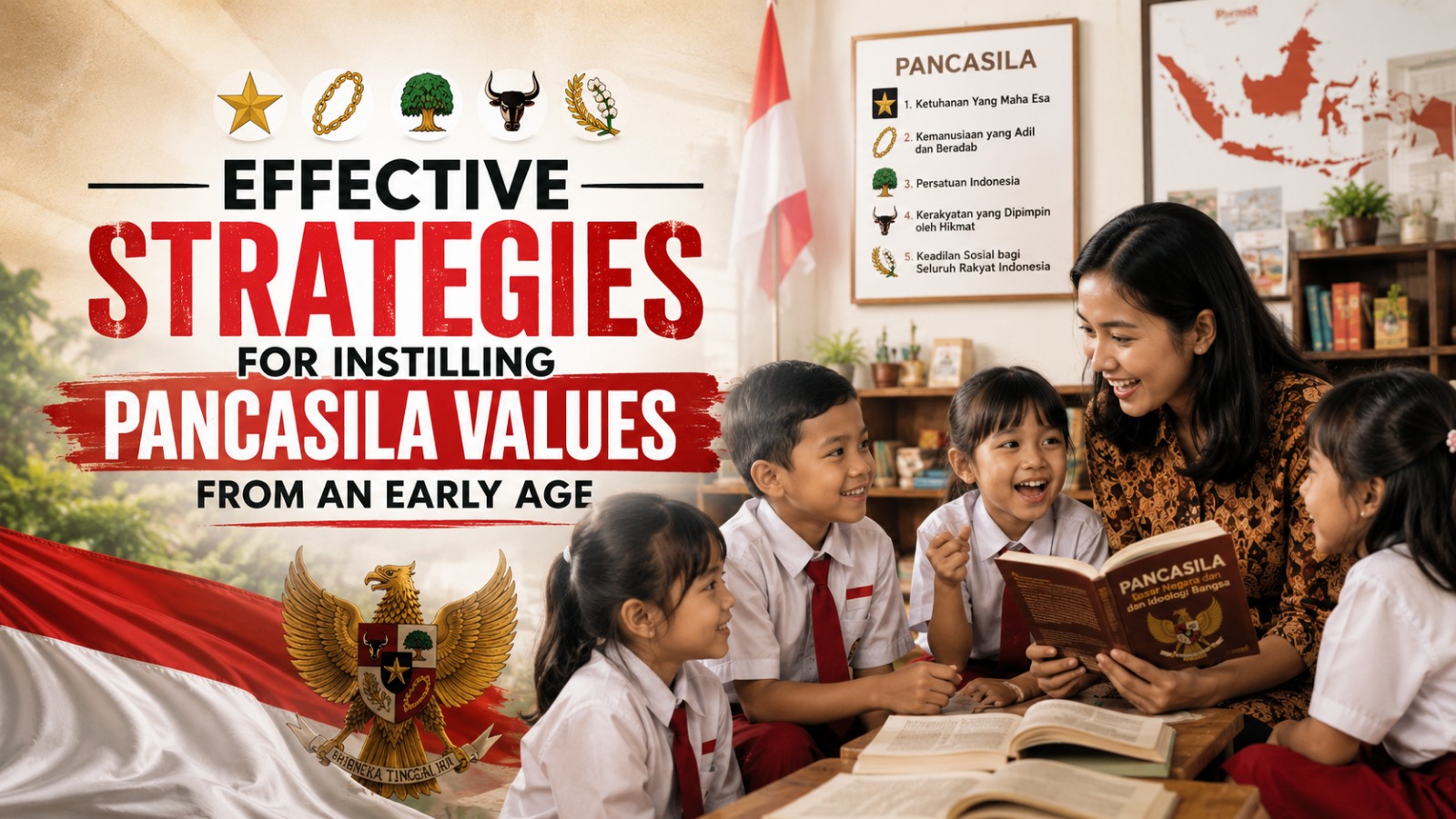
Pancasila is the foundation of Indonesia that contains important values for shaping the character and behavior of citizens. The principles of Pancasila teach children about faith, humanity, unity, democracy, and social justice. Instilling these values from an early age is essential because childhood is an important period for developing attitudes, habits, and moral character.
In the modern era, children face various influences from technology, social media, and global culture. These changes can provide benefits but may also affect children’s understanding of national values. Therefore, effective strategies are needed to introduce and apply Pancasila values for children so they can grow into responsible, tolerant, and caring individuals.
THE IMPORTANCE OF INTRODUCING PANCASILA VALUES FROM CHILDHOOD
Early childhood is a crucial stage for forming personality and character. Values learned during this period often become habits that influence children’s behavior in the future. Introducing Pancasila values from an early age helps children understand the importance of respect, responsibility, and cooperation.
When children understand Pancasila principles, they can develop positive attitudes toward themselves and others. They learn how to appreciate differences, follow rules, and contribute to their environment. Early introduction of Pancasila creates a strong foundation for building a generation with good moral character.
TEACHING PANCASILA THROUGH FAMILY EDUCATION
The family is the first environment where children learn values and behaviors. Parents have an important role in introducing Pancasila principles through daily activities and examples. Children often learn more effectively by observing the attitudes and actions of their parents.
Parents can teach Pancasila values by encouraging honesty, helping others, respecting family members, and discussing the importance of tolerance. Simple activities such as sharing responsibilities at home and showing kindness can become practical examples of applying Pancasila. Through family education, children can understand that Pancasila is part of everyday life.
IMPLEMENTING PANCASILA VALUES THROUGH SCHOOL ACTIVITIES
Schools play an important role in strengthening children’s understanding of Pancasila education. Teachers can introduce national values through lessons, discussions, and activities that encourage cooperation and responsibility. Education about Pancasila should not only focus on theory but also involve practical experiences.
Activities such as group projects, community service, cultural events, and classroom discussions help students practice Pancasila values directly. Through these experiences, children learn about teamwork, respect, and fairness. Schools become important places for developing students’ character based on Indonesian values.
USING STORIES AND EXAMPLES TO TEACH MORAL VALUES
Children often understand concepts more easily through stories and real examples. Using educational stories based on Pancasila values can help children learn about kindness, honesty, and tolerance. Stories about cooperation, helping others, and respecting differences can make moral lessons more interesting.
Parents and teachers can use books, videos, and creative activities to introduce Pancasila principles. These methods help children connect values with real situations in their lives. By learning through examples, children can better understand how to apply Pancasila in everyday behavior.
DEVELOPING TOLERANCE AND RESPECT FOR DIVERSITY
Indonesia is a country with many cultures, religions, and traditions. Therefore, children need to learn the importance of tolerance and respect for diversity from an early age. Understanding differences helps children develop empathy and avoid negative attitudes toward others.
Parents and teachers can introduce diversity through cultural activities, discussions, and interactions with different communities. Children should learn that differences are not obstacles but valuable parts of Indonesian society. This understanding strengthens unity and supports the practice of Pancasila values.
TEACHING PANCASILA VALUES THROUGH DIGITAL MEDIA
Technology has become part of children’s daily lives. Digital media can be used as an effective tool to introduce Pancasila values in the digital era. Educational videos, interactive applications, and creative online content can make learning more engaging for children.
However, digital use must be guided by parents and educators. Children should learn digital responsibility, such as using technology positively, respecting others online, and avoiding harmful content. By combining technology with moral education, children can develop good character while adapting to modern changes.
BECOMING A ROLE MODEL FOR CHILDREN
Children learn not only from instructions but also from the behavior of people around them. Therefore, parents, teachers, and society must become examples of practicing Pancasila values. Positive actions shown by adults can influence children’s attitudes and habits.
Showing honesty, fairness, respect, and cooperation in daily life helps children understand the real meaning of Pancasila. When children see these values practiced consistently, they are more likely to follow and apply them. Role models are one of the most effective strategies for character development.
THE ROLE OF SOCIETY IN PRESERVING PANCASILA VALUES
Instilling Pancasila values is not only the responsibility of families and schools but also the wider community. A supportive environment helps children experience and practice national values in real situations. Community activities can become opportunities for children to learn cooperation and social responsibility.
Society can support children’s character development by creating an environment based on mutual respect, tolerance, and cooperation. When families, schools, and communities work together, Pancasila values can become stronger and continue across generations.
CONCLUSION
Instilling Pancasila values from an early age is an important step in building a generation with strong character and national awareness. Effective strategies such as family education, school activities, storytelling, digital learning, and positive examples help children understand and practice Pancasila in daily life.
Through consistent education and support from families, schools, and communities, children can grow into responsible citizens who respect diversity and contribute positively to Indonesia. Pancasila values will continue to serve as a strong foundation for creating a united, peaceful, and prosperous nation.
Tentang Penulis
Gusti Ayu Tita P
Penulis — Universitas STEKOM
Penulis aktif yang berfokus pada isu-isu akademik, teknologi pendidikan, dan pengembangan sumber daya manusia di lingkungan kampus.