Effective Strategies Game Developers Use to Increase Player Satisfaction
Gusti Ayu Tita P
24 Juli 2026
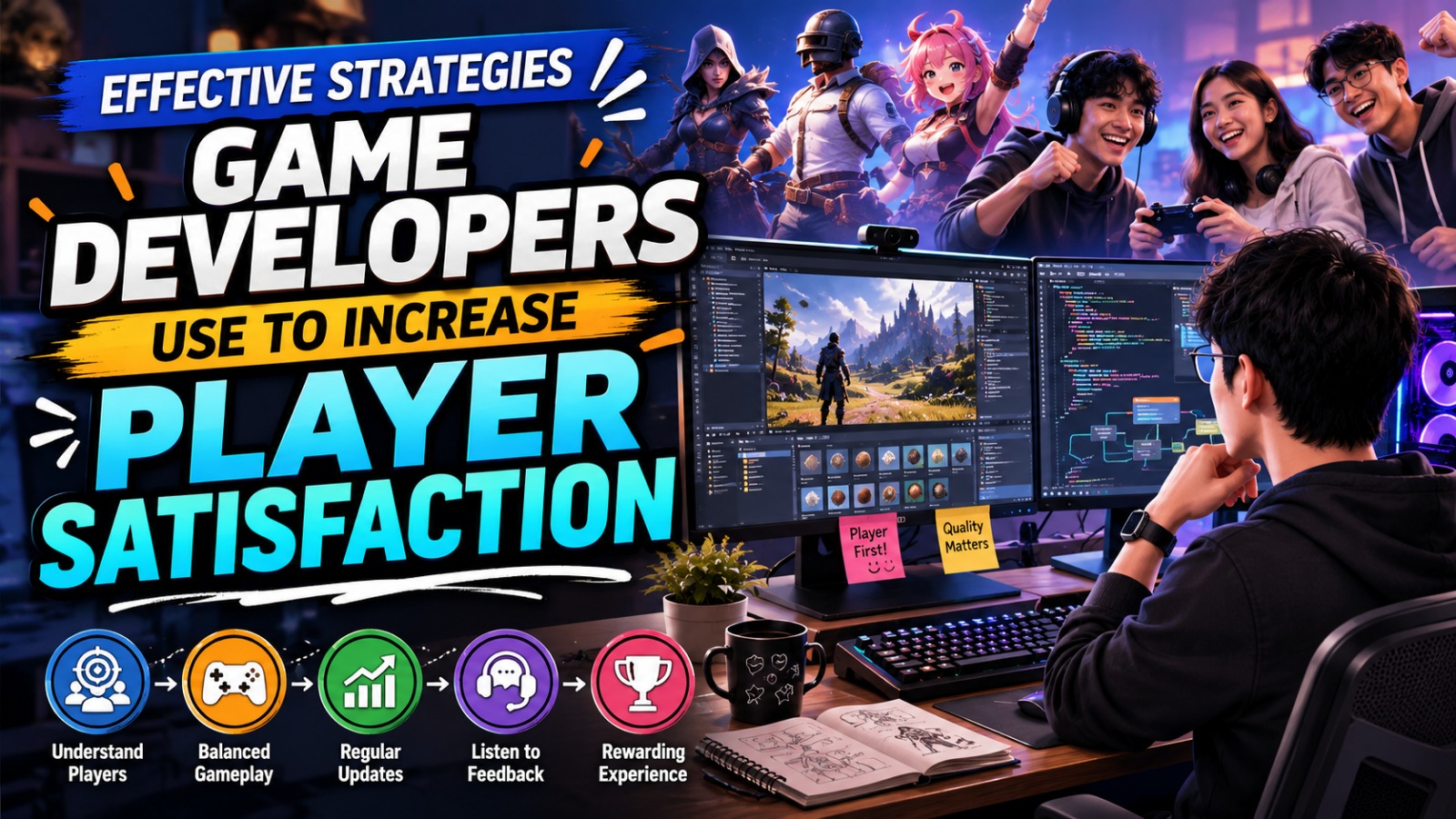
The gaming industry has become increasingly competitive, making player satisfaction one of the most important goals for every game developer. Players expect games that are enjoyable, visually appealing, technically stable, and continuously updated with exciting content. To meet these expectations, developers apply various strategies throughout the game development process, from planning and design to post-launch support. A satisfying gaming experience not only attracts new players but also encourages long-term engagement and loyalty. Understanding these strategies provides valuable insight into how successful games continue to grow and maintain active communities.
UNDERSTANDING PLAYER EXPECTATIONS
Every successful game begins with understanding what players truly want. Game developers conduct market research, analyze gaming trends, and gather community feedback before creating new projects. This information helps identify the features, gameplay styles, and experiences that players value the most.
Developers also consider different player preferences, including casual gamers, competitive players, and story-driven audiences. Designing with the target audience in mind allows developers to create games that feel relevant and enjoyable. Meeting player expectations from the beginning significantly increases overall satisfaction.
CREATING BALANCED AND ENJOYABLE GAMEPLAY
Balanced gameplay mechanics are essential for maintaining player interest over time. Developers carefully adjust difficulty levels, character abilities, rewards, and progression systems to ensure the game remains challenging without becoming frustrating. Well-balanced gameplay motivates players to continue improving their skills.
Regular gameplay testing allows developers to identify areas that require adjustment. Feedback from testers helps refine combat systems, puzzles, and multiplayer balance before release. Continuous balancing creates a smoother and more enjoyable gaming experience for everyone.
DELIVERING HIGH-QUALITY VISUALS AND AUDIO
Outstanding graphics and immersive sound design greatly enhance player satisfaction. Developers use advanced rendering technologies, detailed character models, realistic environments, and smooth animations to create visually engaging worlds. Attractive visuals encourage players to spend more time exploring the game.
High-quality audio complements the visual experience by adding emotional depth and realism. Music, sound effects, and voice acting create stronger immersion during gameplay. The combination of excellent visuals and audio leaves a lasting impression on players.
OPTIMIZING PERFORMANCE AND STABILITY
Technical performance is just as important as gameplay quality. Developers optimize games to achieve stable frame rates, faster loading times, and minimal crashes across different devices and platforms. A smooth gaming experience prevents frustration and increases player confidence in the product.
Extensive testing helps identify bugs, compatibility issues, and performance bottlenecks before release. Developers continue monitoring technical performance after launch to resolve newly discovered problems quickly. Reliable performance contributes significantly to long-term player satisfaction.
PROVIDING REGULAR CONTENT UPDATES
Modern games continue evolving after launch through content updates and new features. Developers release additional levels, characters, game modes, seasonal events, and downloadable content to keep the experience fresh. Frequent updates encourage players to return regularly.
Listening to community feedback also helps developers prioritize future improvements. New content based on player suggestions strengthens the relationship between developers and their audience. Consistent updates demonstrate a commitment to maintaining an active and enjoyable game.
BUILDING STRONG PLAYER COMMUNITIES
Healthy gaming communities play an important role in maintaining player engagement. Developers communicate with players through official forums, social media, live streams, and community events. Open communication creates trust and allows developers to better understand player concerns.
Community activities such as tournaments, challenges, and seasonal competitions encourage player interaction. Developers who actively engage with their communities often receive valuable suggestions for improving gameplay. Strong communities contribute to higher player retention and long-term success.
USING PLAYER FEEDBACK TO DRIVE IMPROVEMENT
Player feedback provides developers with direct insight into the strengths and weaknesses of a game. Reviews, surveys, support tickets, and gameplay analytics help identify areas requiring improvement. Developers use this information to refine game mechanics, balance features, and improve overall user experience.
Constructive feedback also supports innovation by revealing new ideas and player preferences. Regular communication between developers and players creates a collaborative development environment. This ongoing improvement process keeps games competitive in a rapidly evolving market.
ENSURING FAIR AND REWARDING GAME PROGRESSION
A satisfying progression system motivates players to continue playing and achieving new goals. Developers design reward systems that recognize player effort through achievements, unlockable content, skill progression, and meaningful in-game rewards. Fair progression encourages continued engagement without making advancement feel repetitive.
Developers also avoid unfair mechanics that discourage players, such as excessive grinding or unbalanced advantages. A well-designed progression system creates a sense of accomplishment while maintaining excitement throughout the game. Players are more likely to remain loyal when their time and effort feel valued.
CONCLUSION
Game developers increase player satisfaction by combining engaging gameplay, strong technical performance, high-quality visuals, continuous updates, active community engagement, and meaningful player feedback. Every stage of development contributes to creating games that players enjoy and recommend to others. As the gaming industry continues to evolve, developers who prioritize player experience will remain competitive and build lasting relationships with their audiences. Focusing on satisfaction is not only beneficial for players but also essential for the long-term success of every game.
Tentang Penulis
Gusti Ayu Tita P
Penulis — Universitas STEKOM
Penulis aktif yang berfokus pada isu-isu akademik, teknologi pendidikan, dan pengembangan sumber daya manusia di lingkungan kampus.