
Effective Study Strategies for the Madrasah Examination
Gusti Ayu Tita P
29 Agustus 2026
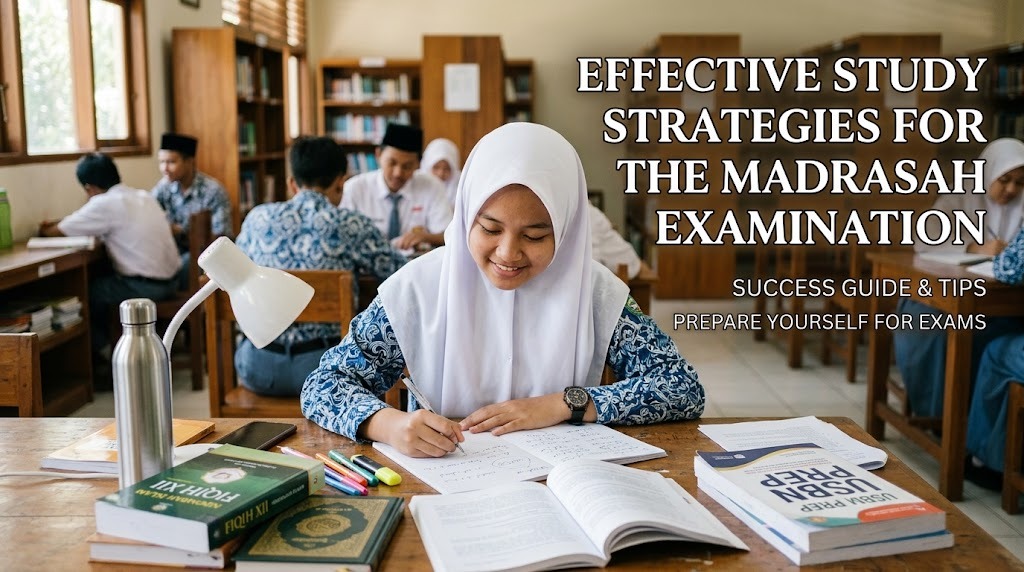
The Madrasah Examination is an important academic assessment for students in Islamic schools or madrasahs. Good preparation can help students understand the learning materials, manage their time, and feel more confident during the examination. Studying effectively does not mean spending the entire day reading books. Students need a clear strategy that combines regular study, practice, healthy habits, and proper time management.
By using the right effective study strategies, students can prepare for examinations in a more organized way. Starting early and studying consistently can also reduce stress and prevent last minute preparation.
CREATE A REALISTIC STUDY SCHEDULE
A well planned study schedule is one of the most useful strategies for preparing for the Madrasah Examination. List all subjects that will be tested and divide the available study time between them. Give more time to subjects or topics that are difficult to understand. A clear schedule helps students avoid spending too much time on only one subject.
The schedule should also include short breaks and enough time for sleep. Avoid creating a timetable that is too demanding because it can lead to tiredness and reduce concentration. Study in focused sessions and take regular breaks when needed. Most importantly, follow the schedule consistently instead of studying intensively only a few days before the examination.
IDENTIFY IMPORTANT LEARNING MATERIALS
Students should understand which topics need the most attention before starting their study sessions. Review textbooks, class notes, summaries, and materials provided by teachers. Divide the material into topics that are already understood, partly understood, and difficult. This makes it easier to determine which subjects require additional study time.
Do not try to memorize everything at once. Focus on understanding important concepts and how they are connected. For subjects that involve formulas or problem solving, practice applying the concepts instead of only reading the explanations. This approach can make learning more effective and help students remember information for longer.
USE ACTIVE LEARNING METHODS
Reading the same material repeatedly is not always enough to develop strong understanding. Students can use active learning methods such as creating summaries, making concept maps, answering questions, or explaining a topic in their own words. Teaching a topic to someone else is also a useful way to identify areas that are still unclear. These methods encourage students to actively process the information rather than simply read it.
Another useful approach is to test yourself after studying a topic. Close the book and try to recall the main ideas without looking at the material. Write down important points from memory and then compare them with your notes. Repeating this process can strengthen understanding and make it easier to identify weaknesses.
PRACTICE WITH EXAM QUESTIONS
Practice questions are essential when preparing for the Madrasah Examination. They help students understand how knowledge may be applied in different types of questions. Regular practice can also improve speed and accuracy. Students should try to complete practice sessions within a specific time limit to develop better time management.
After completing the questions, do not focus only on the score. Review every incorrect answer and find out why the mistake happened. It may be caused by a lack of understanding, careless reading, or an incorrect calculation. Learning from mistakes is an important part of effective exam preparation.
STUDY WITH CLASSMATES
Studying with classmates can be useful when students have difficulty understanding certain topics. Group discussions allow students to exchange explanations, questions, and different ways of solving problems. Explaining a difficult concept to another person can also strengthen personal understanding. A study group can make preparation more interactive and less stressful.
However, group study needs clear goals. Decide which subjects or topics will be discussed before starting the session. Avoid spending too much time chatting or discussing unrelated topics. If there are different answers or interpretations, check the textbook or ask the teacher to make sure the information is accurate.
REVIEW NOTES REGULARLY
Good notes can make revision easier, especially when the examination date is getting closer. Organize notes according to subjects and topics so important information can be found quickly. Highlight key concepts, definitions, formulas, and important examples. Keep summaries short enough to review without becoming overwhelmed by too much information.
Regular review is more effective than trying to remember everything in one session. Spend a few minutes revisiting previously studied topics before moving to new material. This helps reinforce information and reduces the need for last minute memorization. Reviewing difficult topics several times can also improve long term retention.
MANAGE STUDY DISTRACTIONS
Distractions can make study sessions less effective even when students spend many hours at their desks. Mobile phones, social media, games, and unnecessary notifications can interrupt concentration. Keep distracting devices away during focused study sessions or turn off notifications that are not related to learning. A quiet and comfortable study environment can make it easier to stay focused.
Students should also prepare their learning materials before starting a study session. This prevents unnecessary interruptions caused by searching for books or stationery. Set a specific goal for each session, such as completing one topic or answering a certain number of practice questions. Clear goals make study time more productive.
TAKE CARE OF YOUR HEALTH
Effective study strategies should include proper physical preparation. Lack of sleep can reduce concentration, energy, and the ability to process information. Students should maintain a regular sleep schedule and avoid excessive late night studying before the examination. Getting enough rest can help the brain and body remain ready for learning.
Healthy eating and adequate hydration are also important. Take regular breaks from studying and include light physical activity when possible. Avoid relying excessively on caffeinated drinks to stay awake. A healthy routine can support concentration and help students maintain their energy throughout the examination period.
STAY CALM AND BUILD CONFIDENCE
Exam anxiety is common, especially when students are worried about their results. However, excessive anxiety can make it difficult to concentrate and recall information. Students should focus on preparation rather than constantly thinking about possible results. Taking slow breaths and pausing briefly can help reduce tension when feeling overwhelmed.
Confidence grows through consistent preparation. If a topic is difficult, treat it as something that needs more practice rather than a reason to give up. Avoid comparing your progress with classmates because every student learns at a different pace. A calm mindset combined with proper preparation can help students approach the examination more confidently.
CONCLUSION
Effective Study Strategies for the Madrasah Examination include creating a realistic study schedule, identifying important materials, using active learning methods, and practicing examination questions. Students should also review their notes regularly, study with classmates when useful, and minimize distractions during study sessions. Physical and mental preparation are equally important, so students should get enough sleep, maintain healthy habits, and manage exam anxiety. With consistent preparation and the right study techniques, students can improve their understanding and face the Madrasah Examination with greater confidence.
Tentang Penulis
Gusti Ayu Tita P
Penulis — Universitas STEKOM
Penulis aktif yang berfokus pada isu-isu akademik, teknologi pendidikan, dan pengembangan sumber daya manusia di lingkungan kampus.















