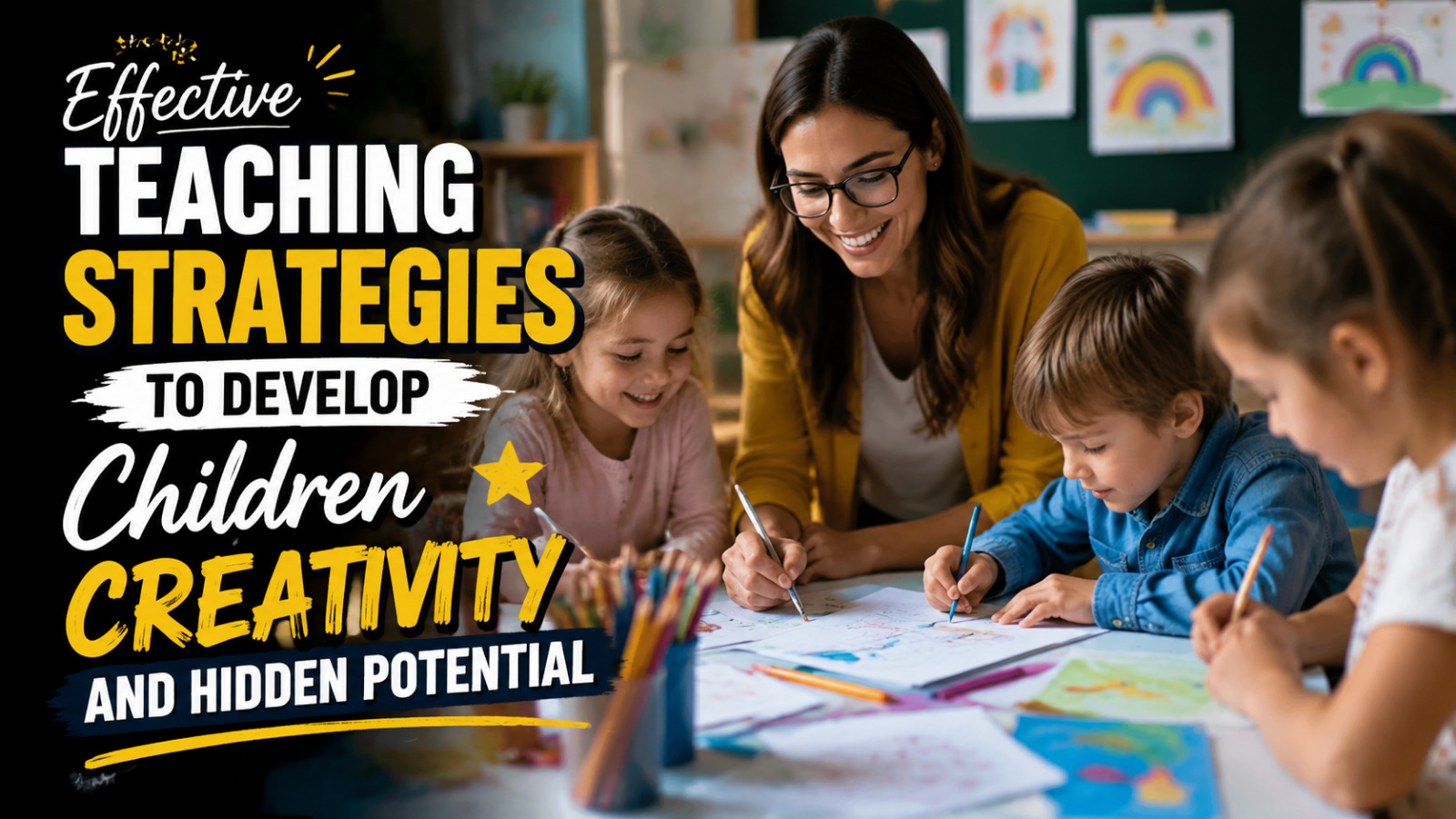
Education is not only about transferring knowledge but also about helping children discover their abilities, creativity, and unique talents. Every child has different strengths and potential that need to be supported through appropriate learning approaches. Teachers play an important role in creating an environment where students feel encouraged to explore, experiment, and express their ideas. By applying effective teaching strategies, educators can help children develop critical thinking, confidence, and problem-solving skills. Supporting children’s creativity from an early age prepares them to face future challenges with innovation and adaptability.
CREATING A SUPPORTIVE LEARNING ENVIRONMENT
A positive learning environment is one of the most important factors in developing children creativity. Teachers should create classrooms where students feel safe to share ideas, ask questions, and make mistakes during the learning process. When children feel comfortable, they become more confident in expressing their thoughts and exploring new possibilities.
A supportive classroom also encourages cooperation and respect among students. Teachers can use group activities, discussions, and creative projects to help children learn from each other. A comfortable environment allows children to develop their abilities naturally without fear of failure.
ENCOURAGING CREATIVE THINKING AND EXPLORATION
Creative thinking develops when children are given opportunities to explore different ideas and solutions. Teachers should avoid limiting students to only one correct answer and instead encourage them to think from different perspectives. Activities such as brainstorming, storytelling, experiments, and art projects can stimulate imagination and innovation.
Through exploration, children learn how to solve problems independently. They become more curious and willing to try new approaches. These experiences help reveal their hidden potential and strengthen their confidence in their own abilities.
USING ACTIVE AND INTERACTIVE LEARNING METHODS
Traditional learning methods that focus only on memorization may limit children’s creativity. Modern learning methods encourage students to participate actively through discussions, projects, games, and practical activities. These approaches make learning more enjoyable and meaningful.
Interactive learning allows children to connect lessons with real-life experiences. When students actively participate, they develop communication skills, teamwork, and critical thinking. These abilities are important for their academic success and future development.
IDENTIFYING EACH CHILD’S UNIQUE TALENTS
Every child has different interests, abilities, and learning styles. Teachers need to recognize these differences to provide appropriate support and opportunities. Some children may excel in academic subjects, while others may show talent in art, sports, technology, leadership, or social activities.
By observing students carefully, teachers can identify their strengths and encourage further development. Providing personalized guidance helps children feel valued and motivated. Recognizing individual abilities is an important part of effective child development.
INTEGRATING TECHNOLOGY INTO CREATIVE LEARNING
Technology provides many opportunities to enhance creativity in education. Teachers can use digital tools, educational applications, videos, and interactive platforms to create engaging learning experiences. These resources help students access information and develop digital skills.
However, technology should be used wisely and balanced with traditional learning activities. Teachers must guide children to use digital resources responsibly and creatively. Proper technology integration can support innovation and improve the overall learning experience.
PROMOTING PROBLEM-SOLVING SKILLS
Problem-solving is an important skill that supports creativity and future success. Teachers can develop this ability by giving students challenging tasks that require analysis and creative solutions. Project-based learning is one effective approach to encourage independent thinking.
When children solve problems, they learn how to evaluate situations, make decisions, and learn from mistakes. These experiences strengthen their confidence and resilience. Problem-solving activities also help students prepare for real-world challenges.
BUILDING CHILDREN’S CONFIDENCE AND MOTIVATION
Confidence is a key factor in developing creativity. Children who believe in their abilities are more willing to share ideas and try new things. Teachers can build confidence by appreciating students’ efforts, providing constructive feedback, and celebrating progress.
Motivation also plays an important role in learning success. Encouraging words and positive support help children stay interested and enthusiastic. When children feel supported, they are more likely to explore their abilities and reach their full potential.
THE ROLE OF PARENTS AND TEACHERS IN CHILD DEVELOPMENT
Teachers and parents must work together to support children’s growth. While teachers provide guidance at school, parents create supportive environments at home. Cooperation between both sides helps children receive consistent encouragement and opportunities to develop.
Parents and teachers should focus on supporting children’s interests rather than forcing them into specific expectations. Understanding each child’s personality and abilities allows them to grow naturally. Strong collaboration creates better conditions for developing creativity and potential.
CONCLUSION
Effective teaching strategies are essential for developing children creativity and discovering their hidden potential. By creating supportive environments, encouraging exploration, using interactive learning methods, recognizing individual talents, and building confidence, teachers can help children grow into creative and capable individuals. Education should not only focus on academic achievement but also nurture imagination, curiosity, and problem-solving abilities. With proper guidance from teachers and parents, every child has the opportunity to develop their unique talents and achieve future success.
Tentang Penulis
Gusti Ayu Tita P
Penulis — Universitas STEKOM
Penulis aktif yang berfokus pada isu-isu akademik, teknologi pendidikan, dan pengembangan sumber daya manusia di lingkungan kampus.