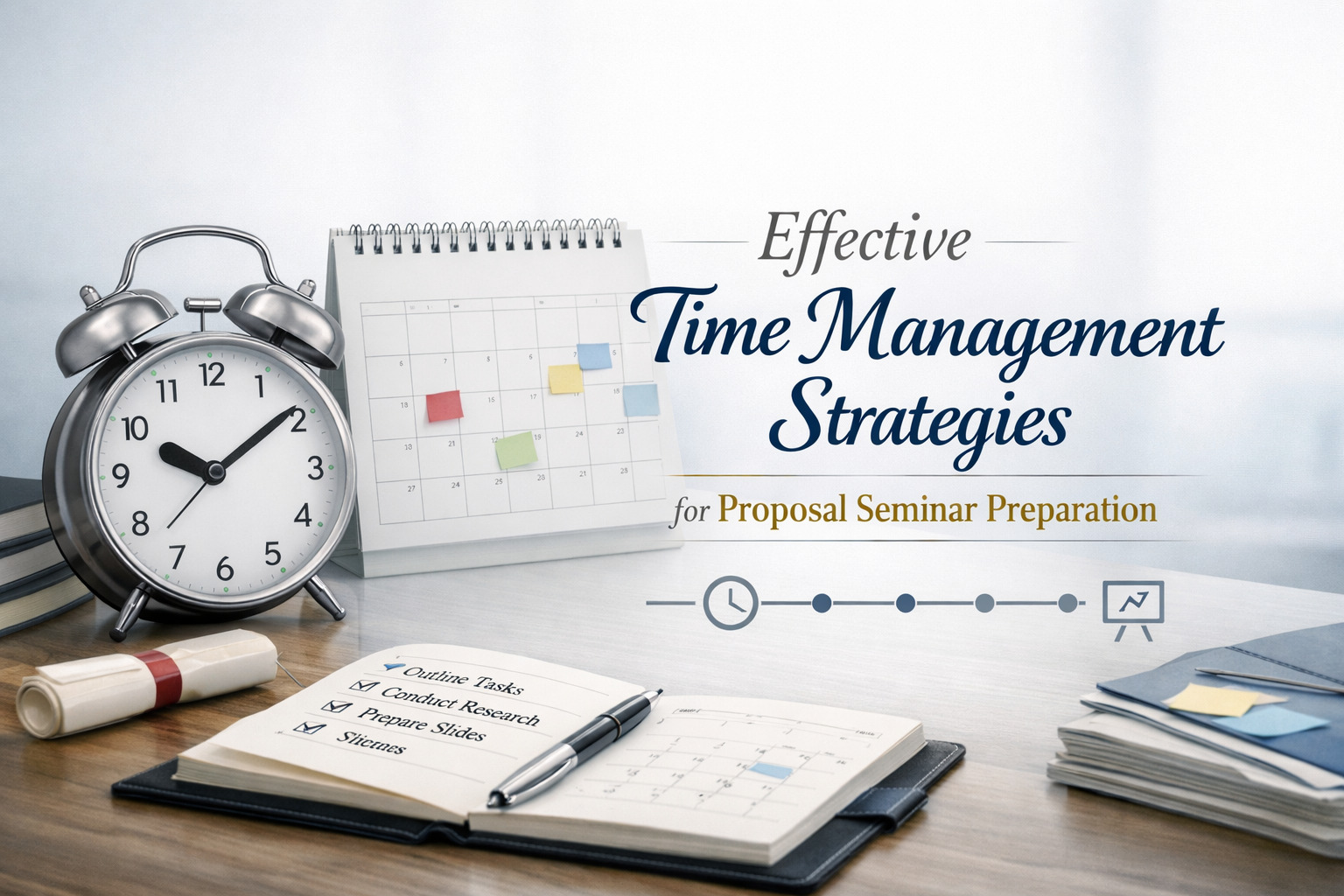
Effective Time Management Strategies For Proposal Seminar Preparation
Gusti Ayu Tita P
17 September 2026
Preparing for a proposal seminar is one of the most important stages in completing a thesis. Besides mastering the research content, students must also manage their time effectively to ensure every preparation step is completed before the seminar day. Without proper planning, even well-prepared research can be presented poorly due to unnecessary stress and last-minute work.
Implementing Effective Time Management allows students to balance academic responsibilities while improving confidence during presentations. By following the right strategies, students can complete revisions, practice presentations, and prepare mentally without feeling overwhelmed. This article discusses practical and proven methods to help students organize their time efficiently before their proposal seminar.
CREATE A DETAILED PREPARATION SCHEDULE
The first step toward successful seminar preparation is creating a realistic schedule. Divide all required tasks into smaller activities, such as revising the proposal, preparing presentation slides, practicing the presentation, and reviewing possible questions from the examiners. Setting daily or weekly goals helps make the workload more manageable.
A well-organized Study Schedule also helps students monitor their progress and avoid procrastination. Instead of rushing to finish everything in one or two days, completing small tasks consistently produces better results. Time Management becomes much easier when every activity has a clear deadline.
PRIORITIZE THE MOST IMPORTANT TASKS
Not every task has the same level of importance. Begin by completing activities that have the greatest impact on your Proposal Seminar, such as finalizing your research proposal, reviewing theoretical frameworks, and ensuring your methodology is accurate. Less urgent activities can be completed afterward.
Using a priority list reduces unnecessary stress and improves productivity. Students who focus on high-priority work usually experience fewer last-minute problems before the seminar. This strategy also creates extra time to review and improve the overall quality of the proposal.
AVOID PROCRASTINATION DURING PREPARATION
Procrastination is one of the biggest obstacles to effective seminar preparation. Delaying important tasks often leads to unnecessary pressure, reduced confidence, and incomplete preparation. Completing tasks immediately after they are assigned prevents work from accumulating.
Building productive habits is equally important. Set specific study hours, eliminate distractions, and reward yourself after completing major tasks. Consistent discipline strengthens Effective Time Management and allows students to prepare with greater confidence.
PRACTICE YOUR PRESENTATION REGULARLY
Preparing excellent slides alone is not enough. Students should repeatedly practice delivering their presentations to improve fluency, confidence, and communication skills. Practicing also helps reduce nervousness during the actual seminar.
Record your presentation or practice in front of classmates, friends, or family members. Constructive feedback can reveal weaknesses that need improvement before the seminar day. Strong Presentation Skills significantly increase the chance of delivering a convincing and professional presentation.
PREPARE FOR QUESTIONS FROM THE EXAMINERS
One essential part of Seminar Preparation is anticipating possible questions from the examiners. Review your research objectives, literature review, methodology, expected findings, and research limitations carefully. Understanding every section of your proposal allows you to answer confidently.
Do not memorize answers word for word. Instead, focus on understanding the reasoning behind every decision made in your research. This approach demonstrates critical thinking and leaves a positive impression on the examination committee.
MAINTAIN YOUR PHYSICAL AND MENTAL WELL-BEING
Managing time effectively also means allocating sufficient time for rest and self-care. Lack of sleep, unhealthy eating habits, and excessive stress can negatively affect concentration and presentation performance. Maintaining good physical health supports better academic performance.
In addition, manage anxiety by practicing relaxation techniques, exercising regularly, and maintaining a positive mindset. Students who take care of both their physical and mental health are generally more prepared to face academic challenges. Good health contributes directly to Academic Success.
REVIEW EVERYTHING BEFORE THE SEMINAR DAY
The final preparation stage is conducting a complete review of all seminar materials. Check your Thesis Proposal, presentation slides, supporting documents, references, and presentation equipment. Ensuring that everything is ready minimizes unexpected technical or administrative issues.
It is also beneficial to rehearse the presentation one final time while timing yourself. This helps you deliver your material within the allotted duration while maintaining a clear and structured explanation. Careful final preparation boosts confidence and reduces anxiety on seminar day.
CONCLUSION
Successfully preparing for a proposal seminar requires more than academic knowledge. Effective Time Management, careful planning, consistent practice, proper prioritization, and maintaining physical and mental well-being all contribute to a successful presentation. By following these strategies, students can improve their Presentation Skills, reduce unnecessary stress, and confidently face their Proposal Seminar. Good preparation not only increases the likelihood of passing the seminar but also lays a strong foundation for completing a high-quality thesis.
Tentang Penulis
Gusti Ayu Tita P
Penulis — Universitas STEKOM
Penulis aktif yang berfokus pada isu-isu akademik, teknologi pendidikan, dan pengembangan sumber daya manusia di lingkungan kampus.