Employee Training as a Long Term Investment for Business Growth
Gusti Ayu Tita P
19 Agustus 2026
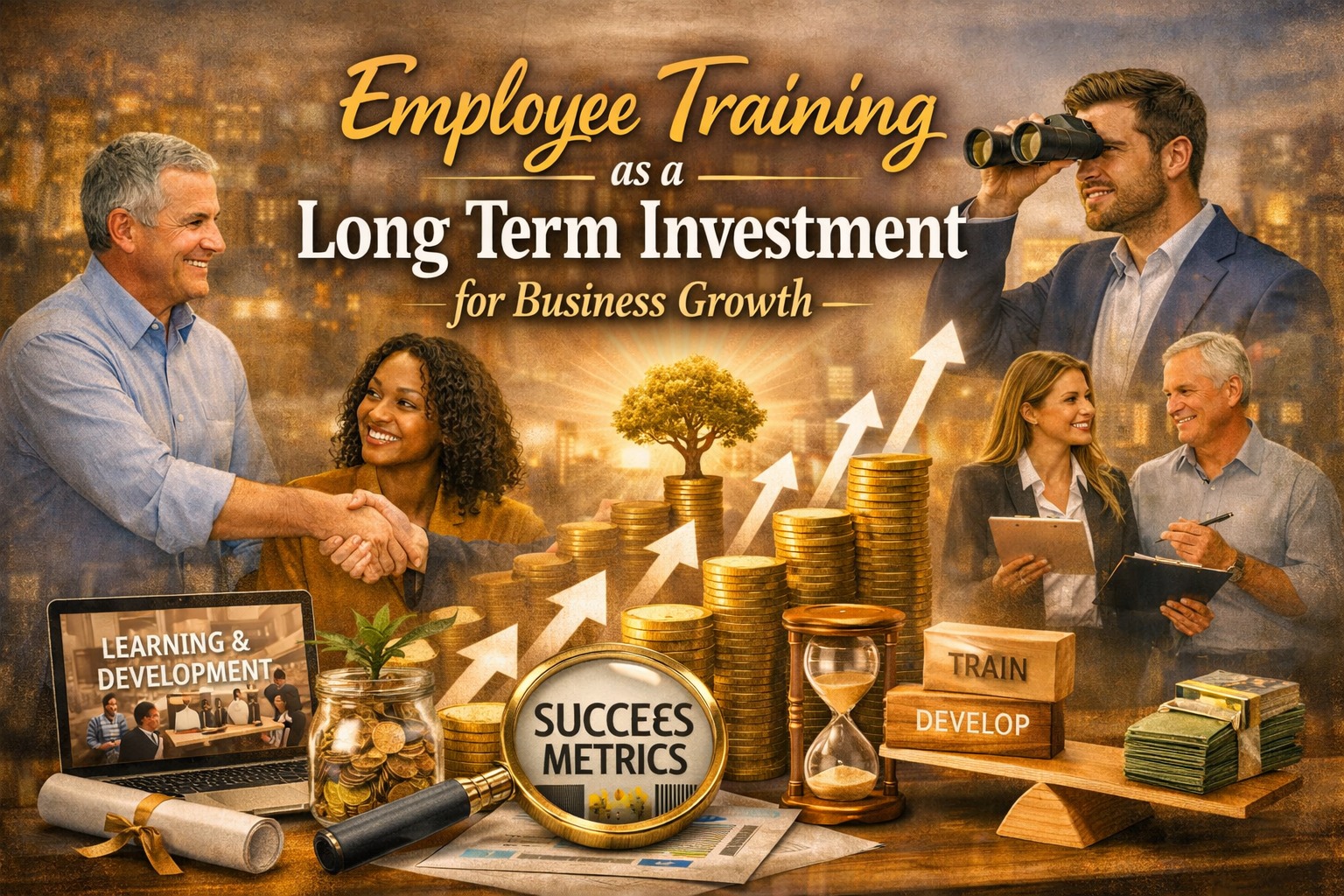
In today’s competitive market, companies must continuously improve their workforce to stay relevant and profitable. One of the most effective ways to achieve this is through employee training, which helps build stronger skills and better performance. Many organizations now see employee training as a long-term investment rather than a short-term cost. This approach supports sustainable business growth by improving efficiency, innovation, and employee satisfaction. When employees are well-trained, they contribute more effectively to overall organizational performance and long-term success.
WHY EMPLOYEE TRAINING IS A LONG-TERM INVESTMENT
Employee training is not just about improving current job performance, but also about preparing workers for future challenges. Companies that invest in workforce development often experience stronger adaptability when market changes occur. Training programs help employees develop critical thinking, communication, and technical skills that remain valuable over time. This is why employee development programs are considered a key part of strategic business planning. In the long run, this investment reduces hiring costs because businesses can promote from within instead of constantly recruiting new talent.
KEY BENEFITS FOR BUSINESS GROWTH
One of the main advantages of employee training is improved productivity, which directly contributes to business growth. Well-trained employees complete tasks faster and with fewer errors, increasing overall efficiency. Another benefit is higher employee retention, as workers are more likely to stay in companies that invest in their growth. Strong skills development also leads to better innovation, allowing companies to stay competitive in their industry. As a result, organizations experience stronger financial performance and long-term stability.
HOW TRAINING IMPROVES PRODUCTIVITY AND PERFORMANCE
Effective employee training enhances both individual and team performance by providing clear knowledge and practical skills. Employees become more confident in handling responsibilities, which reduces workplace mistakes. This leads to improved employee productivity, as tasks are completed more efficiently and consistently. Training also encourages collaboration, helping teams work better together toward shared goals. Over time, this improves overall organizational performance and strengthens the company’s competitive position in the market.
ROLE OF DIGITAL AGE TRAINING STRATEGIES
In the modern era, digital tools have transformed how employee training is delivered and managed. Online learning platforms, virtual workshops, and interactive modules make employee development programs more flexible and accessible. These digital methods allow employees to learn at their own pace while still meeting business needs. Companies that adopt modern training strategies often see faster improvements in workforce development and skill acquisition. This shows that adapting to technology is essential for achieving long-term business growth.
MEASURING ROI OF EMPLOYEE TRAINING
Measuring the return on investment (ROI) of employee training helps companies understand its real impact. Businesses can track improvements in productivity, sales performance, and employee retention rates. When skills development leads to higher efficiency, it directly increases profitability. Clear performance metrics also help organizations refine their employee development programs for better results. Over time, this proves that training is not an expense but a powerful driver of business growth.
CONCLUSION
Investing in employee training is one of the most effective strategies for achieving long-term success. It strengthens workforce development, improves employee productivity, and supports sustainable business growth. Companies that prioritize continuous learning are more likely to stay competitive in rapidly changing markets. With the right employee development programs, organizations can build skilled, motivated, and high-performing teams. Ultimately, training should be seen as a strategic investment that delivers lasting value for both employees and businesses.
Tentang Penulis
Gusti Ayu Tita P
Penulis — Universitas STEKOM
Penulis aktif yang berfokus pada isu-isu akademik, teknologi pendidikan, dan pengembangan sumber daya manusia di lingkungan kampus.