Essential Competencies For Holding Structural Positions
Gusti Ayu Tita P
12 Agustus 2026
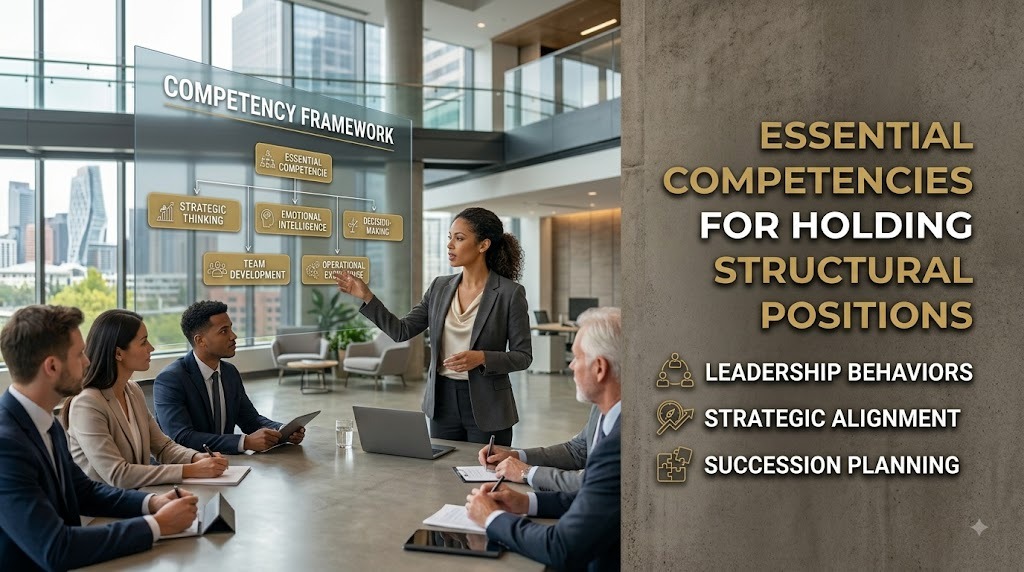
Structural positions require individuals to handle greater responsibilities, manage people, make decisions, and coordinate organizational activities. Holding such a position is not only about having formal authority or a higher title. A structural leader needs a combination of managerial competence, leadership ability, communication skills, integrity, and problem solving skills. These competencies help leaders perform their responsibilities effectively and respond to challenges in the workplace.
In modern organizations, the expectations for structural leaders continue to grow. Digital transformation, changing employee needs, limited resources, and increasingly complex organizational problems require leaders to be adaptable and professional. Strong competencies allow leaders to make better decisions while maintaining organizational goals and ethical standards. Therefore, developing the right competencies is essential for anyone who wants to perform successfully in a structural position.
UNDERSTANDING STRUCTURAL POSITIONS
A structural position is a formal organizational role that carries specific authority, responsibilities, and accountability. Individuals in these positions may supervise employees, coordinate departments, manage programs, or make decisions within their area of responsibility. The exact structure can vary depending on the organization's size, purpose, and governance system. However, the main objective is to ensure that organizational activities are properly directed and coordinated.
Holding a structural position requires more than completing individual tasks. Leaders must understand how different activities and departments contribute to organizational objectives. They also need to recognize the limits of their authority and work according to established policies. Clear responsibility and accountability provide a foundation for effective structural leadership.
MANAGERIAL COMPETENCE
Managerial competence is one of the most important abilities required in structural positions. It involves planning, organizing, directing, coordinating, monitoring, and evaluating organizational activities. A manager must be able to turn organizational objectives into practical plans that employees can understand. Strong managerial skills help ensure that resources and employee efforts are used effectively.
Managerial competence also includes the ability to prioritize tasks and manage limited resources. Leaders may have to handle several responsibilities at the same time, making time management and delegation essential. They need to identify which activities require immediate attention and which can be handled later. Good managerial competence supports efficiency, productivity, and organizational performance.
LEADERSHIP COMPETENCE
Leadership competence enables a structural leader to guide and motivate employees toward common goals. Leaders should provide clear direction while encouraging employees to contribute ideas and take responsibility. A good leader understands that different employees may require different approaches to motivation and support. Effective leadership can strengthen teamwork and improve employee engagement.
Leadership also requires the ability to demonstrate positive behavior. Leaders should be disciplined, fair, responsible, and willing to listen to employees. Their actions can influence workplace culture because employees often observe how managers respond to problems and make decisions. Strong leadership helps create trust, cooperation, and professional workplace relationships.
COMMUNICATION SKILLS
Communication is essential because structural leaders interact with employees, colleagues, senior management, and other stakeholders. Leaders must be able to explain goals, policies, instructions, and expectations clearly. They should also listen carefully to feedback and concerns. Effective communication reduces misunderstandings and helps employees perform their responsibilities correctly.
Good communication involves both speaking and listening. Leaders should adapt their communication style to different situations and audiences. Important information should be delivered accurately and at the appropriate time. Strong communication supports coordination, transparency, and effective teamwork.
DECISION MAKING SKILLS
Structural leaders often make decisions that influence employees, resources, projects, and organizational outcomes. They need to collect relevant information, identify problems, consider alternatives, and evaluate potential risks. Decisions should be based on evidence, organizational priorities, and applicable rules. Objective decision making can improve fairness and reduce unnecessary risks.
Leaders must also be able to make decisions when conditions are uncertain. Waiting for perfect information is not always possible, especially when organizations face urgent problems. A professional leader should evaluate available evidence and make a reasonable decision while remaining prepared to adjust it when new information becomes available. This ability supports responsive and responsible leadership.
PROBLEM SOLVING AND CRITICAL THINKING
Problems are unavoidable in organizational environments. Structural leaders need to identify the actual causes of problems instead of focusing only on their visible effects. Critical thinking helps leaders examine information objectively and compare different possible solutions. Analytical thinking can prevent leaders from making decisions based on assumptions or incomplete information.
Effective problem solving also requires creativity and flexibility. Some organizational problems may not have a single obvious solution. Leaders should consider the impact of each alternative on employees, resources, and organizational objectives. By combining critical thinking and practical judgment, structural leaders can address problems more effectively.
EMOTIONAL INTELLIGENCE
Emotional intelligence is an important competency for leaders because organizational work involves people with different personalities, expectations, and emotions. Leaders need to understand their own emotions and manage their reactions appropriately. They should also recognize the feelings and concerns of employees. Emotional intelligence can improve communication and workplace relationships.
A leader with good emotional intelligence can remain calm during difficult situations. This is particularly important when dealing with conflict, pressure, or unexpected problems. Empathy can also help leaders understand employee perspectives without compromising organizational standards. Strong emotional intelligence supports better conflict management and team cooperation.
INTEGRITY AND ETHICAL RESPONSIBILITY
Integrity is essential for anyone who holds authority within an organization. Leaders should be honest, fair, and consistent when carrying out their responsibilities. They must avoid using their position for personal benefits or allowing conflicts of interest to influence decisions. Ethical leadership strengthens trust among employees and other stakeholders.
Integrity should be demonstrated through everyday actions. Leaders need to follow organizational rules and apply standards consistently. If mistakes occur, responsible leaders should acknowledge them and take appropriate corrective measures. A strong commitment to integrity helps create a trustworthy and professional organizational culture.
DIGITAL COMPETENCE
Digital competence has become increasingly important for structural leaders. Organizations now use technology for communication, data management, administration, monitoring, and service delivery. Leaders need sufficient digital knowledge to understand how technology can support organizational objectives. Digital competence does not mean becoming a technology specialist, but it does require the ability to use and evaluate digital tools appropriately.
Leaders should also understand basic digital risks. Data security, privacy, cybersecurity threats, and responsible information management can affect organizational performance. Managers need to encourage employees to follow appropriate security procedures. By developing digital competence, leaders can support efficient digital transformation while reducing technology related risks.
ADAPTABILITY AND CHANGE MANAGEMENT
Organizations continuously experience changes in technology, regulations, market conditions, and stakeholder expectations. Structural leaders must be able to adapt without losing sight of organizational objectives. They should help employees understand why changes are necessary and how the changes will affect their work. Adaptability allows leaders to respond effectively to changing conditions.
Change management also requires patience and clear communication. Employees may resist new systems or procedures because they are unfamiliar with them. Leaders can reduce resistance by providing training, explaining benefits, and listening to employee concerns. Strong change management helps organizations maintain stability and productivity during transitions.
CONCLUSION
Essential competencies for holding structural positions include managerial ability, leadership, communication, decision making, problem solving, emotional intelligence, integrity, digital competence, adaptability, resource management, and teamwork. These competencies allow leaders to manage responsibilities effectively while supporting employees and organizational objectives. A structural position requires both technical understanding and the ability to manage people and processes.
Competence development should be treated as a continuous process rather than a one time preparation. Leaders who consistently improve their skills can respond more effectively to organizational challenges and technological changes. By combining professional competence, ethical responsibility, continuous learning, and strong leadership, individuals in structural positions can contribute to a more productive, adaptable, and sustainable organization.
Tentang Penulis
Gusti Ayu Tita P
Penulis — Universitas STEKOM
Penulis aktif yang berfokus pada isu-isu akademik, teknologi pendidikan, dan pengembangan sumber daya manusia di lingkungan kampus.