Essential Skills Every Civil Engineering Student Should Master
Gusti Ayu Tita P
14 Oktober 2026
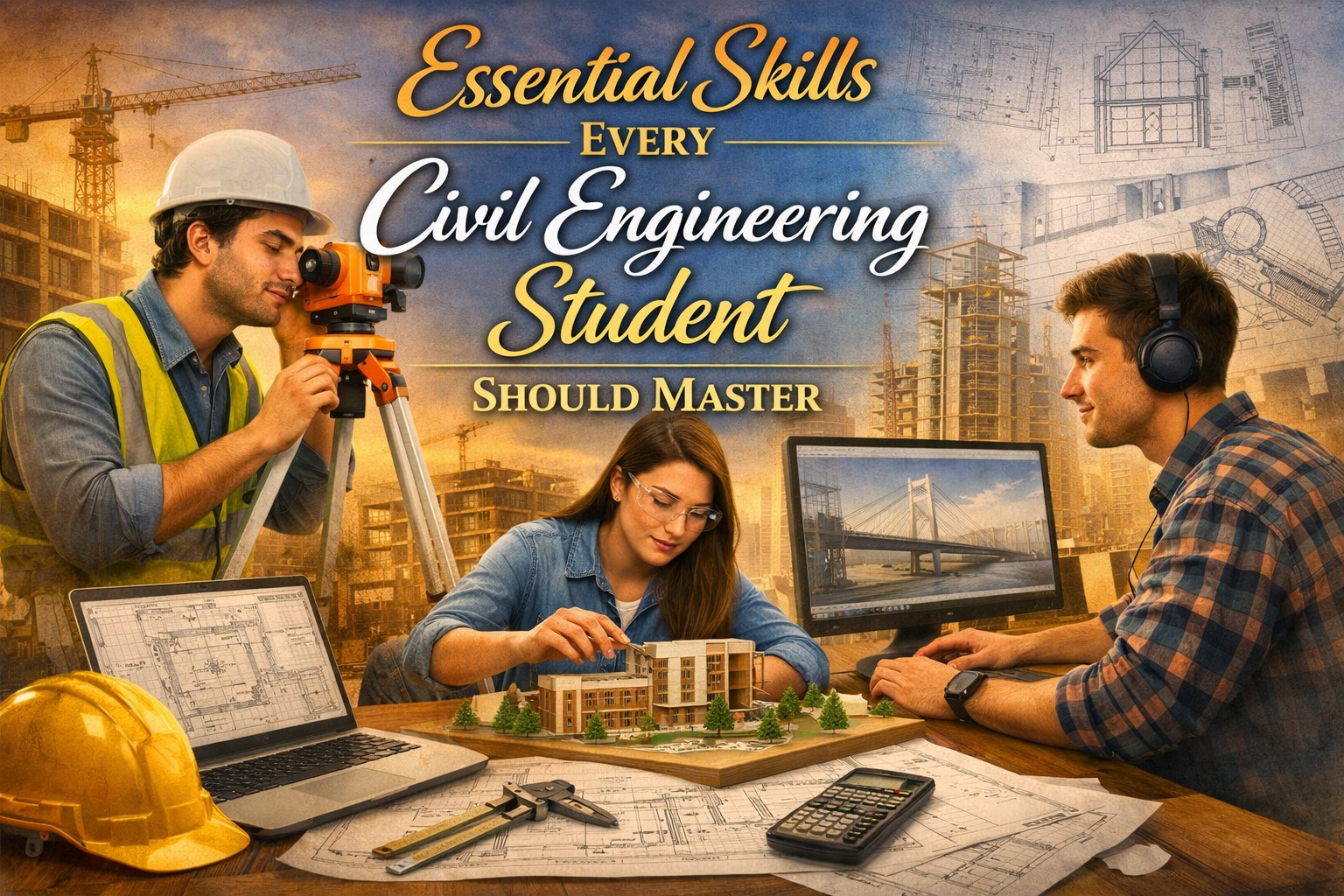
Civil engineering is one of the most respected and in-demand fields in the modern world. As infrastructure projects continue to expand globally, the need for skilled civil engineers is growing rapidly. Students pursuing a civil engineering degree must develop a combination of technical knowledge, practical abilities, and professional competencies to succeed in their future careers. Mastering these skills not only improves academic performance but also prepares students for real-world engineering challenges.
TECHNICAL KNOWLEDGE AND ENGINEERING FUNDAMENTALS
A strong understanding of engineering principles is the foundation of every successful civil engineer. Students must learn key subjects such as structural engineering, mathematics, physics, mechanics, and construction materials. These topics help them understand how buildings, bridges, roads, and other infrastructure systems function safely and efficiently.
In addition, civil engineering students should become familiar with industry standards, design codes, and engineering regulations. A solid technical background enables future engineers to make accurate calculations, create reliable designs, and solve complex construction problems. Without strong fundamentals, it becomes difficult to handle advanced engineering projects.
COMPUTER-AIDED DESIGN (CAD) AND ENGINEERING SOFTWARE SKILLS
Modern civil engineering heavily relies on technology and digital tools. Students should master Computer-Aided Design (CAD) software such as AutoCAD, Civil 3D, and other engineering applications used in the industry. These programs allow engineers to create detailed drawings, plans, and project models with greater accuracy and efficiency.
Learning engineering software also improves productivity and communication among project teams. Many construction and infrastructure companies expect graduates to have practical experience with design tools before entering the workforce. Therefore, software proficiency has become one of the most valuable skills in today's engineering environment.
PROBLEM-SOLVING AND CRITICAL THINKING ABILITIES
Civil engineers frequently encounter unexpected challenges during project planning and construction. Developing strong problem-solving skills allows students to analyze situations, identify potential risks, and create effective solutions. Every engineering project involves technical, environmental, financial, and safety considerations that require careful evaluation.
Critical thinking helps future engineers make informed decisions based on data and evidence rather than assumptions. Students who practice analytical thinking can adapt more easily to changing project requirements and complex engineering situations. These abilities are essential for ensuring successful project outcomes.
COMMUNICATION AND TEAMWORK COMPETENCIES
Engineering projects often involve collaboration among architects, contractors, government agencies, and clients. For this reason, communication skills are just as important as technical expertise. Civil engineering students should learn how to present ideas clearly, write professional reports, and explain technical concepts to different audiences.
Teamwork is equally important because large infrastructure projects require cooperation between multiple professionals. Students who can work effectively within a team are better prepared for workplace environments. Strong interpersonal skills help improve project coordination and reduce misunderstandings during project execution.
PROJECT MANAGEMENT AND ORGANIZATIONAL SKILLS
Successful engineers must understand how to manage time, resources, and project schedules effectively. Project management skills enable students to coordinate tasks, monitor progress, and ensure projects remain within budget and deadlines. These abilities become increasingly important as engineers take on leadership responsibilities.
Organization also plays a significant role in handling multiple project requirements simultaneously. Students who develop good planning habits can improve efficiency and reduce costly mistakes. Learning basic project management principles early provides a strong advantage for future career growth.
UNDERSTANDING SUSTAINABLE CONSTRUCTION PRACTICES
The construction industry is increasingly focused on sustainable construction and environmentally responsible development. Civil engineering students should understand how infrastructure projects impact natural resources, energy consumption, and environmental quality. This knowledge helps engineers design solutions that support long-term sustainability goals.
Modern infrastructure development requires balancing economic growth with environmental protection. Engineers who understand sustainability concepts can contribute to greener buildings, efficient transportation systems, and resilient urban infrastructure. As sustainability becomes a global priority, this skill is becoming more valuable than ever.
PRACTICAL FIELD EXPERIENCE AND ADAPTABILITY
Classroom learning provides essential knowledge, but practical experience helps students apply that knowledge in real-world situations. Participating in internships, site visits, laboratory activities, and construction projects allows students to gain valuable industry exposure. These experiences help bridge the gap between theory and practice.
Adaptability is another crucial skill because engineering technologies and construction methods continue to evolve. Students who remain open to learning new techniques and innovations will be better prepared for future industry demands. Continuous learning is a key characteristic of successful civil engineers.
CONCLUSION
Mastering the essential skills required in civil engineering is critical for academic success and professional development. Strong technical knowledge, CAD proficiency, problem-solving abilities, communication skills, project management expertise, and an understanding of sustainable construction provide a solid foundation for a successful engineering career. By continuously developing these competencies and gaining practical experience, civil engineering students can confidently contribute to the future of infrastructure development and become valuable professionals in the engineering industry.
Tentang Penulis
Gusti Ayu Tita P
Penulis — Universitas STEKOM
Penulis aktif yang berfokus pada isu-isu akademik, teknologi pendidikan, dan pengembangan sumber daya manusia di lingkungan kampus.