
Essential Skills Every Vocational School Graduate Needs for Career Success
Gusti Ayu Tita P
30 September 2026
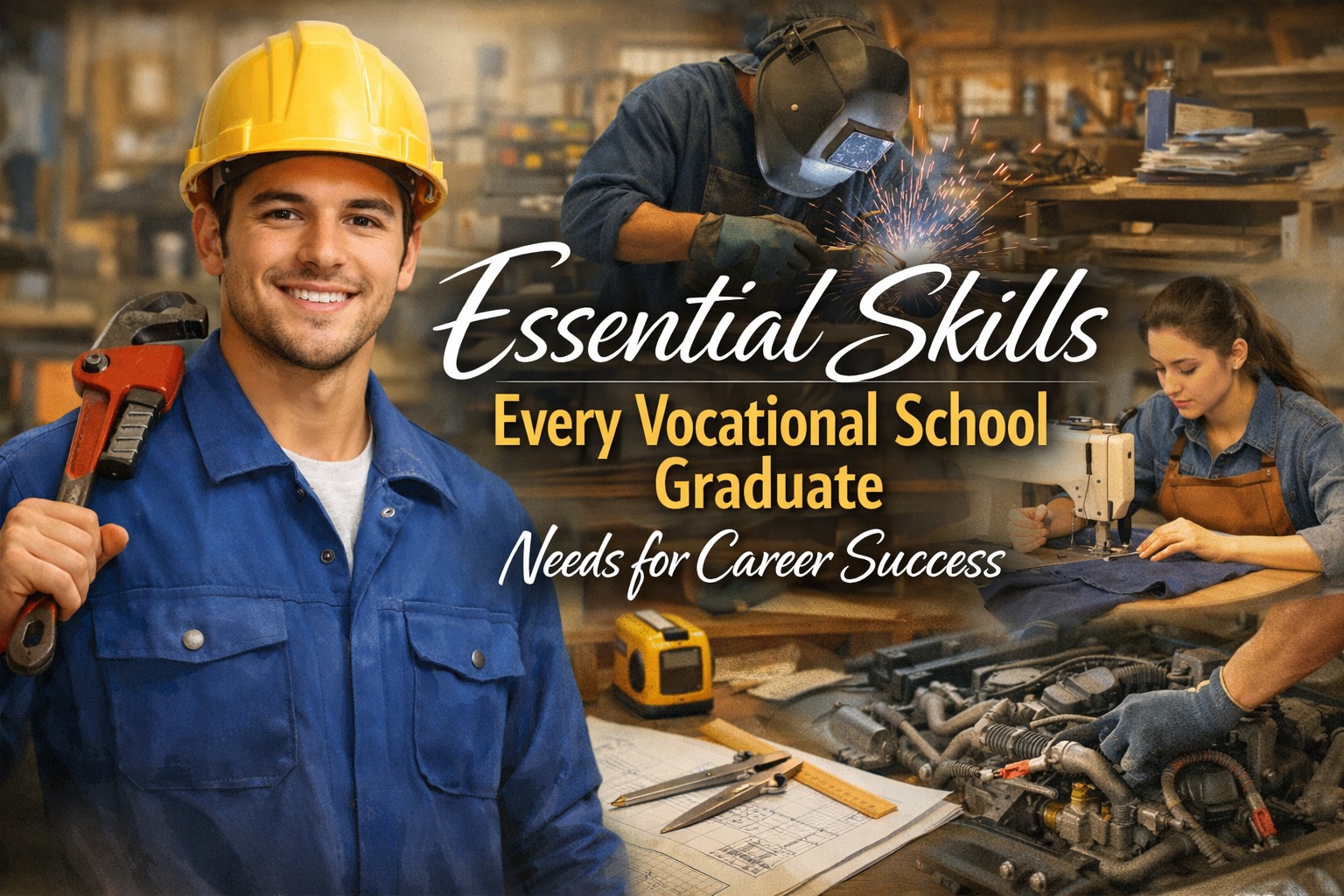
Entering the workforce after graduating from vocational school can be an exciting but challenging experience. Employers are looking for candidates who can contribute to the workplace, adapt to changes, and continue developing their abilities. For this reason, having a vocational education alone is not always enough to guarantee long-term career growth.
Vocational school graduates need a combination of technical abilities, soft skills, digital knowledge, and professional attitudes to compete in the modern job market. By developing these essential skills, graduates can improve their employability, perform better at work, and build a stronger foundation for long-term career success.
TECHNICAL SKILLS RELATED TO YOUR CAREER FIELD
Technical skills are one of the most important advantages of vocational school graduates. These skills are developed through practical training, classroom learning, workshops, projects, and internships. Depending on the study program, graduates may learn skills related to automotive technology, information technology, design, hospitality, business, healthcare support, engineering, or other professional fields.
However, technical skills should continue to improve after graduation. Industries constantly introduce new tools, equipment, software, and working methods. Graduates who regularly update their technical knowledge can remain more competitive and adapt more easily to changing industry requirements.
DIGITAL LITERACY
Digital literacy has become an essential skill in almost every modern workplace. Even jobs that are not directly related to technology often require employees to use computers, digital applications, online platforms, and workplace software. Basic digital knowledge can therefore help vocational graduates perform their daily responsibilities more efficiently.
Graduates should become comfortable with tools that are commonly used in their chosen industry. These may include office applications, design software, communication platforms, data management systems, or specialized technical programs. Strong digital literacy can improve productivity and create additional career opportunities.
COMMUNICATION SKILLS
Effective communication is essential for building strong professional relationships. Employees need to communicate with supervisors, coworkers, customers, clients, and business partners in a clear and respectful manner. Good communication can reduce misunderstandings and help teams work more efficiently.
Communication includes more than speaking. Graduates should also develop active listening, professional writing, presentation, and interpersonal communication skills. The ability to explain ideas clearly and listen carefully can make a significant difference in the workplace.
PROBLEM SOLVING SKILLS
Employers value workers who can solve problems rather than waiting for someone else to provide every solution. Vocational education often gives students practical experience that can help them develop critical thinking and problem solving abilities. These skills are useful when dealing with technical problems, customer complaints, workplace mistakes, or unexpected situations.
Strong problem solving requires employees to understand the situation, identify the main cause, consider possible solutions, and choose the most appropriate action. Graduates who develop this ability can become more independent and valuable members of a professional team.
TEAMWORK AND COLLABORATION
Most modern workplaces require employees to work with other people. Teamwork skills help vocational graduates collaborate with colleagues who may have different backgrounds, experiences, and responsibilities. Cooperation, respect, flexibility, and responsibility are important qualities for successful teamwork.
A good team member understands how to contribute while also respecting the ideas of others. Graduates should be willing to share information, support colleagues, accept constructive feedback, and focus on achieving shared goals. Strong collaboration skills can also improve workplace relationships and productivity.
TIME MANAGEMENT
Time management is an important skill for employees who want to perform their responsibilities effectively. Graduates may need to complete several tasks, meet deadlines, attend meetings, and manage unexpected responsibilities. Without proper organization, even simple tasks can become difficult to complete.
Effective time management involves setting priorities, creating schedules, avoiding unnecessary delays, and completing tasks on time. Employees who manage their time well are often seen as more reliable and professional by employers.
ADAPTABILITY AND WILLINGNESS TO LEARN
The modern job market continues to change because of technology, automation, and new business trends. As a result, vocational graduates must be prepared to learn new methods and adapt to unfamiliar situations. Adaptability allows employees to remain productive even when their responsibilities or working environments change.
A willingness to learn is equally important. Graduates should not assume that their education ends when they receive their diploma. Continuous learning through training, courses, certifications, and workplace experience can help them remain relevant and improve their career prospects.
PROFESSIONALISM AND WORK ETHIC
Professionalism reflects how employees behave and perform their responsibilities. Employers value workers who demonstrate discipline, honesty, responsibility, punctuality, and respect. These qualities can influence how managers and coworkers view an employee.
A strong work ethic means completing tasks seriously and maintaining high standards even when supervision is limited. Vocational graduates who consistently show professional behavior can build trust and may receive greater responsibilities and opportunities for career advancement.
CUSTOMER SERVICE SKILLS
Customer service skills are important in many industries, including hospitality, retail, business, technology, healthcare support, and service-related professions. Employees often need to understand customer needs, respond politely, and provide effective solutions. Positive customer experiences can directly influence the success of a business.
Graduates should learn how to communicate professionally with different types of customers. Patience, empathy, problem solving, and clear communication can help employees handle difficult situations more effectively and build strong relationships with customers.
LEADERSHIP SKILLS
Leadership is not only important for managers or business owners. Vocational graduates can benefit from developing leadership skills early in their careers. Initiative, decision making, responsibility, and the ability to motivate others are valuable qualities in many professional environments.
A person can demonstrate leadership by taking responsibility for tasks, helping coworkers, suggesting improvements, and remaining calm during challenges. Developing these skills can prepare graduates for future promotions and greater professional responsibilities.
FINANCIAL AND BUSINESS AWARENESS
Basic financial and business knowledge can help vocational graduates understand how organizations operate. Employees should have a general understanding of costs, revenue, productivity, customer value, and business objectives. This knowledge can help them make better decisions in their professional roles.
Financial awareness is also useful for graduates who want to start a business or work as freelancers. Understanding budgeting, pricing, expenses, and income can help them manage their professional activities more effectively and make smarter career decisions.
NETWORKING SKILLS
Professional networking can help graduates discover new career opportunities and learn from experienced professionals. Building relationships with teachers, classmates, employers, coworkers, and industry professionals can provide valuable information and connections.
Networking does not always mean asking people for jobs. It involves building genuine professional relationships and sharing knowledge. Over time, a strong professional network can lead to career opportunities, recommendations, partnerships, and valuable advice.
CONCLUSION
Vocational school graduates need more than technical knowledge to achieve long-term career success. Digital literacy, communication, problem solving, teamwork, adaptability, time management, professionalism, and continuous learning are also essential skills in the modern workforce.
By developing these abilities, graduates can become more confident, competitive, and prepared for workplace challenges. The combination of technical expertise and strong professional skills can create better employment opportunities and provide a solid foundation for long-term career development.
Tentang Penulis
Gusti Ayu Tita P
Penulis — Universitas STEKOM
Penulis aktif yang berfokus pada isu-isu akademik, teknologi pendidikan, dan pengembangan sumber daya manusia di lingkungan kampus.



