Exploring the Factors Behind Mass Protests
Gusti Ayu Tita P
1 September 2026
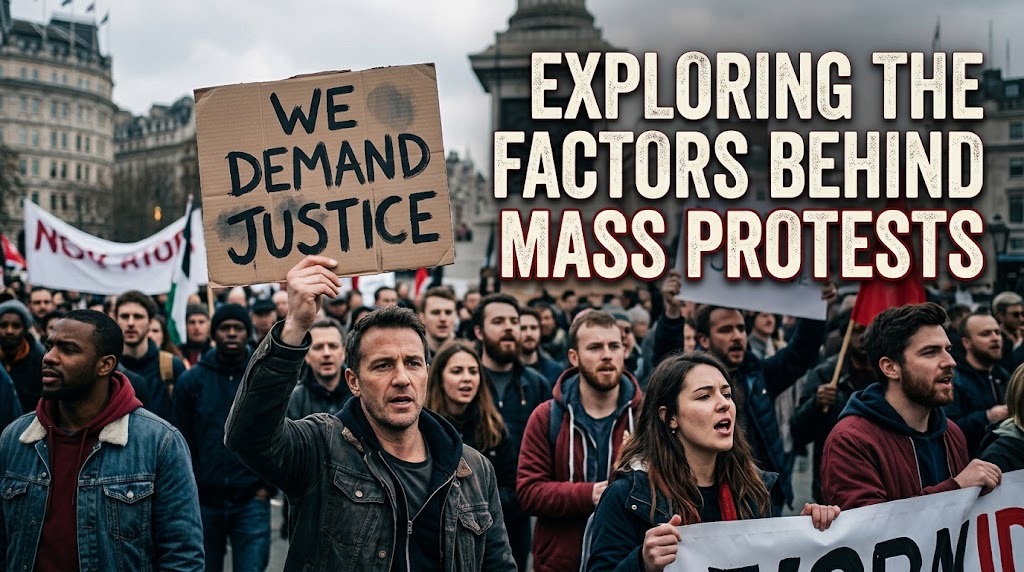
Mass protests usually emerge when public dissatisfaction grows and people feel the need to express their concerns collectively. The reasons behind a protest can vary, ranging from economic problems and government policies to social inequality and public frustration. In many situations, a single event may become the final trigger after concerns have existed for some time. Understanding these factors is important because the visible protest is often only the result of deeper problems within society.
ECONOMIC PRESSURE CAN TRIGGER PUBLIC DISSATISFACTION
Economic conditions can strongly influence people's feelings about their future. Rising daily expenses, limited employment opportunities, unstable income, and difficulty meeting basic needs can create frustration. When similar problems affect many people, individual difficulties may develop into a shared economic concern. This can encourage communities to express their dissatisfaction collectively.
Economic pressure can become more serious when people feel that existing policies do not adequately address their situation. Expectations about better wages, affordable services, and improved economic opportunities can become part of public demands. When these expectations remain unanswered, frustration may continue to grow. Economic dissatisfaction can eventually become one of the factors encouraging people to participate in mass protests.
CONTROVERSIAL POLICIES CAN CREATE REACTIONS
Government policies can become a major reason for public demonstrations when citizens believe a decision will negatively affect their lives. Changes involving education, employment, taxation, transportation, public services, or other important areas can receive strong reactions. People may protest when they consider a policy unfair, harmful, or insufficiently explained. Policy dissatisfaction can therefore develop into collective action.
The reaction to a policy is not always based on its actual effect alone. Public understanding, communication, and expectations can influence how people respond. If citizens feel that their concerns were not considered before a decision was made, opposition may become stronger. Transparent communication can help reduce misunderstanding, although disagreement may still remain.
SOCIAL INEQUALITY CREATES DEEPER CONCERNS
Differences in opportunities and living conditions can create feelings of unfairness. People may question why some groups have better access to education, employment, public services, or economic opportunities. When these differences are considered persistent or unjust, they can become social grievances. Such grievances may encourage people to support collective demands.
Social inequality can also affect how communities view institutions and one another. If people believe that certain groups receive unfair advantages, trust can decline. Over time, this can create frustration that extends beyond a single policy or event. Perceived injustice can become a powerful reason for people to express their concerns publicly.
LACK OF TRUST CAN STRENGTHEN PROTESTS
Public trust plays an important role in the relationship between citizens and institutions. People are more likely to accept difficult decisions when they believe authorities are acting transparently and responsibly. When trust declines, even ordinary policy changes can receive stronger criticism. Low institutional trust can make existing public concerns more difficult to resolve.
Trust can decline for many reasons, including unclear communication, unmet promises, or repeated dissatisfaction with public services. When people feel that their concerns are not being heard, they may look for alternative ways to gain attention. Mass protests can become one method of making those concerns more visible. This does not mean every protest is caused by distrust, but institutional confidence can influence public reactions.
A SINGLE EVENT CAN BECOME A TRIGGER
Sometimes a protest appears to begin because of one specific event. A controversial announcement, unexpected decision, public incident, or sudden change can quickly attract attention. However, the event may only be a trigger rather than the complete cause. Existing frustrations can make society more sensitive to a new development.
This explains why similar events can produce different reactions at different times. If public dissatisfaction is already high, a new event may encourage people to act collectively. If public confidence is stronger, the same event may result mainly in discussion or criticism. Accumulated frustration can therefore influence the scale of a public response.
SOCIAL MEDIA MAKES MOBILIZATION FASTER
Social media has changed how people communicate about public issues. Information can spread quickly through videos, posts, discussions, and online communities. People who share similar concerns can find one another even when they live in different locations. Digital communication can therefore help transform individual opinions into broader conversations.
Social media can also make protest organization easier by allowing people to share announcements and updates. However, not every piece of information online is accurate. False claims or misleading content can increase confusion and tension. Responsible users should check information before sharing it so that online discussions remain useful and trustworthy.
COLLECTIVE IDENTITY ENCOURAGES PARTICIPATION
People may become more willing to participate when they feel connected to others who share their concerns. A sense of belonging can make individuals feel that their involvement has greater meaning. This creates a collective identity around a particular issue or movement. Shared experiences can strengthen relationships among participants.
Collective identity does not mean that everyone involved has exactly the same opinion. A large protest can include people with different backgrounds and personal motivations. What connects them may simply be a common concern or demand. Shared objectives can provide enough common ground for people to act together.
ORGANIZATION HELPS TURN CONCERNS INTO ACTION
Public dissatisfaction does not automatically result in a mass protest. People also need ways to communicate, coordinate, and organize participation. Student groups, community organizations, workers, social communities, and other networks can help connect individuals with similar concerns. Organized participation can make collective action more effective.
Good organization can also help participants understand the purpose of an action. Clear information about demands, locations, schedules, and expected behavior can reduce confusion. Without coordination, a large number of people may have difficulty communicating a unified message. Strong communication networks can therefore influence whether a public concern develops into a larger movement.
MEDIA ATTENTION CAN EXPAND A PROTEST
Mass protests can attract attention from television, online news, newspapers, and social media users. Once an event receives widespread coverage, people who were not present can learn about the concerns behind it. This can transform a local issue into a broader public conversation. Media attention can therefore increase the visibility of a movement.
However, media coverage can emphasize different aspects of a protest. Some reports may focus on demands, while others may concentrate on disruption or conflict. This can influence how people outside the protest understand the event. Clear communication from participants can help ensure that the main concerns remain visible alongside other developments.
PUBLIC EXPECTATIONS CAN GROW OVER TIME
Protests can also emerge when there is a gap between what people expect and what they experience. Citizens may expect improvements in public services, economic opportunities, education, or government responsiveness. When reality does not meet these expectations for a long period, disappointment can increase. Unmet expectations can become a deeper source of public dissatisfaction.
The size of this gap can influence how people respond to new developments. A relatively small issue may become significant when it confirms existing feelings of disappointment. People may begin to see separate problems as part of a larger pattern. This can strengthen collective frustration and encourage broader participation.
CONCLUSION
Mass protests rarely have one simple cause. They can develop through a combination of economic pressure, controversial policies, social inequality, declining trust, unmet expectations, social media, collective identity, and organizational networks. A specific event may act as the immediate trigger, but deeper concerns often exist beforehand. The interaction between these factors can determine whether dissatisfaction remains individual or develops into collective action.
Understanding the factors behind mass protests helps society look beyond the crowd and examine the concerns that motivate participation. Open communication, responsible institutions, accurate information, and meaningful public dialogue can provide opportunities to address problems before tensions become more serious. Protests may not always produce immediate solutions, but they can reveal issues that society needs to discuss. Recognizing these underlying concerns is an important step toward understanding social change.
Tentang Penulis
Gusti Ayu Tita P
Penulis — Universitas STEKOM
Penulis aktif yang berfokus pada isu-isu akademik, teknologi pendidikan, dan pengembangan sumber daya manusia di lingkungan kampus.