
From Theory to Action Assessing the Contribution of Community Service Program to Student Self-Development
Gusti Ayu Tita P
27 Februari 2026
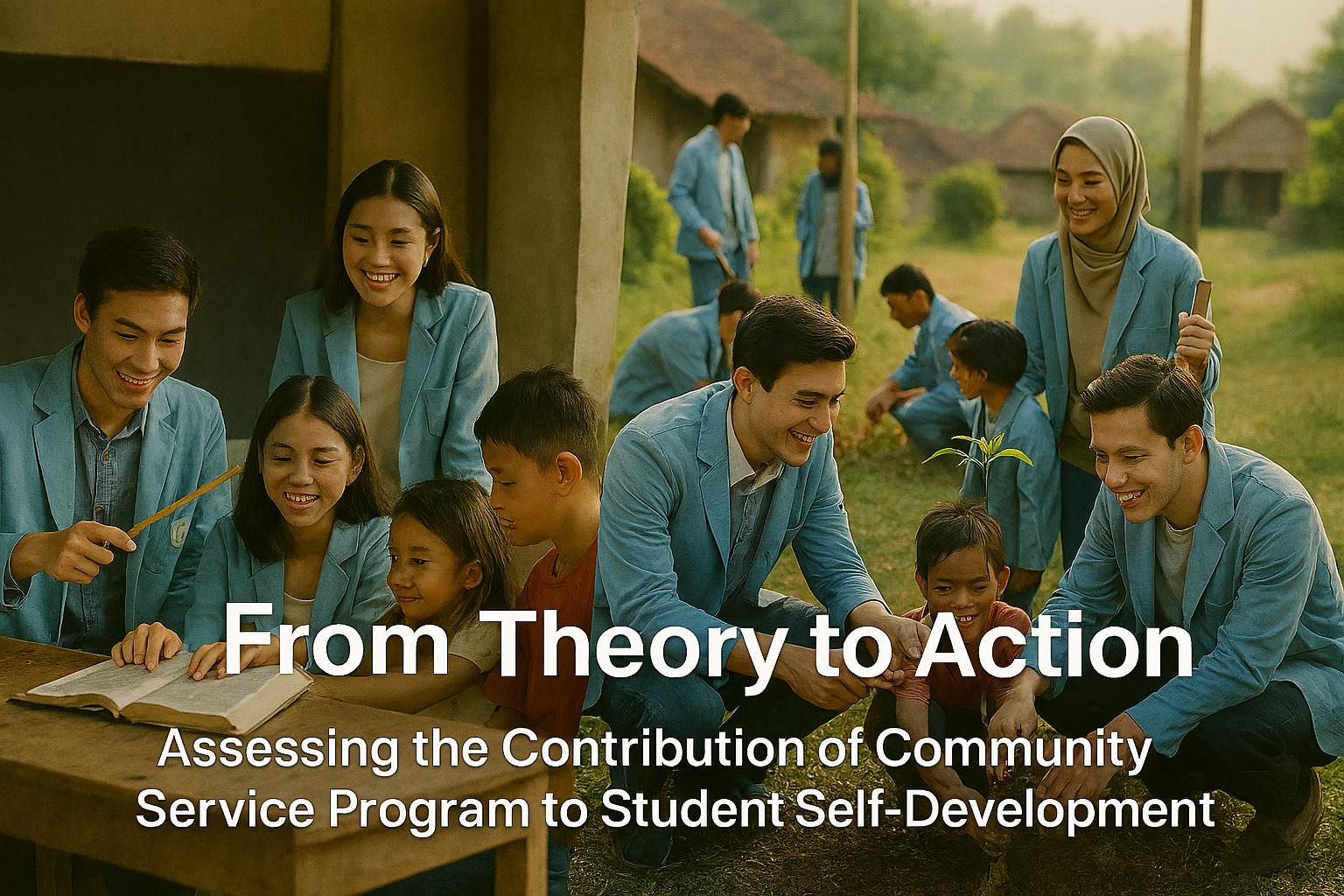
Community service programs provide students with opportunities to apply knowledge beyond the classroom. Through direct interaction with communities, students can experience real social, economic, educational, and environmental challenges. These experiences can help students develop skills that are difficult to gain through theoretical learning alone. Community service can therefore become a bridge between academic knowledge and practical experience. When planned and evaluated properly, it can contribute significantly to student self-development.
UNDERSTANDING COMMUNITY SERVICE PROGRAMS
A community service program is an educational activity that encourages students to contribute their knowledge and skills to society. The activities may include education, entrepreneurship support, environmental programs, health campaigns, digital literacy, or other initiatives based on community needs. Students are expected to participate actively rather than simply observe existing problems. This makes community service a form of experiential learning.
The effectiveness of a program depends on how well its activities match actual community conditions. Students need to understand local needs before designing solutions. They also need to communicate with residents and other stakeholders throughout the process. This approach helps students understand that real world problems often require flexible and collaborative solutions.
CONNECTING THEORY WITH REAL WORLD PROBLEMS
One of the greatest benefits of community service is the opportunity to transform theoretical knowledge into practical action. Students can use concepts learned in class to analyze problems and develop appropriate solutions. For example, students with business knowledge may help small businesses improve marketing strategies or digital promotion. Students from education-related fields may contribute through tutoring or literacy activities.
This process can reveal the difference between understanding a concept and applying it effectively. Real communities have different resources, priorities, and limitations that may not appear in textbooks. Students therefore need to adjust their knowledge to specific situations. This experience strengthens practical thinking and problem solving skills.
DEVELOPING COMMUNICATION SKILLS
Community service requires students to communicate with people from different backgrounds. They may interact with children, parents, business owners, community leaders, government representatives, and other residents. Such interactions can improve verbal communication, active listening, and interpersonal skills. Students also learn how to explain ideas using language that is easy for others to understand.
Communication becomes particularly important when students work on community projects as a team. They need to discuss plans, divide responsibilities, handle disagreements, and report progress. These experiences teach students that effective communication involves not only speaking but also listening and understanding different perspectives. Such skills are valuable in both professional and social environments.
BUILDING CONFIDENCE AND INDEPENDENCE
Community service can encourage students to become more confident and independent. They may be required to speak in front of groups, lead activities, make decisions, or solve unexpected problems. Successfully completing these responsibilities can strengthen their belief in their own abilities. Even when mistakes occur, students can learn from the experience and improve their approach.
Independence also develops because students often have to manage activities with limited supervision. They need to organize schedules, prepare materials, coordinate with community members, and respond to changing circumstances. These responsibilities encourage initiative and personal accountability. Over time, students may become more comfortable taking responsibility for their decisions.
STRENGTHENING PROBLEM SOLVING ABILITIES
Community problems rarely have simple solutions. Students may encounter limited resources, low participation, communication barriers, or unexpected changes during implementation. These situations require them to identify the main problem and consider realistic alternatives. As a result, community service can strengthen critical thinking and problem solving abilities.
Students also learn that a solution must fit the local context. A strategy that works in one community may not produce the same results elsewhere. This encourages students to gather information, listen to residents, evaluate available resources, and adjust their plans. Such flexibility is an important part of adaptive learning and decision making.
DEVELOPING LEADERSHIP AND TEAMWORK
Many community service activities require students to work in teams. Each member may have different responsibilities, such as planning, communication, documentation, logistics, or implementation. Working together teaches students how to coordinate tasks and respect different abilities. This can strengthen teamwork and leadership skills.
Leadership in community service is not simply about giving instructions. Effective student leaders need to listen to team members, encourage participation, manage conflicts, and make responsible decisions. Students can learn that leadership requires responsibility, empathy, and cooperation. These experiences can become valuable preparation for future academic and professional environments.
INCREASING SOCIAL AWARENESS
Direct interaction with communities can help students develop a deeper understanding of social realities. Students may encounter challenges related to education, economic opportunities, environmental conditions, technology access, or other local issues. Such experiences can broaden their perspective beyond their own daily environment. They may begin to understand that different communities have different needs and priorities.
Social awareness can also encourage students to become more responsible citizens. Instead of viewing social problems only as theoretical topics, students experience their real consequences. This can develop empathy, social responsibility, and respect for diversity. These qualities are important components of well rounded personal development.
ENCOURAGING CREATIVITY AND INNOVATION
Community service often requires students to find new approaches when existing methods are not effective. Limited resources can encourage them to develop creative and practical solutions. For example, students may use digital platforms to promote local products or create simple educational materials for children. Such activities allow students to experiment with ideas and evaluate their usefulness.
Innovation does not always mean creating sophisticated technology. A simple improvement that solves a real community problem can also be considered valuable innovation. Students learn to focus on usefulness, accessibility, and local needs rather than simply producing something new. This mindset can strengthen their ability to innovate in future academic and professional settings.
DEVELOPING PROFESSIONAL SKILLS
Community service can provide an early opportunity for students to practice skills that are relevant to the workplace. These may include project management, teamwork, communication, time management, presentation, documentation, and problem solving. Students can experience how responsibilities are divided and how deadlines affect project implementation. These practical experiences can complement formal academic learning.
Community projects can also help students identify their strengths and weaknesses. A student who initially struggles with public speaking may gain confidence after repeatedly communicating with residents. Another student may discover an interest in project planning or social entrepreneurship. This process of self-discovery can help students make better decisions about their future development.
LEARNING FROM CHALLENGES AND FAILURE
Not every community service activity produces the expected results. Some programs may receive limited participation, experience logistical problems, or fail to achieve their initial targets. These situations can become valuable learning opportunities when students are encouraged to reflect on what happened. Failure can become part of the learning process rather than simply being viewed as a negative outcome.
Reflection allows students to identify what worked, what did not work, and what should be changed. They can compare their original plans with actual results and develop improved strategies. This process builds resilience and adaptability, which are important for personal and professional growth. Students learn that successful projects often require adjustment rather than perfect execution from the beginning.
THE IMPORTANCE OF REFLECTION AND EVALUATION
The benefits of community service are stronger when students have opportunities to reflect on their experiences. Reflection can help them connect practical activities with academic concepts and personal development goals. Students can write reports, participate in discussions, or present their experiences after completing projects. These activities encourage them to think critically about what they have learned.
Evaluation should also consider the impact on the community. Students need to ask whether their activities actually addressed local needs and whether the results can continue after the program ends. This creates a more responsible approach to community engagement. Impact evaluation and reflection can transform community service from a temporary activity into a meaningful learning experience.
CHALLENGES IN COMMUNITY SERVICE PROGRAMS
Community service programs also face several challenges. Students may have limited understanding of local conditions, communication difficulties, insufficient resources, or unrealistic expectations about what they can accomplish. Projects may also become ineffective if students design activities without sufficiently involving the community. These challenges show why community participation is essential.
A strong program should begin with careful observation and discussion with local stakeholders. Students should identify needs together with the community rather than assuming they already know the best solution. Regular communication can help identify problems before they become serious. With participatory planning and continuous evaluation, community service can become more relevant and sustainable.
CONCLUSION
Community service can make an important contribution to student self-development by turning academic theory into practical experience. Through direct community engagement, students can develop communication, leadership, teamwork, problem solving, creativity, independence, and social awareness. They also learn how to respond to unexpected challenges and reflect on their own strengths and weaknesses. However, the success of a community service program depends on careful planning, community participation, meaningful reflection, and continuous evaluation. When these elements are combined, community service becomes more than an academic requirement and can serve as a valuable pathway for developing capable, adaptable, responsible, and socially aware students.
Tentang Penulis
Gusti Ayu Tita P
Penulis — Universitas STEKOM
Penulis aktif yang berfokus pada isu-isu akademik, teknologi pendidikan, dan pengembangan sumber daya manusia di lingkungan kampus.















