Governor Strategies for Developing Regional Potential
Gusti Ayu Tita P
12 Agustus 2026
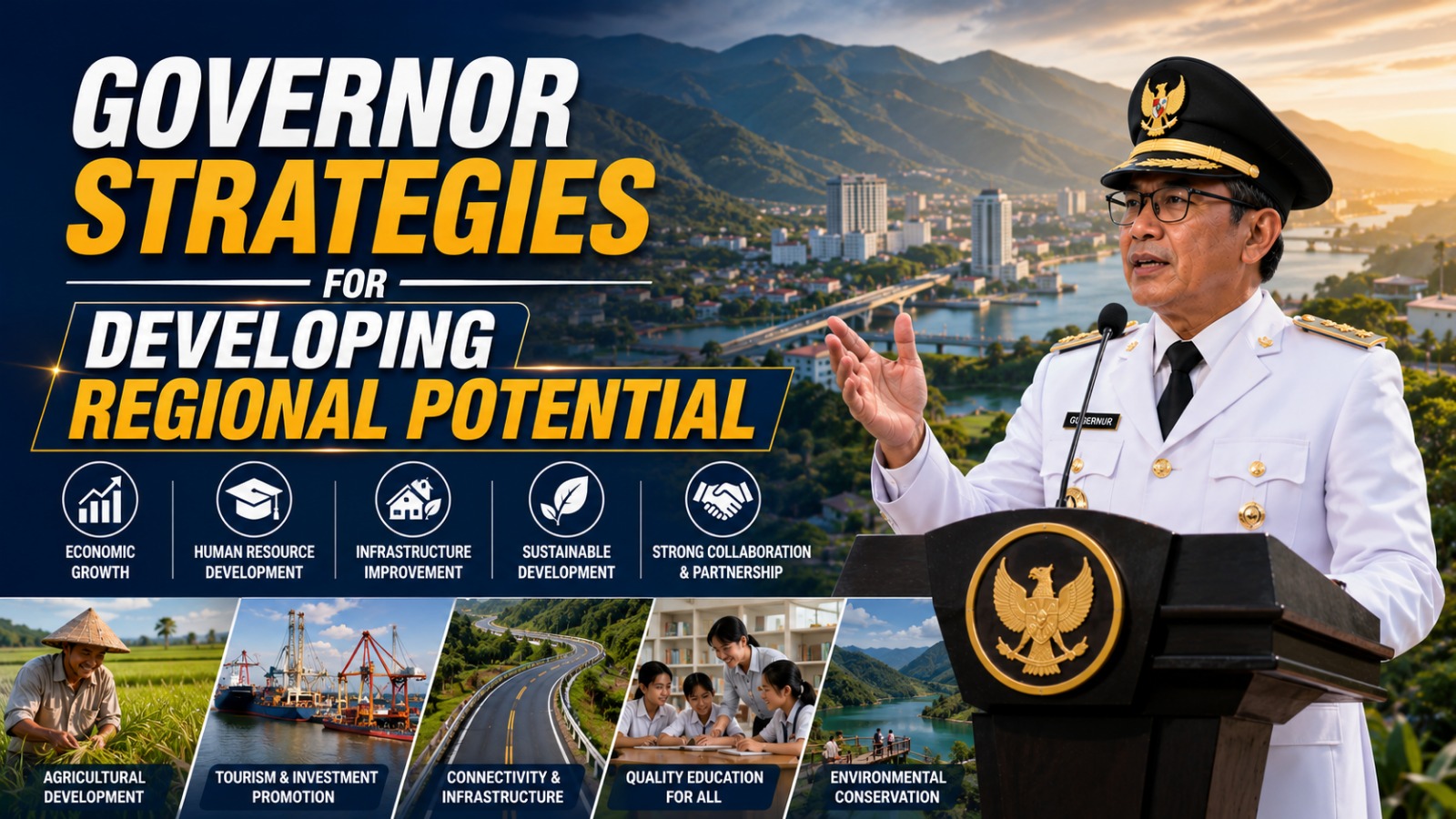
Every region has unique potential that can support economic growth and improve public welfare. This potential may come from agriculture, fisheries, tourism, natural resources, manufacturing, creative industries, technology, or human resources. Governors have an important role in creating policies that help these strengths develop in a productive and sustainable way. Effective regional development requires clear planning, strong coordination, and cooperation with local communities.
Developing regional potential is not simply about increasing economic activity. Governors also need to consider infrastructure, education, investment, environmental protection, and equal access to opportunities. The right strategy should match the characteristics of each region rather than applying the same approach everywhere. When managed properly, regional potential can create jobs, strengthen local businesses, and improve people's quality of life.
IDENTIFYING REGIONAL STRENGTHS
The first step in developing regional potential is identifying the strengths and needs of each area. Governors can use reliable data to understand the region's economic sectors, natural resources, infrastructure, workforce, and local industries. This information helps the provincial government determine which sectors have the greatest opportunities for development. Accurate mapping also prevents development policies from being based only on assumptions.
Each region may require a different development strategy. An area with strong agricultural production may need better irrigation, storage, processing facilities, and market access. A tourism destination may require better transportation, visitor facilities, promotion, and environmental management. Understanding these differences allows governors to create policies that are more targeted and useful.
IMPROVING HUMAN RESOURCE QUALITY
Human resources are essential for turning regional potential into real economic opportunities. Governors can support education, vocational training, professional development, and skills programs that match local industries. Workers with relevant skills are more capable of using technology, improving productivity, and creating innovative products. Strong human resources can also make a region more attractive to businesses and investors.
Training programs should be connected to actual labor market needs. For example, tourism areas may need workers with hospitality, language, marketing, and digital skills. Industrial regions may require technical, engineering, and manufacturing competencies. By connecting education with regional economic opportunities, governments can reduce skills gaps and create better employment prospects for local communities.
DEVELOPING INFRASTRUCTURE
Good infrastructure is a foundation for regional economic development. Roads, bridges, transportation systems, electricity, clean water, telecommunications, and digital connectivity can make economic activities more efficient. Better infrastructure allows businesses to move products more easily and helps communities access markets and public services. It can also encourage investment in areas that previously had limited economic activity.
Governors need to prioritize infrastructure according to regional needs and development plans. Infrastructure projects should not focus only on major urban centers while leaving less-developed areas behind. Connectivity between rural areas, towns, industrial centers, and markets can support more balanced growth. Infrastructure planning should also consider long-term maintenance and environmental impacts.
SUPPORTING LOCAL BUSINESSES AND SMALL ENTERPRISES
Local businesses and small enterprises can play a major role in developing regional economies. Governors can support them through business training, access to financing, digitalization, product development, and market opportunities. Stronger local businesses can create employment and keep more economic activity within the region. They can also become part of supply chains connected to larger companies.
Improving product quality is equally important. Local producers may need assistance with packaging, branding, certification, distribution, and digital marketing. Government programs can help businesses meet market standards and reach customers outside their immediate area. This approach allows local products to compete more effectively at national and international levels.
ATTRACTING RESPONSIBLE INVESTMENT
Investment can accelerate regional development by providing capital, technology, infrastructure, and employment opportunities. Governors can promote regional investment opportunities and create a business environment that provides clarity and efficient public services. Investors are more likely to consider a region when regulations are clear, infrastructure is adequate, and government services are reliable. Investment policies should also be aligned with the region's long-term development priorities.
However, attracting investment should not focus only on the amount of capital entering the region. Governors also need to consider environmental protection, local employment, community interests, and compliance with regulations. Responsible investment can create long-term benefits instead of producing short-term economic gains. Cooperation between investors, local businesses, communities, and government can make investment more inclusive.
DEVELOPING TOURISM AND CREATIVE INDUSTRIES
Tourism can become a major source of regional income when local attractions are managed effectively. Governors can support tourism through infrastructure improvements, destination management, promotion, workforce development, and cooperation with local communities. Natural landscapes, cultural traditions, local food, and historical sites can become valuable tourism assets. Tourism growth can also create opportunities for accommodation, transportation, food businesses, handicrafts, and other services.
Creative industries can strengthen the tourism sector by giving destinations unique products and experiences. Local crafts, fashion, culinary products, art, music, and digital content can become part of a region's identity. Government support can include training, exhibitions, promotional events, and access to digital markets. When tourism and creative industries develop together, their economic benefits can reach a wider range of local communities.
USING TECHNOLOGY AND DIGITALIZATION
Technology can help regions improve both government services and economic activities. Digital platforms can be used to promote local products, support tourism marketing, improve public services, and connect businesses with wider markets. Governors can also encourage data-based policymaking so that regional programs are built around measurable needs. Digital transformation can make government and business processes faster and more efficient.
Local businesses should also be supported in adopting digital tools. Training in online marketing, e-commerce, digital payments, data management, and business applications can improve competitiveness. Digital infrastructure is especially important for communities outside major cities. Wider digital access can allow people in less-connected areas to participate in the modern economy.
PROMOTING VALUE-ADDED LOCAL PRODUCTS
Regions can gain greater economic benefits when local resources are processed into higher-value products. Agricultural, fishery, forestry, and other local products can be developed into processed goods instead of being sold only as raw materials. Value-added production can increase income for producers and create additional employment opportunities. It can also encourage the growth of local processing industries.
Governors can support this process through training, technology, infrastructure, certification assistance, and market development. Product quality and safety standards are important for entering larger markets. Strong local branding can also help products become more recognizable. By improving the entire production chain, regional resources can generate greater and more sustainable economic value.
STRENGTHENING REGIONAL COOPERATION
Regional potential often extends beyond administrative boundaries. Governors can encourage cooperation between provincial, regency, and city governments when development issues affect multiple areas. Cooperation may involve transportation, tourism, trade, environmental management, infrastructure, or regional supply chains. Joint planning can reduce duplication and make public resources more effective.
Partnerships with universities, businesses, community organizations, and other institutions can also strengthen regional development. Each partner can contribute different knowledge, technology, funding, networks, or expertise. Strong collaboration allows regional programs to respond more effectively to complex challenges. It also creates opportunities for innovation and long-term economic development.
PROTECTING THE ENVIRONMENT
Economic development must be balanced with environmental protection. Excessive use of natural resources can damage ecosystems and create long-term costs for communities. Governors therefore need to consider sustainability when developing agriculture, tourism, industry, energy, and natural resources. Environmental considerations should be integrated into development planning rather than treated as an afterthought.
Sustainable development can include efficient resource use, waste management, conservation, clean technology, and responsible land use. Tourism development, for example, should protect natural and cultural assets that attract visitors in the first place. Industrial development should also follow environmental regulations and responsible practices. Protecting the environment helps ensure that regional potential remains available for future generations.
CONCLUSION
Governor strategies for developing regional potential should begin with accurate identification of local strengths and continue through human resource development, infrastructure improvement, business support, investment, tourism, digitalization, and value-added production. These strategies can create stronger local economies while expanding employment and business opportunities. Effective coordination between different levels of government is also essential for achieving broader development goals.
Regional development should not focus solely on economic growth. Governors also need to consider social inclusion, public services, environmental sustainability, and the long-term interests of local communities. With clear planning and cooperation among government, businesses, communities, and other stakeholders, regional potential can become a sustainable source of economic growth and public welfare.
Tentang Penulis
Gusti Ayu Tita P
Penulis — Universitas STEKOM
Penulis aktif yang berfokus pada isu-isu akademik, teknologi pendidikan, dan pengembangan sumber daya manusia di lingkungan kampus.