
Governors and Strategies to Improve Public Welfare
Gusti Ayu Tita P
12 Agustus 2026
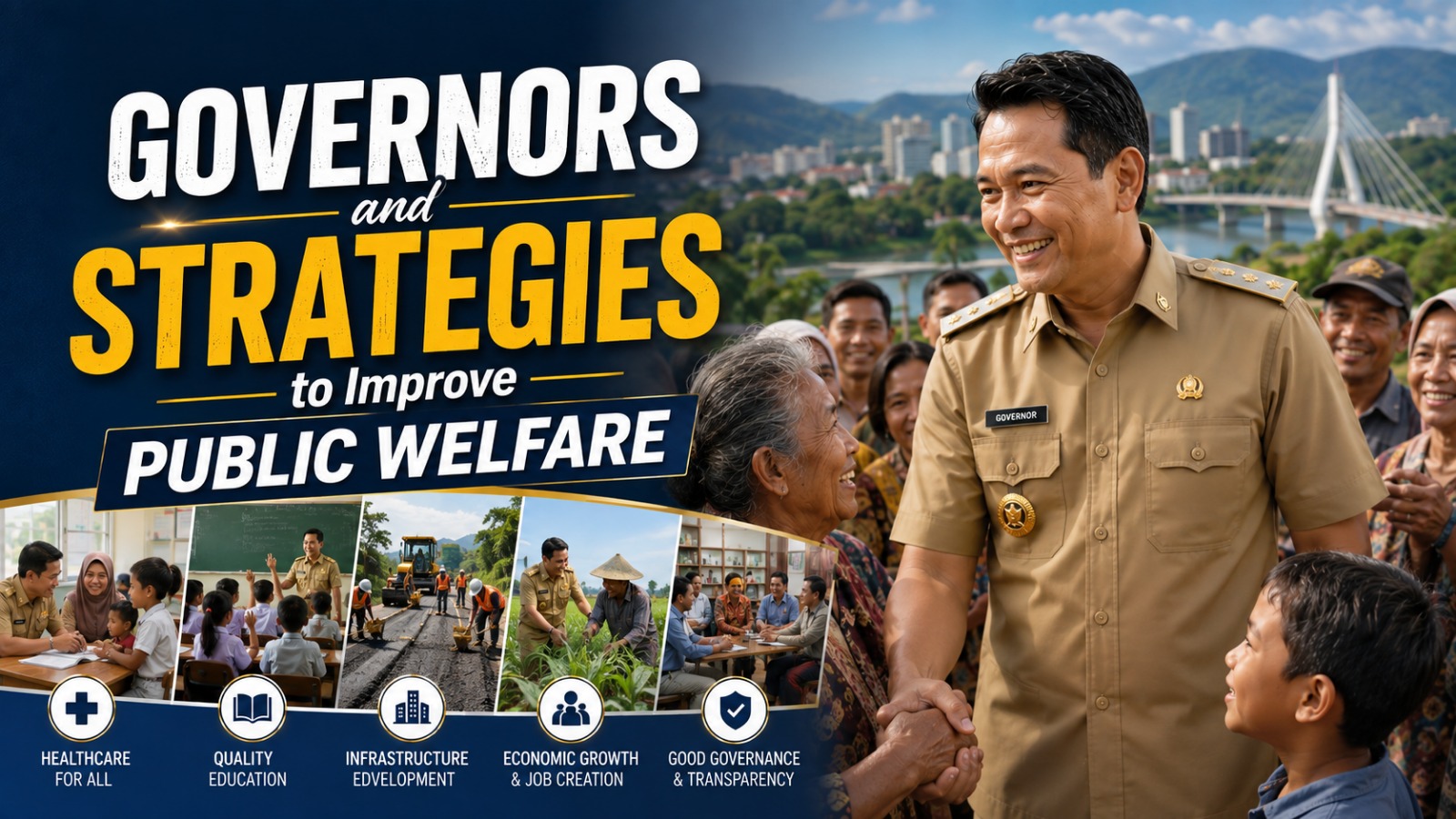
Governors play an important role in improving public welfare at the provincial level. As regional leaders, they are responsible for guiding government programs and coordinating development according to local needs. Their policies can influence education, healthcare, employment, infrastructure, economic growth, and social services.
Improving public welfare requires more than creating government programs. Governors need to understand the conditions of their communities, manage public resources responsibly, and work with different stakeholders. Effective strategies should focus on creating long-term improvements while ensuring that development benefits people across different regions and social groups.
STRENGTHENING PUBLIC SERVICES
One of the most important strategies is improving the quality of public services. Communities need accessible healthcare, quality education, reliable transportation, and efficient administrative services. Governors can improve these services by strengthening public institutions, developing competent personnel, and evaluating service performance regularly. Digital technology can also be used to make government services faster and easier to access.
However, digital services should not completely replace direct assistance. Some communities may have limited internet access or difficulty using digital platforms. Governors therefore need to develop public services that combine technology with accessible offline support. This approach can help ensure that improvements reach a wider range of citizens.
EXPANDING ECONOMIC OPPORTUNITIES
Economic growth is closely connected to public welfare. Governors can support local industries, small businesses, agriculture, tourism, fisheries, and creative industries according to the economic potential of their provinces. Policies that simplify business processes and improve access to training and markets can help local entrepreneurs grow.
Creating employment opportunities should also be a major priority. Governors can cooperate with businesses, educational institutions, and training centers to improve workforce skills. When people have better skills and access to decent employment, household incomes can increase and economic inequality can gradually decrease.
IMPROVING EDUCATION AND SKILLS
Education is a long-term investment in public welfare. Governors can support better access to schools, vocational education, scholarships, teacher development, and skills training within their areas of authority. Education programs should consider local economic needs so that students can develop relevant knowledge and practical abilities.
Workforce development should not stop after formal education. Adults and workers may also need opportunities to improve their skills as technology and industry requirements change. Continuous training can help people remain competitive and adapt to changes in the labor market.
DEVELOPING FAIR INFRASTRUCTURE
Infrastructure plays an important role in connecting communities with economic and public services. Governors need to support the development and maintenance of roads, bridges, public transportation, clean water systems, digital connectivity, and other infrastructure within provincial responsibilities. Good infrastructure can reduce travel barriers and support economic activity.
Infrastructure development should also consider regional inequality. Rural, remote, and less-developed areas may require greater attention because access to basic facilities can be limited. Planning based on reliable data can help governments identify priority areas and use public funds more effectively.
STRENGTHENING SOCIAL PROTECTION
Public welfare also depends on the ability of vulnerable groups to meet their basic needs. Governors can strengthen coordination for social assistance, healthcare access, disability services, and programs supporting low-income households. These efforts should be based on accurate data to reduce the risk of assistance being distributed to the wrong recipients.
Social protection should also help people become more independent. In addition to short-term assistance, governments can provide skills training, employment support, and access to economic opportunities. This approach can help vulnerable communities improve their living conditions over the long term.
PROMOTING TRANSPARENT GOVERNANCE
Good governance is essential for improving public welfare. Governors need to ensure that public budgets are managed efficiently, transparently, and accountably. Clear information about government programs and spending can help citizens understand how public resources are being used.
Public participation is also important. Citizens should have opportunities to express concerns, provide suggestions, and evaluate government services. By listening to communities and responding to legitimate concerns, governors can develop policies that are more relevant to actual conditions.
PROTECTING THE ENVIRONMENT
Environmental protection is an important part of long-term welfare. Economic development that damages natural resources can create serious problems for communities in the future. Governors therefore need to encourage responsible land use, waste management, environmental conservation, and sustainable economic activities within their authority.
Environmental policies should also address disaster risks. Floods, landslides, droughts, and other hazards can cause significant social and economic losses. Strengthening disaster preparedness, early warning systems, resilient infrastructure, and public education can help communities reduce these risks.
BUILDING COLLABORATION
No governor can improve public welfare alone. Cooperation with mayors, regents, central government agencies, businesses, universities, community organizations, and citizens is essential. Many issues, such as transportation, environmental management, employment, and disaster response, require coordination across administrative boundaries.
Strong collaboration can also prevent overlapping programs and improve the use of public resources. Governors should establish clear communication and shared priorities with relevant stakeholders. When different groups work toward common goals, regional development can become more effective and sustainable.
CONCLUSION
Governors and strategies to improve public welfare are closely connected because regional leadership can influence many aspects of people's daily lives. Strengthening public services, expanding economic opportunities, improving education, developing infrastructure, and protecting vulnerable communities are important steps toward better living standards.
Effective welfare policies require responsible governance, accurate data, public participation, and strong collaboration. Governors also need to evaluate their programs regularly and adjust policies when community needs change. With inclusive and sustainable strategies, provincial governments can create better opportunities and improve public welfare over the long term.
Tentang Penulis
Gusti Ayu Tita P
Penulis — Universitas STEKOM
Penulis aktif yang berfokus pada isu-isu akademik, teknologi pendidikan, dan pengembangan sumber daya manusia di lingkungan kampus.