High Demand Jobs for Skilled Trade Graduates in the Digital Economy
Gusti Ayu Tita P
30 September 2026
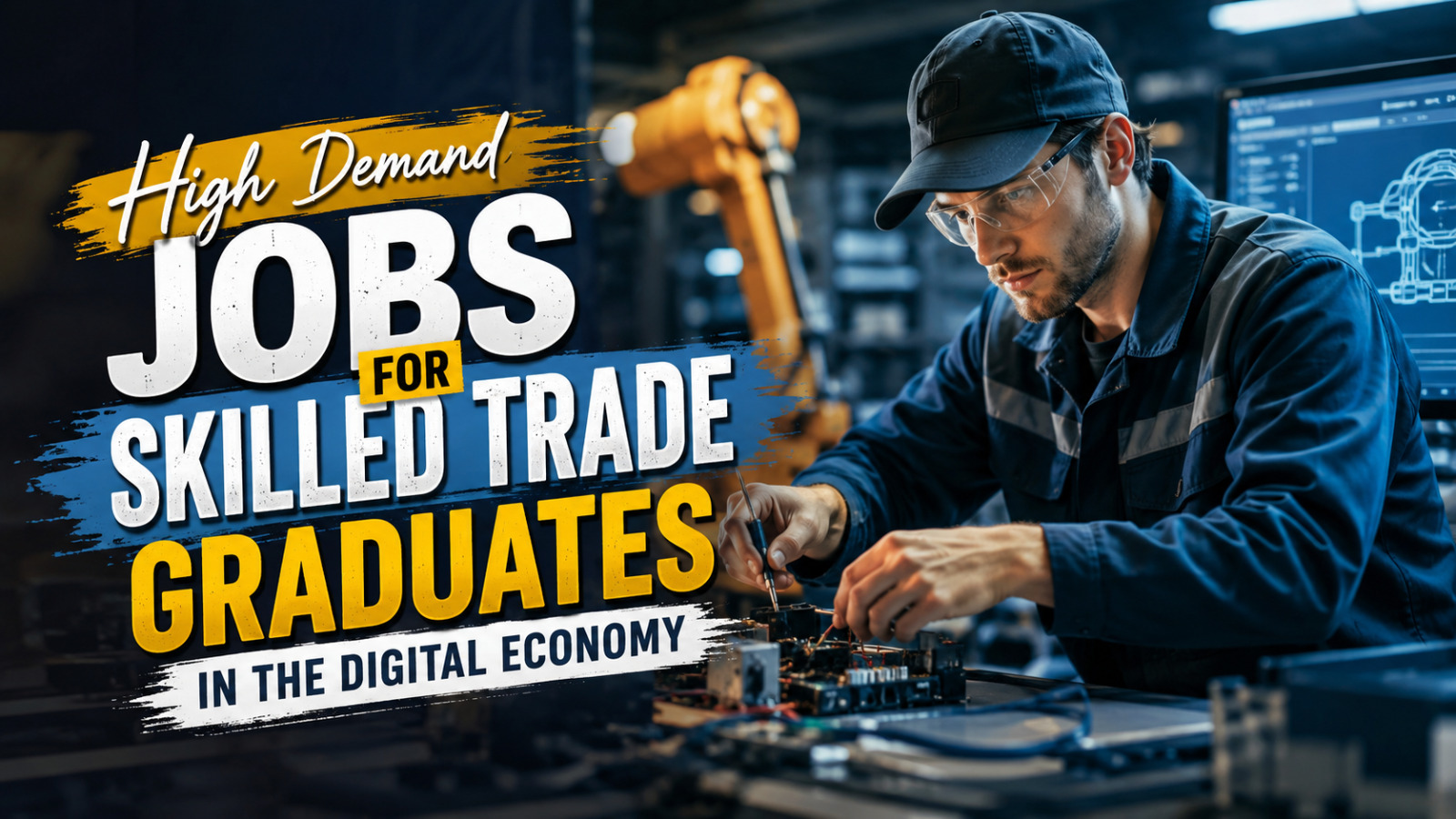
The digital economy is changing the way people work and creating new opportunities for skilled trade graduates. As technology becomes part of almost every industry, employers increasingly need workers who combine practical skills, technical knowledge, and the ability to adapt to new systems. This means vocational and skilled trade graduates can build successful careers without following only traditional academic pathways.
Today, many industries depend on professionals who can install, operate, maintain, and repair advanced equipment. From manufacturing and construction to information technology and renewable energy, skilled workers remain essential to the modern economy. With the right training and continuous learning, skilled trade graduates can access careers that offer strong demand, career growth, and long term opportunities.
WHY SKILLED TRADE GRADUATES ARE IN HIGH DEMAND
One major reason skilled trade graduates are increasingly valuable is the growing shortage of workers with practical technical abilities. Many industries need employees who can solve real world problems, operate complex equipment, and complete specialized tasks efficiently. While technology continues to advance, businesses still need people who understand how to apply that technology in real working environments.
Employers also value graduates who can become productive quickly. Practical experience often allows skilled trade graduates to understand workplace procedures and technical responsibilities faster. This combination of hands on ability and technical understanding makes them attractive candidates in industries that require reliable and efficient workers.
ELECTRICAL AND ELECTRONICS TECHNICIANS
Electrical and electronics technicians are among the most important professionals in the modern economy. They install, maintain, test, and repair electrical systems and electronic equipment used in homes, factories, offices, and industrial facilities. As businesses increasingly depend on automation and digital systems, the demand for workers with electrical expertise continues to grow.
Modern technicians may work with automation systems, control panels, sensors, robotics, and smart technologies. Skilled trade graduates who understand both traditional electrical principles and modern digital systems can have a significant advantage in the job market. Continuous training in automation, electronics, and industrial technology can also create opportunities for career advancement.
INDUSTRIAL MACHINERY AND MAINTENANCE TECHNICIANS
Modern factories depend on sophisticated machines that must operate efficiently and safely. Industrial machinery and maintenance technicians are responsible for inspecting equipment, identifying problems, performing repairs, and preventing unexpected breakdowns. Their work is essential because equipment failure can cause significant financial losses for companies.
The rise of smart factories has also changed the role of maintenance professionals. Many technicians now use digital monitoring tools, sensors, and data analysis to detect potential problems before serious damage occurs. Graduates with knowledge of predictive maintenance and industrial technology can therefore find strong opportunities in advanced manufacturing environments.
WELDERS AND ADVANCED FABRICATION SPECIALISTS
Welding remains an important skilled trade across construction, manufacturing, transportation, energy, and infrastructure industries. However, modern welding has become increasingly advanced through the use of computer controlled equipment and automated systems. This has created new opportunities for graduates who understand both traditional welding techniques and modern fabrication technology.
Specialized welders can work on complex projects that require accuracy, safety, and technical expertise. Industries such as aerospace, automotive manufacturing, shipbuilding, and energy often require highly trained professionals. Workers who develop advanced certifications and learn to operate modern equipment can improve their employment opportunities and earning potential.
HVAC AND SMART BUILDING TECHNICIANS
Heating, ventilation, and air conditioning systems are becoming more advanced as buildings adopt smart technologies and energy efficient solutions. HVAC technicians are responsible for installing, maintaining, and repairing systems that control indoor comfort and air quality. Their skills are needed in residential, commercial, industrial, and public buildings.
The growth of smart buildings has expanded the responsibilities of modern HVAC professionals. Many systems now use digital controls, automated sensors, and energy management technologies. Skilled trade graduates who understand both mechanical systems and digital controls can become valuable employees in the growing field of energy efficient building technology.
RENEWABLE ENERGY TECHNICIANS
The global transition toward cleaner energy is creating new career opportunities for skilled trade graduates. Solar panel installation, wind energy maintenance, battery storage, and electrical infrastructure all require workers with strong technical abilities. Renewable energy technicians help install, maintain, and repair systems that support the future of energy production.
This industry is especially attractive for graduates who want to work in a fast growing sector. As businesses, governments, and households invest in renewable energy, the need for trained technicians is expected to continue. Combining electrical knowledge with renewable energy training can help graduates build a career in a field with long term potential.
AUTOMOTIVE AND ELECTRIC VEHICLE TECHNICIANS
The automotive industry is experiencing major technological changes. Traditional vehicles are increasingly being joined by electric and hybrid vehicles that use advanced batteries, electronic systems, sensors, and computer software. As a result, automotive technicians need more than traditional mechanical skills.
Graduates who learn about electric vehicles, battery systems, vehicle diagnostics, and automotive electronics can access new career opportunities. Modern automotive technicians must be comfortable using diagnostic software and understanding complex electronic systems. This combination of mechanical and digital skills is becoming increasingly important in the future of transportation.
ROBOTICS AND AUTOMATION TECHNICIANS
Robotics and automation are transforming factories, warehouses, logistics operations, and other industries. Robotics technicians install, program, maintain, and repair automated systems used to improve productivity and efficiency. This career path is particularly suitable for graduates with interests in mechanical systems, electronics, programming, and technology.
The demand for automation professionals continues to increase as companies seek more efficient production methods. Skilled trade graduates who develop knowledge of industrial robotics can work with robotic arms, automated production lines, sensors, and control systems. Their ability to combine practical skills with digital technology can make them highly competitive in the modern job market.
INFORMATION TECHNOLOGY AND NETWORKING TECHNICIANS
Although information technology is often associated with university degrees, many technical roles can be entered through vocational education, certifications, and practical training. IT support specialists and networking technicians help organizations maintain computers, networks, servers, and digital systems. Their work is essential because modern businesses depend heavily on reliable technology.
Skilled trade graduates with an interest in computers can build careers by learning networking, cybersecurity fundamentals, hardware maintenance, and technical support. Practical experience and industry certifications can help demonstrate their abilities to employers. As digital systems continue to expand, IT support skills can provide valuable opportunities across many industries.
CONSTRUCTION TECHNOLOGY SPECIALISTS
The construction industry is also becoming more digital and technologically advanced. Modern construction projects increasingly use digital design tools, building information modeling, drones, smart equipment, and advanced machinery. This creates demand for workers who understand both traditional construction practices and modern technology.
Graduates with skills in electrical work, plumbing, machinery operation, surveying, or construction technology can find opportunities in many sectors. Professionals who learn digital tools and modern project systems can improve their productivity and career prospects. The future of construction will require workers who can combine technical expertise with practical problem solving.
HOW SKILLED TRADE GRADUATES CAN STAY COMPETITIVE
The job market is changing quickly, so skilled trade graduates should continue developing their knowledge after graduation. Completing additional certifications, learning new technologies, and gaining practical experience can help workers remain competitive. Employers increasingly look for candidates who are willing to learn and adapt to changing workplace requirements.
Soft skills are also important for long term career success. Communication, teamwork, problem solving, time management, and workplace safety awareness can make a major difference in professional development. A graduate who combines strong technical abilities with professional behavior can become more valuable to employers and gain better opportunities for promotion.
THE FUTURE OF SKILLED TRADE CAREERS
The future of skilled trade careers is closely connected to technological development. Automation may change certain tasks, but it will also create new responsibilities that require human judgment, technical knowledge, and problem solving. Many advanced systems still need trained professionals to install, operate, maintain, and repair them.
For this reason, skilled trade graduates should view technology as an opportunity rather than a threat. Workers who continuously upgrade their abilities can remain relevant in a changing economy. The strongest career opportunities will often belong to professionals who can combine hands on skills with digital knowledge and a willingness to keep learning.
Tentang Penulis
Gusti Ayu Tita P
Penulis — Universitas STEKOM
Penulis aktif yang berfokus pada isu-isu akademik, teknologi pendidikan, dan pengembangan sumber daya manusia di lingkungan kampus.