Holiday Return Travel Tips for Families on the Road
Gusti Ayu Tita P
10 Agustus 2026
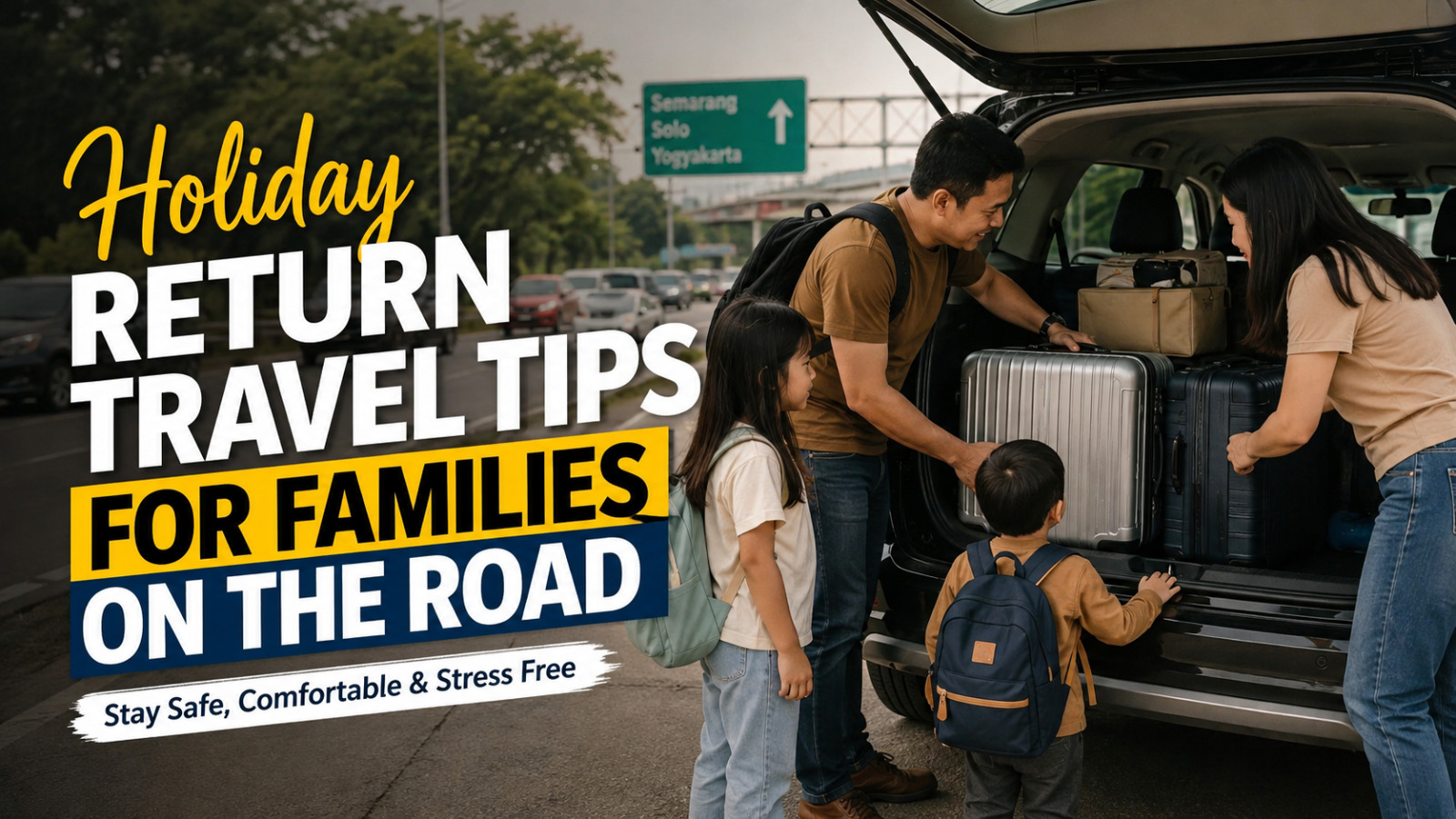
Returning home after a holiday can be exciting, but it can also become tiring when families face long distances, heavy traffic, and unpredictable road conditions. A well-planned journey can make the return trip safer and more comfortable for everyone. Families should prepare not only the vehicle but also food, rest stops, travel documents, and entertainment for children. Good preparation can reduce stress and help travelers respond calmly to unexpected situations. With the right strategy, the journey home can become a pleasant part of the holiday experience.
PLAN THE JOURNEY BEFORE LEAVING
Families should plan their return journey before starting the trip. Check the expected traffic conditions, weather, road closures, and alternative routes that may be useful if congestion becomes severe. It is also important to estimate the travel time realistically instead of assuming that the journey will take the same amount of time as usual. Leaving with enough time and having a backup route can prevent unnecessary pressure on the driver. Parents should also discuss the planned route and rest stops with other family members so everyone knows what to expect.
Travelers should avoid making the schedule too tight, especially when traveling with young children or older family members. Unexpected traffic, bathroom breaks, meal stops, or vehicle problems can easily extend the journey. A flexible travel schedule allows families to handle delays without rushing. Before departure, make sure important items such as identification, money, mobile phones, chargers, medicines, and travel documents are easy to access. Proper preparation makes the return journey more organized from the beginning.
CHECK THE VEHICLE BEFORE THE TRIP
A vehicle should be checked carefully before beginning a long-distance return trip. Important components include the tires, brakes, engine oil, coolant, lights, battery, windshield wipers, and fuel level. Tire pressure should follow the vehicle manufacturer's recommendations, especially when the car carries several passengers and additional luggage. Drivers should also make sure the spare tire and basic emergency equipment are available. A simple vehicle inspection can help identify problems before they become dangerous on the road.
Families should avoid ignoring warning signs such as unusual engine sounds, reduced braking performance, dashboard warning lights, or damaged tires. If a serious problem is discovered, it is safer to have the vehicle inspected by a qualified mechanic before departure. Carrying a basic emergency kit can also be helpful during a long trip. The kit may include a flashlight, first aid supplies, drinking water, and other essential items. Vehicle readiness is one of the most important parts of safe holiday return travel.
CHOOSE THE RIGHT DEPARTURE TIME
Choosing the right departure time can significantly affect the comfort and duration of a family journey. Travelers should monitor traffic information before leaving because conditions can change quickly during major holiday return periods. Avoiding known peak congestion periods can help reduce travel time and driver fatigue. However, drivers should not choose an inconvenient departure time simply to avoid traffic if it results in severe sleep deprivation. Safety should always be more important than arriving home as quickly as possible.
Drivers who plan to leave early in the morning should make sure they have received enough sleep beforehand. Driving while tired can reduce concentration and reaction speed, creating serious risks for everyone in the vehicle. If the journey is very long, families can consider sharing driving responsibilities with another qualified driver. A rested driver is better prepared to deal with changing traffic and road conditions. Regular breaks should also be included in the journey rather than waiting until the driver becomes extremely tired.
PREPARE COMFORTABLE SUPPLIES FOR CHILDREN
Long journeys can be challenging for children because they may become bored, hungry, or uncomfortable after spending hours in the vehicle. Parents should prepare enough water, healthy snacks, tissues, and other basic necessities before leaving. Children should remain properly secured in appropriate child restraints or seat belts throughout the journey. Favorite books, simple games, music, or downloaded entertainment can also help make the trip more enjoyable. However, entertainment should never distract the driver.
Parents should also prepare extra clothes and essential personal items, particularly when traveling with babies or young children. A small bag containing frequently needed items can be kept within easy reach instead of being placed deep inside the luggage. Families should plan regular stops so children can stretch, use the restroom, and relax. Comfortable children often make the entire journey easier for parents and drivers. A calm environment inside the vehicle can also help reduce distractions and unnecessary stress.
TAKE REGULAR REST BREAKS
Rest breaks are essential during long-distance holiday return trips. Staying behind the wheel for too many consecutive hours can cause physical and mental fatigue, even when the driver initially feels comfortable. Families should stop at safe and appropriate locations to allow the driver and passengers to rest. A short break can improve alertness and make the journey more manageable. Drivers should never continue driving when they are struggling to stay awake.
Rest areas, service stations, and other safe locations can provide opportunities to eat, drink, use the restroom, and stretch. If the driver feels extremely tired, taking a longer break or changing drivers may be the safest option. Families should also avoid stopping on unsafe road shoulders unless there is an emergency. Resting safely is far more important than saving a few minutes of travel time. Building breaks into the original travel plan can make them easier to follow.
STAY ALERT DURING HEAVY TRAFFIC
Heavy traffic requires patience and greater concentration from drivers. Sudden braking, lane changes, motorcycles moving between vehicles, and unpredictable driver behavior can make congested roads more difficult to navigate. Drivers should maintain a safe following distance and avoid aggressive maneuvers. Patience and defensive driving are essential when traffic becomes crowded. Using a mobile phone while driving should also be avoided because even a brief distraction can create a serious accident risk.
Families should remain calm when traffic moves slowly or becomes temporarily stopped. Drivers should follow traffic signs, road markings, and instructions from authorized traffic officers. If an alternative route is considered, it should be checked carefully rather than selected based only on assumptions. A longer but safer route can sometimes be a better choice than an unfamiliar shortcut. Everyone in the vehicle should understand that reaching home safely is the main objective.
KEEP IMPORTANT ITEMS WITHIN REACH
Families should organize their luggage so that important items can be accessed without unpacking the entire vehicle. Drinking water, snacks, chargers, tissues, identification documents, and basic first aid supplies should be placed somewhere convenient. Valuable belongings should also be kept secure and should not be left visibly inside the vehicle when stopping. Good luggage organization can save time and reduce stress during unexpected situations.
Parents traveling with children should keep frequently needed items nearby. This may include diapers, wipes, medication that has already been prescribed for the traveler, extra clothing, and small snacks. Electronic devices should be charged before departure, and carrying suitable charging equipment can be useful during a long journey. Preparing essential items in advance helps families avoid unnecessary stops. It also allows travelers to focus more on the road and less on searching through luggage.
CONCLUSION
Holiday return travel can be much easier when families prepare carefully before leaving. Checking the vehicle, choosing a suitable departure time, planning rest breaks, and preparing children's needs are important steps for a safer journey. Drivers should prioritize adequate rest and remain patient when facing heavy traffic. Families should also keep essential items accessible and be prepared to adjust their plans when road conditions change. The most important goal of any return journey is arriving home safely and comfortably, not simply arriving as quickly as possible.
Tentang Penulis
Gusti Ayu Tita P
Penulis — Universitas STEKOM
Penulis aktif yang berfokus pada isu-isu akademik, teknologi pendidikan, dan pengembangan sumber daya manusia di lingkungan kampus.