
How a Gap Year Opens Your Eyes to the Reality of the Working World
Gusti Ayu Tita P
1 April 2026
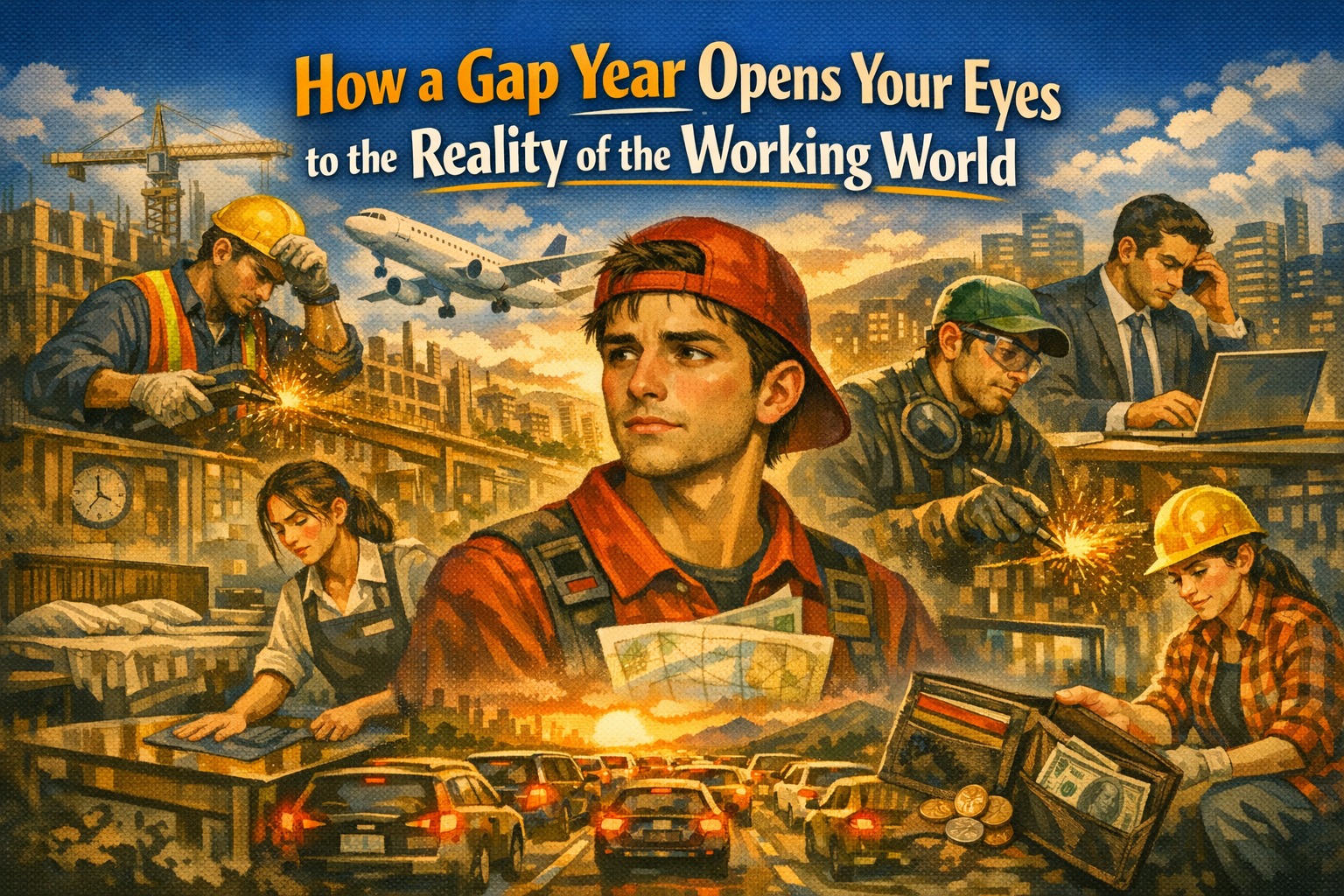
A gap year can give students an opportunity to experience life beyond classrooms and textbooks. Instead of immediately continuing to university, students can spend a structured period exploring work, volunteering, training, internships, or personal projects. These experiences can introduce them to responsibilities that are rarely experienced in school. A well planned gap year can therefore provide a clearer picture of what the working world is really like.
Workplaces require more than academic knowledge. Employees are expected to communicate effectively, meet deadlines, cooperate with others, solve problems, and adapt to different situations. Experiencing these expectations directly can help students understand their strengths and areas that still need improvement. Practical experience can make future education and career decisions more realistic.
UNDERSTANDING THE REALITY OF THE WORKING WORLD
The working world can be very different from what students imagine while they are still in school. Employees usually have specific responsibilities, schedules, targets, and performance expectations. A gap year can allow students to experience these conditions before they enter a long term career. This exposure can help them understand that professional life requires responsibility and consistency.
Students may discover that completing a task is not only about getting a good result. They also need to consider deadlines, teamwork, communication, and the needs of customers or colleagues. Small mistakes can affect other people, while good cooperation can improve the entire team's performance. These lessons provide a realistic understanding of professional responsibility.
GAINING FIRSTHAND WORK EXPERIENCE
One of the main benefits of a gap year is the opportunity to gain firsthand work experience. Students can participate in internships, part time jobs, apprenticeships, volunteering, or project based activities. Each experience can introduce them to different workplace environments and responsibilities. Even a short experience can provide valuable lessons when students actively reflect on what they have learned.
Students can observe how employees communicate and complete their daily responsibilities. They may also learn how organizations manage customers, projects, schedules, and internal processes. These observations can help students understand how classroom knowledge is applied in real situations. Direct exposure can make professional concepts easier to understand.
UNDERSTANDING THE IMPORTANCE OF TEAMWORK
Most workplaces require employees to work with other people. Team members may have different personalities, communication styles, skills, and responsibilities. A gap year can teach students how to cooperate with people who do not always think the same way. Teamwork skills are essential for completing shared goals effectively.
Students can learn how to listen, communicate ideas, accept feedback, and handle disagreements professionally. They may also discover that successful teamwork requires flexibility and mutual respect. These experiences can improve their ability to contribute to group projects in university and future employment. Learning to work with others is one of the most practical benefits of workplace exposure.
LEARNING HOW TO HANDLE MISTAKES
Mistakes are a normal part of learning and working. During a gap year, students may make errors while completing tasks or adjusting to new responsibilities. Instead of avoiding mistakes, they can learn how to identify the problem and find a solution. Problem solving and accountability are important qualities in professional environments.
Students can learn to communicate honestly when something goes wrong. They can ask for guidance, correct the problem, and use feedback to avoid repeating the same mistake. This process can build resilience and maturity. The ability to learn from mistakes can become a valuable advantage in future academic and professional situations.
CONNECTING WORK EXPERIENCE WITH EDUCATION
A gap year can also help students understand why education matters for their future careers. After experiencing workplace responsibilities, they may recognize specific skills that they need to develop further. This understanding can influence their choice of university major, training program, or professional course. Practical experience can provide direction for future education.
For example, students may discover that their desired career requires stronger communication, analytical, digital, or management abilities. They can then choose educational opportunities that help develop those skills. This creates a stronger connection between learning and career goals. Education can become more meaningful when students understand how it relates to real professional needs.
MAKING A GAP YEAR PURPOSEFUL
A gap year becomes more valuable when students have clear goals. Simply taking time away from school without a plan may not provide the same benefits as a structured experience. Students can decide whether they want to focus on work experience, career exploration, skill development, or personal growth. Clear goals and careful planning can make the year more productive.
Students should also document what they accomplish during the gap year. Certificates, project results, work samples, and records of responsibilities can become useful for future applications. Reflecting on each experience can help students identify what they learned and what they want to improve. This approach can turn a temporary break into meaningful career preparation.
PREPARING FOR THE NEXT STAGE
The main purpose of a gap year should be to help students become more prepared for their next stage. After gaining workplace exposure, they can decide whether to continue their education, pursue professional training, or enter employment. Their decision can be based on actual experience rather than assumptions. Greater career clarity can make the transition easier.
Students should review their goals near the end of the gap year. They can evaluate their skills, experiences, interests, and future plans. If their original career goal has changed, that can be a positive outcome because they have gained new information about themselves. What matters is moving forward with greater awareness and preparation.
CONCLUSION
A gap year can open students' eyes to the reality of the working world by providing direct experience with professional responsibilities. Through internships, part time jobs, volunteering, and projects, students can develop practical skills and understand workplace expectations. They can also discover their strengths, identify weaknesses, and explore different career options.
The value of a gap year depends on how intentionally it is used. Students who set clear goals, choose meaningful activities, reflect on their experiences, and prepare for their next step can gain lasting benefits. Work experience, self awareness, and career exploration can help students approach higher education or employment with greater confidence and a clearer direction.
Tentang Penulis
Gusti Ayu Tita P
Penulis — Universitas STEKOM
Penulis aktif yang berfokus pada isu-isu akademik, teknologi pendidikan, dan pengembangan sumber daya manusia di lingkungan kampus.















