How Are Fingerprints Used to Identify a Person?
Gusti Ayu Tita P
14 September 2026
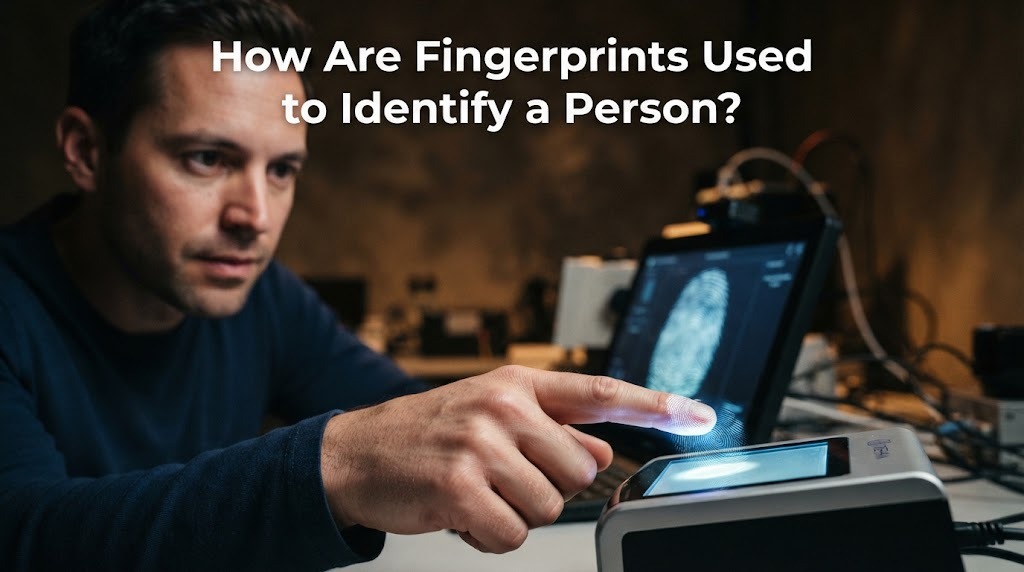
Fingerprints are one of the most widely recognized forms of biometric identification. Each person has a distinctive arrangement of lines and ridges on their fingers, making fingerprints useful for distinguishing one individual from another. Modern technology can capture these patterns and convert them into digital information. The information can then be compared with previously registered fingerprint data. This process helps organizations and individuals perform identification more quickly and conveniently.
THE FINGERPRINT IDENTIFICATION PROCESS
Fingerprint identification starts when a person places a finger on a fingerprint scanner. The scanner captures the pattern of ridges and valleys on the surface of the finger. The system processes the captured image and removes unnecessary information that could affect the comparison. It then analyzes important characteristics within the fingerprint pattern. The resulting information is compared with fingerprint data stored in the system.
The comparison is performed using specialized biometric software. The software looks for similarities between the newly scanned fingerprint and registered data. If the similarity reaches the required security threshold, the system can accept the fingerprint as a match. If the result does not meet the threshold, access or identification may be rejected. This process usually takes only a short amount of time.
UNIQUE FEATURES OF FINGERPRINTS
Fingerprints contain many characteristics that can help distinguish one person from another. Important features include ridge endings, bifurcations, curves, loops, arches, and whorls. The position and combination of these features create a distinctive fingerprint pattern. Even people with similar general patterns usually have differences in their smaller ridge details. These differences provide useful information for biometric comparison.
A fingerprint system does not normally depend on only one characteristic. Instead, it examines multiple features to improve the reliability of the comparison. The more useful details that can be captured, the better the system can distinguish between different fingerprints. However, the quality of the scan also affects the result. Dirty, wet, damaged, or poorly positioned fingers can make some fingerprint details difficult to detect.
DIGITAL FINGERPRINT DATA
After a fingerprint is scanned, the system processes the captured information into a digital biometric template. This template represents selected characteristics of the fingerprint rather than simply functioning as an ordinary photograph. The system can use the template when comparing a new fingerprint with previously registered information. This makes repeated verification possible without requiring the person to enter a password each time.
Protecting digital fingerprint information is especially important because biometric data is personal and sensitive. Organizations should use appropriate security measures to prevent unauthorized access, misuse, or unnecessary exposure. Access to biometric databases should be limited to authorized systems and personnel. Data encryption and secure storage can also help reduce security risks. Responsible management is essential whenever fingerprint technology is used.
IDENTIFICATION AND VERIFICATION METHODS
Fingerprint technology can be used for both identification and verification. Identification determines which person a fingerprint may belong to by comparing it with multiple registered records. For example, a system can search its database to find a matching employee fingerprint. Verification has a narrower purpose because it checks whether a fingerprint belongs to a specific person who has already claimed an identity. Both methods rely on comparing fingerprint characteristics.
The main difference is the number of comparisons involved. Identification may compare one fingerprint against many stored templates. Verification generally compares the fingerprint with a particular registered template. This distinction allows fingerprint systems to support different needs in workplaces, mobile devices, and security environments. The chosen method depends on the purpose and design of the biometric system.
COMMON USES OF FINGERPRINT IDENTIFICATION
Fingerprint identification is used in many everyday situations. Mobile phones can use fingerprint recognition to unlock devices and confirm certain actions. Companies may use fingerprint scanners to record employee attendance and control access to specific areas. Educational institutions and other organizations can also use biometric systems for identity verification where appropriate. These applications show how fingerprint technology has become part of modern digital systems.
One major advantage is convenience because users do not need to remember a password or carry a physical identification card for every verification process. Fingerprint scanning can also make certain processes faster and easier to manage. However, fingerprint systems should always include suitable security and privacy protections. Organizations should also provide alternative procedures when a fingerprint cannot be read correctly.
CONCLUSION
Fingerprints can be used to identify people because their ridge patterns contain distinctive and relatively stable characteristics. A fingerprint scanner captures these characteristics and converts them into digital information for comparison. The technology supports identification, verification, attendance management, and access control. Its convenience makes fingerprint recognition useful in many modern applications. At the same time, protecting biometric data is essential to ensure that fingerprint technology is used safely and responsibly.
Tentang Penulis
Gusti Ayu Tita P
Penulis — Universitas STEKOM
Penulis aktif yang berfokus pada isu-isu akademik, teknologi pendidikan, dan pengembangan sumber daya manusia di lingkungan kampus.