
How Can Academic Competition Be Optimized to Truly Improve the Quality of University Students?
Gusti Ayu Tita P
27 Februari 2026
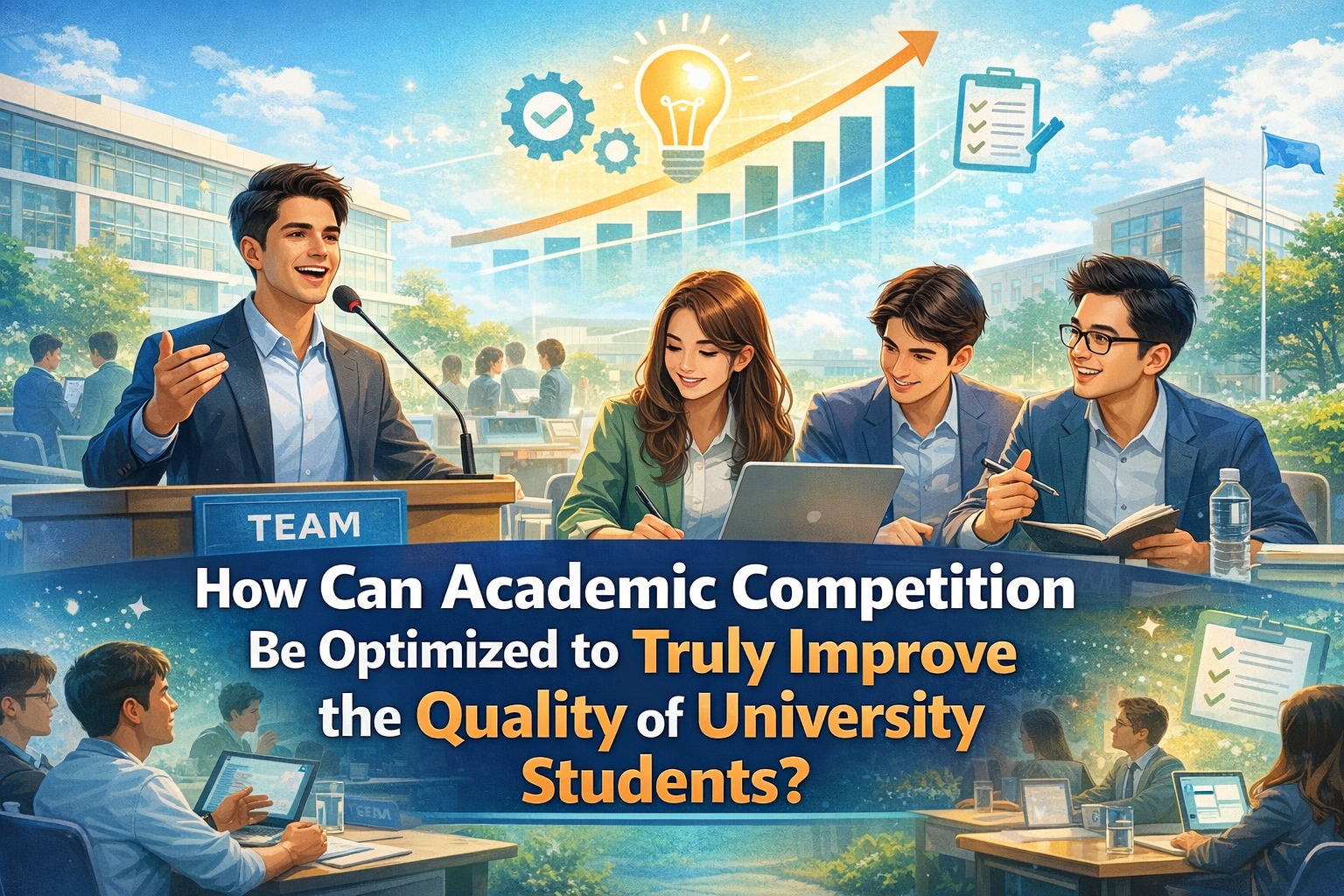
Academic competition is a common feature in higher education. From GPA rankings to scholarship selections, competition is often used to motivate students to perform better. When managed wisely, it can sharpen critical thinking, strengthen discipline, and encourage innovation. However, if poorly designed, it may create stress, unhealthy rivalry, and superficial learning.
To truly improve the quality of university students, academic competition must be optimized with clear goals and balanced implementation.
FOCUS ON MASTERY, NOT JUST RANKINGS
The primary purpose of academic competition should be student growth. Universities need to move beyond systems that only reward high scores. When students compete merely for grades, they tend to memorize rather than understand.
Instead, institutions should reward:
• Deep understanding
• Problem-solving ability
• Creativity and innovation
• Consistent improvement
By emphasizing mastery, competition becomes a tool for meaningful learning rather than simple comparison.
COMBINE COMPETITION WITH COLLABORATION
An effective academic environment blends competition and teamwork. Pure competition can isolate students, while collaboration alone may reduce motivation.
Universities can optimize this balance by:
• Holding team-based academic contests
• Encouraging peer learning groups
• Designing interdisciplinary projects
This approach helps students build communication and leadership skills while still striving for excellence.
PROTECT STUDENTS’ MENTAL WELL-BEING
Healthy competition should challenge students without overwhelming them. Excessive pressure can lead to burnout and reduced academic engagement.
To maintain balance, universities should:
• Provide accessible counseling support
• Promote a growth mindset culture
• Avoid overly harsh grading curves
• Encourage learning from mistakes
Students who feel supported are more willing to take intellectual risks and pursue deeper learning
ALIGN COMPETITION WITH REAL-WORLD SKILLS
Academic competition becomes more meaningful when it reflects workplace realities. Employers value graduates who can think critically, collaborate, and solve complex problems.
Universities can strengthen this connection through:
• Case competitions
• Research projects
• Entrepreneurship programs
• Industry partnerships
When competition mirrors real-world challenges, students graduate with practical competence, not just high grades.
CONCLUSION
Academic competition is not inherently harmful—it is a powerful tool when designed thoughtfully. By focusing on mastery, balancing collaboration, protecting mental health, and aligning activities with real-world needs, universities can transform competition into a positive force.
Optimized academic competition does more than rank students; it develops capable, resilient, and high-quality graduates ready to face future challenges
Tentang Penulis
Gusti Ayu Tita P
Penulis — Universitas STEKOM
Penulis aktif yang berfokus pada isu-isu akademik, teknologi pendidikan, dan pengembangan sumber daya manusia di lingkungan kampus.















