How Can Fisheries Management Adapt To Changes In The Global Environment?
Gusti Ayu Tita P
11 Agustus 2026
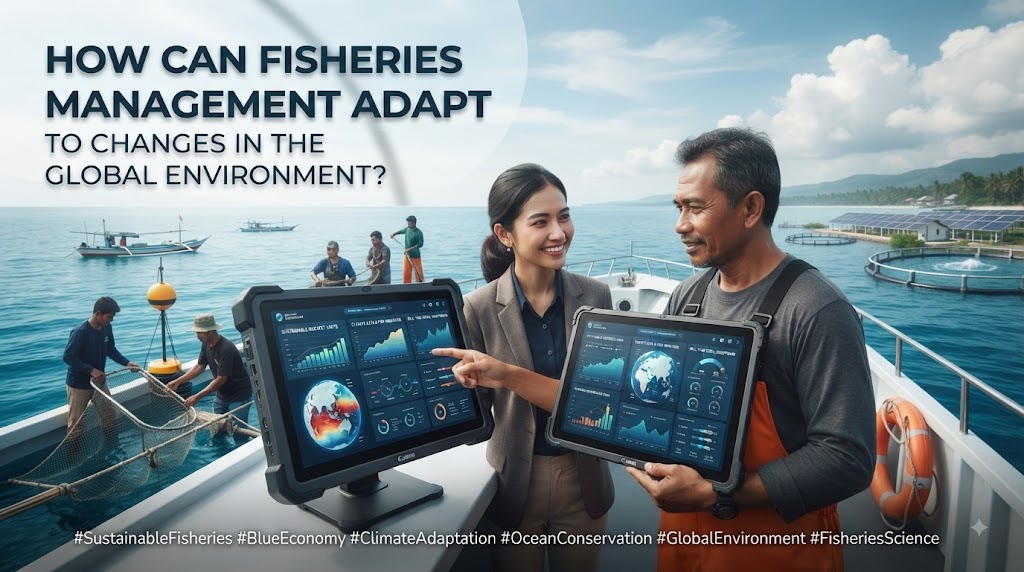
The global environment is changing rapidly, creating new challenges for fisheries around the world. Climate change, rising ocean temperatures, pollution, habitat degradation, and changing marine ecosystems can affect fish populations and fishing activities. These changes can influence where fish live, how they reproduce, and how much seafood can be harvested sustainably. As a result, traditional fisheries management approaches need to become more flexible and responsive.
Fisheries are also closely connected to food security, employment, coastal communities, and the global economy. Effective management therefore needs to protect marine ecosystems while supporting people who depend on fisheries for their livelihoods. Adaptive fisheries management can help governments, scientists, fishing communities, and industry respond to environmental changes. By combining scientific information, local knowledge, technology, and responsible policies, fisheries can become more resilient.
UNDERSTANDING GLOBAL ENVIRONMENTAL CHANGES
Global environmental changes can have significant effects on marine ecosystems. Rising sea temperatures can influence fish distribution because many species move toward areas with more suitable conditions. Ocean acidification can also affect marine organisms, particularly species that depend on calcium carbonate to build shells or structures. Changes in rainfall, currents, and extreme weather can further influence coastal and marine habitats.
Pollution and habitat destruction create additional pressures on fish populations. Plastic waste, chemical pollution, excessive nutrient runoff, and damage to coastal ecosystems can reduce environmental quality. These pressures may become more serious when combined with overfishing and climate change. Fisheries management therefore needs to consider multiple environmental factors instead of focusing only on fishing pressure.
USING ADAPTIVE FISHERIES MANAGEMENT
Traditional fisheries rules are often based on historical information about fish populations and environmental conditions. However, changing ecosystems can make historical patterns less reliable. Adaptive management allows regulations to be adjusted when new scientific information becomes available. This approach can help fisheries respond more effectively to changes in fish abundance and distribution.
For example, fishing limits, seasonal closures, or protected areas can be reviewed when monitoring shows significant changes in an ecosystem. Managers can compare the results of different policies and adjust them when necessary. This creates a continuous cycle of monitoring, evaluation, and improvement. Such flexibility is especially important in ecosystems affected by rapid climate change.
IMPROVING FISHERIES DATA AND SCIENTIFIC MONITORING
Reliable information is essential for effective fisheries management. Scientists and fisheries authorities need data about fish populations, reproduction, migration, catch levels, and environmental conditions. Scientific monitoring can help identify changes before they become serious threats to fish stocks. Better data can also support more accurate assessments of sustainable catch levels.
Modern technologies are making fisheries monitoring more efficient. Satellite information, electronic monitoring systems, acoustic surveys, sensors, and digital catch reporting can provide valuable information about fishing activities and marine conditions. Combining these technologies with field research can improve the quality of fisheries assessments. However, data must be properly managed and interpreted before it is used for policy decisions.
PROTECTING MARINE HABITATS AND ECOSYSTEMS
Healthy habitats are essential for productive fisheries. Coral reefs, mangroves, seagrass beds, estuaries, and other coastal ecosystems provide feeding, breeding, and nursery areas for many marine species. Protecting these habitats can strengthen fish populations and improve ecosystem resilience. Marine conservation should therefore be an important part of fisheries management.
Habitat protection can involve marine protected areas, restoration projects, pollution reduction, and responsible coastal development. Management measures should consider the connections between different habitats rather than treating each area as completely separate. Protecting important nursery and spawning grounds can provide long-term benefits for fisheries. Ecosystem protection also helps coastal communities adapt to environmental changes.
REDUCING OVERFISHING AND PROMOTING SUSTAINABLE CATCHES
Overfishing can weaken fish populations and reduce their ability to recover from environmental changes. When fish stocks are already under pressure, climate-related changes can make recovery even more difficult. Fisheries managers can use sustainable fishing limits to prevent excessive harvesting. These limits should be based on the best available scientific information and updated when conditions change.
Other measures can include seasonal restrictions, size limits, gear regulations, and temporary closures. These approaches can reduce pressure on vulnerable species and allow populations to reproduce. Effective enforcement is also essential because regulations have limited value if they are not followed. Cooperation with fishing communities can improve compliance and make management measures more practical.
INVOLVING FISHING COMMUNITIES IN DECISION MAKING
Fisheries management is more effective when fishing communities are involved in decisions that affect their livelihoods. Fishers often possess valuable local ecological knowledge based on years of observing changes in marine conditions. Their knowledge can complement scientific research and help identify changes that may not immediately appear in formal datasets. Participation can also increase trust between authorities and fishing communities.
Community involvement should go beyond simply informing fishers about new regulations. Stakeholders can participate in discussions, monitoring programs, and management planning. When communities understand why a measure is necessary, they may be more willing to follow it. Inclusive decision making can create fisheries policies that are both environmentally responsible and socially realistic.
SUPPORTING FISHERS DURING ENVIRONMENTAL CHANGES
Environmental changes can create economic difficulties for fishing communities. Fish may move to different areas, fishing seasons may change, and extreme weather can reduce the number of safe fishing days. Management policies therefore need to consider the social and economic resilience of fishing communities. Protecting fish stocks is important, but people who depend on fisheries also need support during periods of change.
Governments and other stakeholders can support training, alternative livelihoods, improved infrastructure, and access to financial resources where appropriate. Diversifying income sources can reduce dependence on a single fishery. Sustainable aquaculture, seafood processing, tourism, and other coastal activities may provide additional opportunities when properly planned. These approaches can help communities adapt without increasing pressure on vulnerable fish stocks.
USING TECHNOLOGY FOR SMARTER FISHERIES
Technology can help fisheries managers respond more quickly to environmental changes. Satellite tracking, digital mapping, remote sensing, and electronic monitoring can provide information about fishing activity and marine conditions. Smart fisheries technology can improve transparency and support better management decisions. It can also help identify illegal or unauthorized fishing activities when appropriate monitoring systems are in place.
Artificial intelligence and data analysis can further support the interpretation of large amounts of environmental and fisheries information. These tools may help identify patterns in fish distribution, weather conditions, and fishing activity. However, technology should complement scientific expertise and local knowledge rather than replace human judgment. Proper training, reliable infrastructure, and responsible data management are necessary for successful implementation.
STRENGTHENING INTERNATIONAL COOPERATION
Fish populations do not follow national borders, and many fisheries operate across large marine areas. Environmental changes can therefore affect several countries at the same time. International cooperation is essential for managing shared fish stocks and preventing unsustainable competition. Countries can work together through regional fisheries management organizations, scientific partnerships, and shared monitoring systems.
International agreements can help establish common conservation measures and improve the exchange of scientific information. Cooperation is particularly important for migratory species that move between different jurisdictions. Without coordination, fishing pressure in one area can undermine conservation efforts in another. Strong international collaboration can therefore improve the long-term sustainability of global fisheries.
BUILDING CLIMATE RESILIENT FISHERIES
Climate resilience should become an important goal of modern fisheries management. Managers need to consider how temperature changes, ocean acidification, extreme weather, and shifting species distributions may affect fish stocks. Climate resilient fisheries require policies that can change as environmental conditions evolve. Long-term planning should include different possible environmental scenarios.
Resilience can also be strengthened by protecting biodiversity and avoiding excessive pressure on individual species. Diverse ecosystems are generally better able to absorb environmental disturbances than heavily degraded systems. Maintaining healthy habitats and sustainable fish populations can provide a stronger foundation for adaptation. Fisheries management should therefore focus on both immediate needs and long-term ecosystem health.
CONCLUSION
Fisheries management must become more flexible and adaptive to respond to changes in the global environment. Climate change, pollution, habitat degradation, and shifting fish populations require management systems that can respond to new conditions. Better scientific monitoring, sustainable fishing limits, habitat protection, modern technology, and community participation can help fisheries remain productive and resilient.
Successful adaptation also requires cooperation between governments, scientists, fishing communities, industry, and international organizations. The goal is not only to protect fish stocks but also to maintain healthy marine ecosystems and support the people who depend on them. By combining science, technology, local knowledge, and responsible management, fisheries can better face environmental changes while continuing to provide food and economic opportunities for future generations.
Tentang Penulis
Gusti Ayu Tita P
Penulis — Universitas STEKOM
Penulis aktif yang berfokus pada isu-isu akademik, teknologi pendidikan, dan pengembangan sumber daya manusia di lingkungan kampus.