How Can Ships Float in the Middle of the Ocean?
Gusti Ayu Tita P
11 Agustus 2026
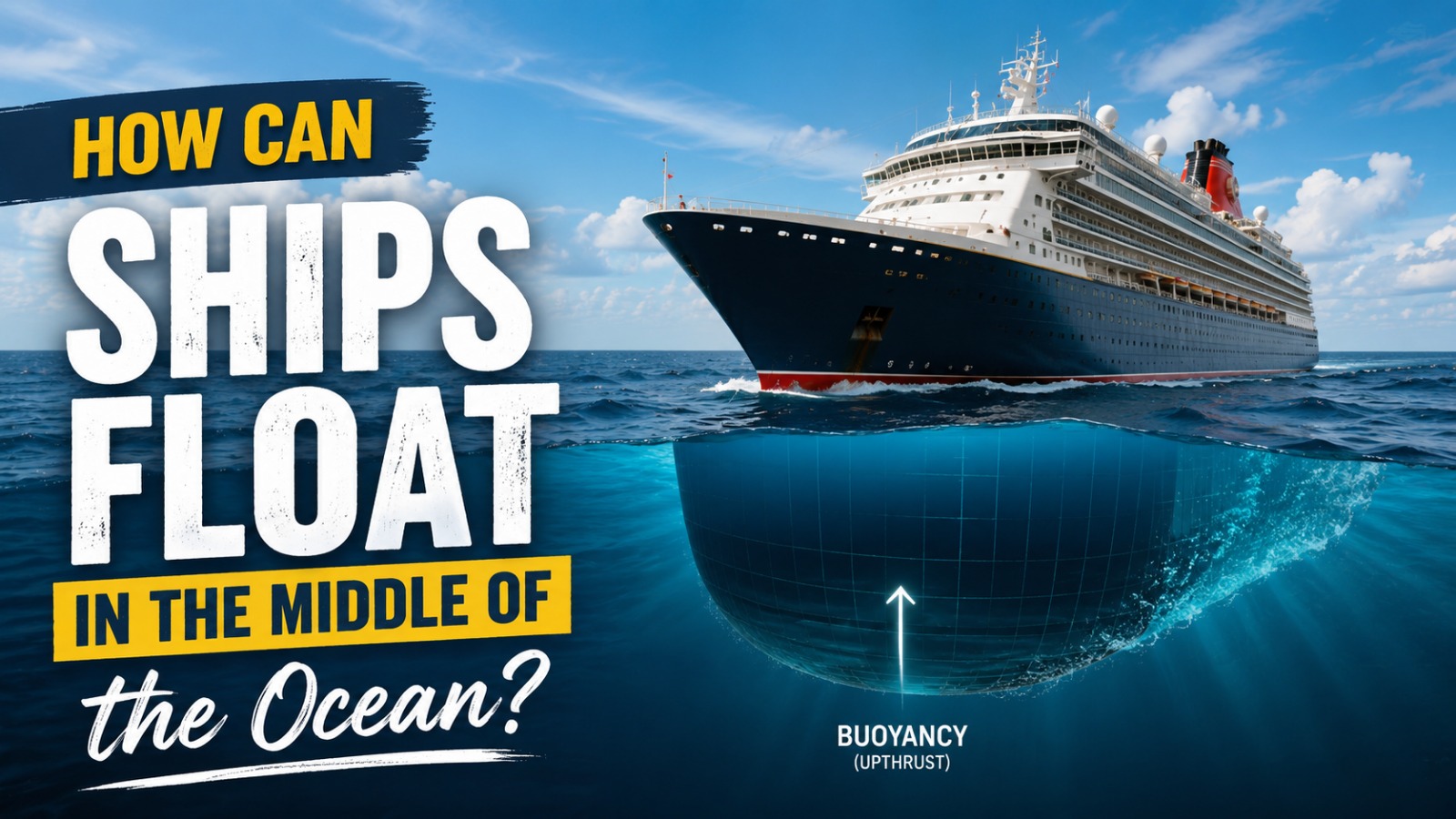
Have you ever wondered how a massive ship weighing thousands of tons can stay on the surface of the ocean? At first, it may seem impossible for such a heavy structure to float. However, ships are designed according to important principles of physics, buoyancy, and water displacement. Their shape and construction allow them to remain stable even while carrying passengers, vehicles, or large amounts of cargo. Understanding how ships float can make sea travel easier to appreciate.
THE BASIC PRINCIPLE OF BUOYANCY
The main reason a ship can float is buoyancy. Buoyancy is an upward force produced by water when an object is placed in it. According to Archimedes' principle, an object in water experiences an upward force equal to the weight of the water it displaces. When this upward force is strong enough to support the ship's weight, the ship can remain afloat.
A ship does not need to be lighter than water as a whole to float. Instead, its overall design allows it to displace enough water to create sufficient buoyant force. This is why a large steel ship can float even though steel itself is much denser than water. The ship's structure and enclosed spaces are essential to this process.
HOW SHIP SHAPE HELPS IT FLOAT
The shape of a ship's hull plays an important role in keeping it above water. Most ships have a large, carefully designed hull that spreads their weight over a significant volume of water. The hull creates enough displacement to generate the upward force needed to support the vessel.
The interior of the hull also contains many enclosed spaces filled mainly with air. This makes the ship's average density lower than the density of solid steel. As a result, the vessel can displace a large amount of water without sinking completely. Engineers carefully design hull dimensions to provide both flotation and stability.
WHY STEEL SHIPS DO NOT SINK
Steel is a heavy material, so a solid block of steel placed in water would normally sink. A ship, however, is not a solid block of steel. Its hollow structure contains large areas of air and empty space, which changes its average density.
When the steel structure and its internal spaces are considered together, the average density of the vessel can be low enough for it to float. The hull pushes water away as the ship enters the ocean. The displaced water then produces the buoyant force that supports the ship.
THE ROLE OF WATER DISPLACEMENT
Water displacement is one of the most important concepts in understanding ship flotation. When a ship enters the water, it pushes some water out of the space occupied by its hull. The amount of water displaced depends on how deeply the ship sits in the water and the shape of its hull.
If a ship becomes heavier because of additional cargo, passengers, fuel, or equipment, it will generally sit deeper in the water. This allows it to displace more water and produce greater buoyant force. However, every ship has safe operating limits. Loading too much weight can cause the vessel to become dangerously low in the water.
SHIP STABILITY AND BALANCE
Floating is not the only requirement for a ship to operate safely. A vessel must also maintain stability and balance while moving through waves and changing conditions. Engineers consider the position of the ship's center of gravity and buoyancy when designing the vessel.
Cargo must also be distributed properly throughout the ship. Uneven loading can cause the vessel to tilt to one side, which may reduce stability. Modern ships use careful loading plans and stability calculations to maintain safe operation. These measures are especially important for large cargo and passenger vessels.
WHAT HAPPENS WHEN A SHIP TAKES ON WATER?
A ship can remain afloat only while its structure and buoyancy systems work properly. If significant amounts of water enter the hull, the water can replace air-filled spaces and increase the vessel's average density. This can reduce its ability to displace enough water to support its weight.
Modern vessels use watertight compartments to limit the spread of water after damage. Pumps and other safety systems can also help manage water entering certain areas. However, serious flooding can still threaten a ship's stability. This is why regular maintenance, inspections, and emergency procedures are essential.
MODERN TECHNOLOGY AND SHIP DESIGN
Modern shipbuilding combines engineering, computer modeling, and advanced materials to create vessels that can float safely and efficiently. Engineers test hull designs to understand how ships behave under different water and weather conditions. Navigation and monitoring systems also help crews manage the vessel during a journey.
Different types of ships require different hull designs. Passenger ships may prioritize comfort and stability, while cargo vessels are designed to carry heavy loads efficiently. Specialized ships can have unique shapes based on their intended function. Despite these differences, they all rely on the fundamental principles of buoyancy and displacement.
CONCLUSION
Ships can float because of the relationship between buoyancy, water displacement, ship design, and weight. Although many ships are constructed from heavy steel, their hollow hulls give them an average density that allows them to remain afloat. The water displaced by the hull creates an upward force that supports the vessel. Proper weight distribution and stability are also essential for safe operation. Thanks to careful engineering and modern technology, enormous ships can travel safely across oceans while carrying people and goods.
Tentang Penulis
Gusti Ayu Tita P
Penulis — Universitas STEKOM
Penulis aktif yang berfokus pada isu-isu akademik, teknologi pendidikan, dan pengembangan sumber daya manusia di lingkungan kampus.