
How Can Social Assistance Support Community Economic Independence?
Gusti Ayu Tita P
1 September 2026
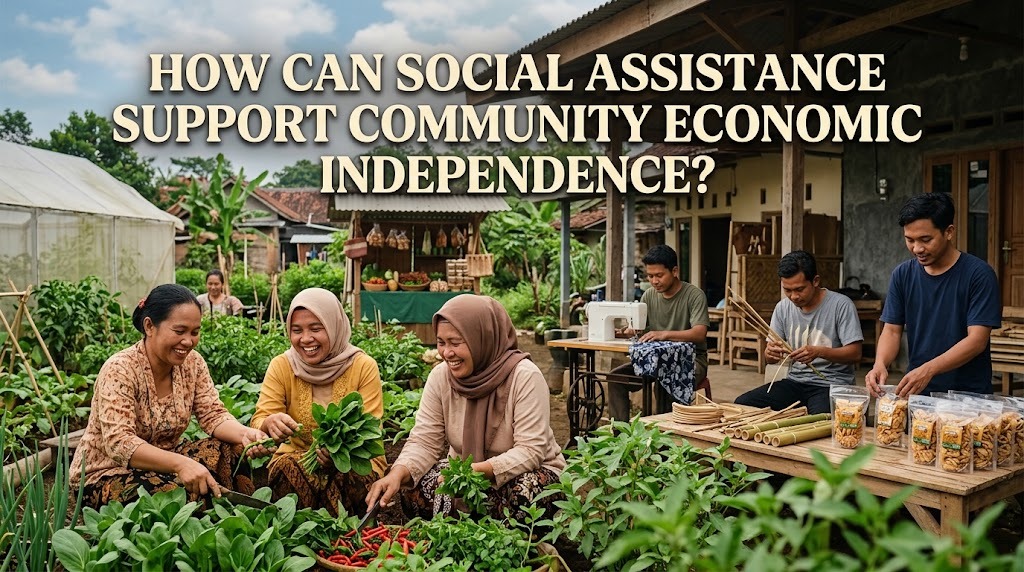
Economic Independence means that individuals and communities have greater ability to meet their needs through sustainable income and economic opportunities. Social assistance can contribute to this goal by providing temporary support to eligible households facing financial difficulties. This support can help families maintain essential needs while they work toward greater financial stability. However, social assistance alone cannot create complete economic independence. Long-term progress usually requires employment, education, skills, and access to productive opportunities.
Communities can become stronger when residents have opportunities to improve their economic conditions. Community Development can involve education, skills training, entrepreneurship, employment programs, and cooperation among local organizations. Social assistance can serve as one component within these broader efforts. When short-term support is connected with long-term development, families may have more opportunities to improve their circumstances. The approach should always follow the rules and objectives of each assistance program.
HELPING FAMILIES MEET BASIC NEEDS
One important role of Social Assistance is helping eligible families manage essential expenses. Support can reduce immediate financial pressure and help households maintain basic consumption during difficult periods. Depending on the program, assistance may support food, education, healthcare, housing, or other approved needs. Meeting these needs can give families greater stability while they look for longer-term solutions. The specific benefits and conditions depend on the relevant program.
Stable households may have more capacity to participate in education and economic activities. Basic Needs should therefore be addressed as part of a broader strategy for improving household resilience. However, assistance should be used responsibly and according to applicable requirements. Families should not assume that temporary support will continue indefinitely. Long-term financial improvement requires sustainable sources of income and appropriate opportunities.
DEVELOPING USEFUL COMMUNITY SKILLS
Skills can play an important role in helping people move toward greater economic independence. Skill Development may include vocational training, digital abilities, communication, financial literacy, agriculture, crafts, or other practical areas. Training should be connected to realistic employment or business opportunities whenever possible. Community organizations and public institutions may provide different forms of training depending on local availability. Recipients should verify training providers before participating.
Developing skills can improve people's ability to respond to changes in the labor market. Work Skills such as teamwork, problem-solving, time management, and communication can complement technical abilities. People can gradually build confidence by practicing what they learn. Training does not guarantee employment, but it can improve preparation for available opportunities. Continuous learning can also help individuals adapt as economic conditions change.
SUPPORTING SMALL BUSINESS ACTIVITIES
Entrepreneurship can provide another pathway toward economic independence. Small Businesses may involve food production, agriculture, handicrafts, retail, services, or digital commerce depending on local demand. Before starting a business, individuals should understand potential customers, costs, competition, and expected income. Starting on a manageable scale can help reduce financial risks. Business activities should also comply with relevant regulations.
Basic financial management is essential for sustainable business operations. Business Management includes tracking costs, setting reasonable prices, managing inventory, and recording sales. Entrepreneurs should avoid using all available household resources without a realistic plan. Training and mentoring can help new business owners understand common challenges. A small business can contribute to community economic activity when it is managed responsibly and responds to genuine market needs.
CREATING LOCAL ECONOMIC OPPORTUNITIES
Strong communities need access to diverse Economic Opportunities. Local employment, entrepreneurship, vocational training, cooperatives, and community-based economic activities can create pathways for residents to improve their incomes. Social assistance can provide temporary support while people pursue these opportunities. However, the availability of opportunities depends on local economic conditions and government programs. Communities can benefit when public and private organizations work together to expand access.
Local economic activity can also encourage cooperation among residents. Local Economy growth may occur when people buy, sell, produce, and provide services within their communities. Supporting local businesses can help circulate money and create additional demand. Community members can also share knowledge and build partnerships where appropriate. These activities can complement social protection efforts and support longer-term economic resilience.
BUILDING LONG TERM FINANCIAL RESILIENCE
Economic independence requires more than receiving temporary assistance. Financial Resilience refers to the ability of households and communities to manage economic difficulties and recover from financial shocks. Families can strengthen resilience through budgeting, skills development, employment, savings when possible, and responsible financial decisions. Social assistance can provide important support during periods of vulnerability. The long-term objective is to help households gain greater capacity to manage their own financial needs.
Government programs can contribute to this process by connecting eligible recipients with development opportunities where such programs exist. Economic Empowerment can include training, employment support, entrepreneurship programs, financial education, or access to other legitimate resources. Recipients should take advantage of suitable opportunities while following program requirements. Progress toward independence may take time and differ between households. Consistent development can create stronger foundations for future stability.
CONCLUSION
Social assistance can support community economic independence by reducing immediate financial pressure and helping eligible families maintain essential needs. However, long-term independence requires more than temporary financial support. Skill Development, employment, entrepreneurship, education, and local economic opportunities can help communities build stronger sources of income.
The most effective approach is to connect short-term social protection with long-term economic development. Economic Empowerment can give individuals and communities greater opportunities to improve their skills, income, and financial resilience. When government institutions, communities, businesses, and individuals work together responsibly, social assistance can become part of a broader pathway toward sustainable economic independence.
Tentang Penulis
Gusti Ayu Tita P
Penulis — Universitas STEKOM
Penulis aktif yang berfokus pada isu-isu akademik, teknologi pendidikan, dan pengembangan sumber daya manusia di lingkungan kampus.