How Can Students Handle Problems Without Their Families Nearby?
Gusti Ayu Tita P
29 September 2026
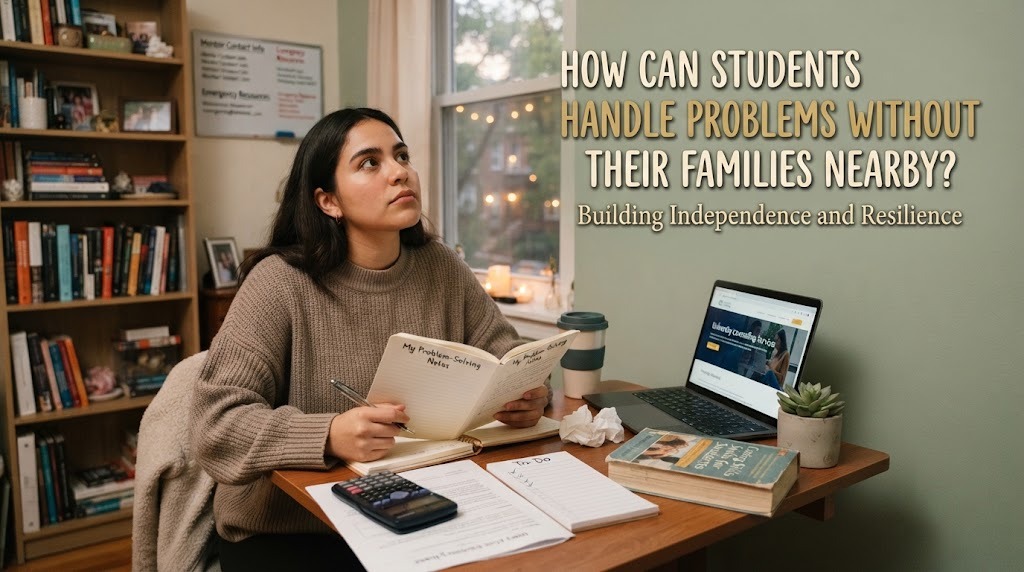
Living away from home can teach students many important life skills. One of the biggest challenges is learning how to handle problems when family members are not nearby. Students may face academic pressure, financial difficulties, health concerns, or personal problems without immediate help from their families. However, these situations can help students become more independent, responsible, and confident. With the right approach, students can learn to solve problems calmly and make better decisions.
STAY CALM AND UNDERSTAND THE PROBLEM
The first step in handling a problem is to stay calm instead of making decisions based on panic. Students should take some time to understand what actually happened and identify the main cause. Writing down the problem can make a difficult situation feel more manageable. Students can then separate problems that need immediate attention from those that can be handled later. A calm mind helps students think more clearly and choose a suitable solution.
Students should also avoid blaming themselves too quickly. Some problems are part of the learning process when living independently. By looking at the situation objectively, students can understand what they can control and what they cannot. This approach can prevent small problems from becoming more stressful.
TRY TO SOLVE SIMPLE PROBLEMS INDEPENDENTLY
Students do not always need to ask their families to solve every problem. Simple situations, such as managing a daily schedule, fixing a basic household issue, or organizing expenses, can often be handled independently. Learning to solve these problems helps students develop problem solving skills. It also makes them more confident when facing similar situations in the future. Small successful decisions can gradually build independence.
However, being independent does not mean refusing all help. Students should recognize their own limits and understand when a problem requires support from someone else. Independence means knowing how to act responsibly while also knowing when to ask for help.
CONTACT FAMILY WHEN SUPPORT IS NEEDED
Even when family members are far away, communication can still provide important emotional support. Students can call or send messages to their parents or other trusted family members when they feel confused or overwhelmed. Sharing a problem can help students feel less alone. Family members may also provide advice based on their experience. Regular communication can make students feel connected even when they live in different places.
Students do not need to wait until a problem becomes serious before contacting their families. A short conversation can sometimes provide reassurance and a different perspective. At the same time, students can continue working toward a solution themselves. Family support and personal independence can work together.
ASK TRUSTED PEOPLE FOR HELP
Sometimes family members cannot provide immediate assistance because of distance or other responsibilities. In these situations, students can contact trusted friends, lecturers, roommates, or other responsible people around them. They may be able to provide practical assistance or suggest useful solutions. Having reliable people nearby is especially important when students are dealing with urgent situations. Building a positive support network can make life away from home easier.
Students should choose people who are trustworthy and respectful. They should also explain their situation clearly so others can understand what kind of help is needed. Asking for help is not a sign of weakness. Knowing when and where to seek support is an important part of becoming mature.
MAKE A PLAN BEFORE TAKING ACTION
After understanding a problem, students should create a simple plan. They can list possible solutions and consider the advantages and disadvantages of each option. For urgent problems, students should focus on the safest and most practical action first. For less urgent situations, they can take more time to compare different choices. Planning can reduce confusion and prevent unnecessary mistakes.
Students can also divide a large problem into smaller steps. Completing one step at a time can make a difficult situation feel easier to manage. If the first solution does not work, students can review the situation and try another approach. This process teaches adaptability and decision making.
LEARN FROM PREVIOUS EXPERIENCES
Every problem can become a learning experience. After solving a difficult situation, students can think about what caused it and what they could do differently next time. For example, a student who struggles with money may learn to create a better monthly budget. A student who often misses deadlines may learn to use a schedule or reminder. Learning from mistakes helps students become better prepared for future problems.
Students should focus on improvement rather than simply feeling guilty about mistakes. Living away from home naturally involves new experiences and unexpected challenges. Over time, these experiences can strengthen confidence, responsibility, and independence. The ability to learn from problems is one of the most useful skills students can develop.
KNOW WHEN A PROBLEM NEEDS PROFESSIONAL HELP
Some problems are too serious to handle alone. Students should seek appropriate professional or emergency assistance when they face situations involving serious health concerns, safety risks, legal issues, or other urgent circumstances. A university support service, counselor, medical professional, or emergency service may be more suitable than trying to solve the situation independently. Getting professional help can be an important and responsible decision.
Students should also avoid hiding serious problems because they are afraid of worrying their families. When necessary, they can inform their families while also contacting the appropriate local support service. The goal is to make sure the problem is handled safely and properly. Knowing the right source of help is an important part of living independently.
CONCLUSION
Handling problems without family nearby can be challenging, but it can also help students become more independent and confident. Students can start by staying calm, understanding the problem, and trying practical solutions. They should communicate with their families when emotional support is needed and build a reliable support network nearby. Most importantly, students should learn from their experiences and recognize when professional help is necessary. These habits can prepare students to handle future challenges more responsibly.
Tentang Penulis
Gusti Ayu Tita P
Penulis — Universitas STEKOM
Penulis aktif yang berfokus pada isu-isu akademik, teknologi pendidikan, dan pengembangan sumber daya manusia di lingkungan kampus.