
How Can Technology Support a New SAR Team During Rescue Operations?
Gusti Ayu Tita P
29 September 2026
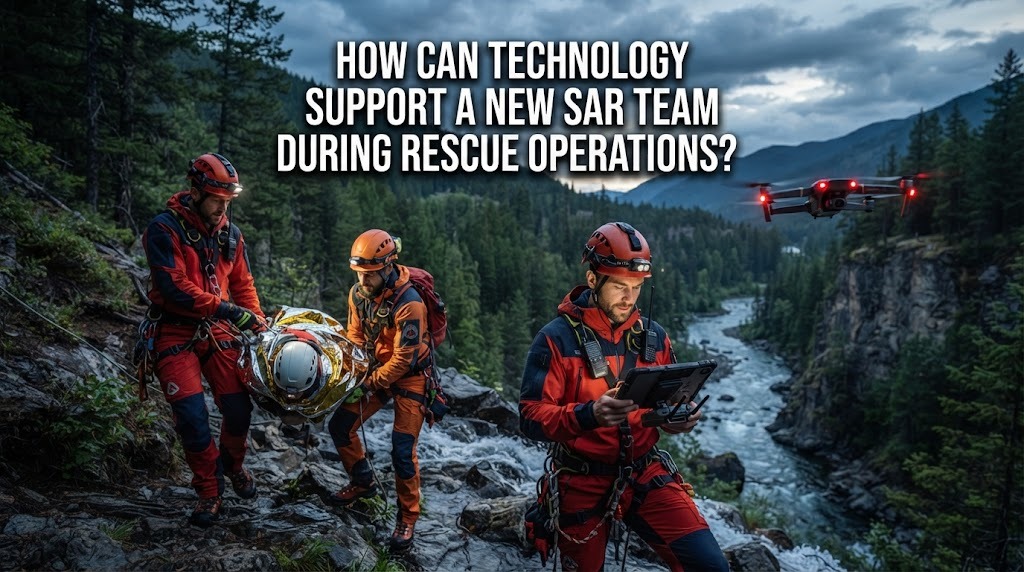
Technology can provide important support for a new SAR team during rescue operations. Search and rescue missions often involve difficult terrain, limited visibility, communication problems, and large areas that are difficult to search manually. Indonesia's SAR guidance issued in 2025 describes modern communication and navigation technology as important parts of current SAR operations and discusses satellite systems, drones, and other technological tools.
For a new team, technology should be used to support trained rescuers rather than replace basic rescue skills. GPS, drones, communication systems, digital maps, and information management tools can help members collect information and coordinate their actions more effectively. BASARNAS has also identified technology, communication systems, and supporting infrastructure as important parts of SAR preparedness.
SUPPORTING SEARCH AREA MAPPING
One useful role of technology is helping a new SAR team understand and map the search area. Digital maps and GPS devices can help rescuers identify locations, record routes, and mark important points during an operation. Accurate location information can make it easier for team members to understand which areas have already been searched. This can support more systematic search operations.
Technology can also help combine information from different sources into one operational picture. INSARAG's Information Management Working Group focuses on improving information management and decision-making for USAR operations through systems such as the INSARAG Coordination and Management System. For a new SAR team, organized mapping and information management can reduce confusion when several groups are searching at the same time.
USING DRONES FOR SEARCH SUPPORT
Drones can help SAR teams observe locations that are difficult or dangerous to reach directly. They can provide an aerial view of forests, mountains, disaster areas, shorelines, or other locations depending on the equipment and mission. BASARNAS has reported the use of drone thermal monitoring during a missing-person search in Mount Salak, where ground teams also faced steep terrain and communication limitations.
Drones can also become more useful when combined with ground teams and other search resources. In its January 2026 evaluation of disaster operations in Aceh and Sumatra, BASARNAS highlighted the need to integrate drone technology with ground teams and K9 units. However, drone operators still need appropriate training, and the technology must be used according to the mission, weather, regulations, and operational safety requirements.
IMPROVING EMERGENCY COMMUNICATION
Reliable communication is essential when a SAR team works across a large or difficult area. Radios, satellite communication, emergency signal systems, and other communication technologies can help rescuers exchange important information. BASARNAS conducted a communications workshop covering COSPAS-SARSAT distress signals, direction finding, and satellite communication equipment in 2025. These technologies can support the team when conventional communication methods are limited.
Technology does not completely remove communication challenges. BASARNAS reported that communication blind spots affected coordination during disaster operations in Aceh and Sumatra in 2025. A new team should therefore have backup communication methods and practice using them before deployment. This can help members continue sharing information when one communication system becomes unavailable.
HELPING WITH REAL TIME INFORMATION
Modern technology can help rescuers receive and organize information during an active operation. Digital databases, location tracking, mapping systems, and communication platforms can make it easier to update information about victims, search areas, resources, and team positions. BASARNAS SAR Planning training in 2025 included modern information systems alongside operational planning, coordination, and evaluation.
Organized information is particularly useful when an emergency involves multiple teams or agencies. A new SAR team can use digital tools to maintain records and provide updates through established operational channels. INSARAG also identifies information management and technology as one of the main areas within its preparedness resources. Good information management can help leaders make decisions based on clearer and more current information.
SUPPORTING NAVIGATION AND ROUTE PLANNING
Technology can help a new team identify safer and more practical routes to a search location. GPS, satellite navigation, digital maps, and location data can help rescuers understand terrain and track movement during an operation. Indonesia's 2025 SAR guidance specifically discusses the role of modern navigation technology in helping teams determine routes toward emergency locations.
However, electronic navigation should not replace traditional skills. A device can lose power, experience technical problems, or become less useful when communication signals are limited. Map reading, compass use, and field observation remain important supporting skills for SAR personnel. Combining technology with basic navigation abilities gives a new team more than one way to determine its position and route.
IMPROVING RESOURCE AND TEAM COORDINATION
Technology can also support how a new SAR team manages people and equipment. A digital system can help track personnel, vehicles, equipment, search locations, and operational information when appropriate systems are available. INSARAG's information management work is specifically aimed at supporting more effective coordination and decision-making during USAR operations. This can become valuable when an incident requires several teams.
Recent BASARNAS evaluations also identified integrated command and control systems as an area that can strengthen disaster response. For a new SAR team, technology can therefore support coordination rather than create a separate communication structure. Team members still need to follow the established command system and operational procedures.
COMBINING TECHNOLOGY WITH TRAINING
Technology is most useful when SAR personnel know how to operate it correctly. A new SAR team should include technology training in its regular preparation, especially for drones, GPS devices, radios, digital mapping tools, and other equipment relevant to its mission. BASARNAS's SAR Planning training emphasized the importance of combining operational planning with modern technology and evaluation.
Practical exercises can show whether technology actually helps the team under field conditions. Members can practice operating devices while also dealing with difficult terrain, limited communication, changing weather, or incomplete information. After each exercise, the team should review what worked and what needs improvement. Technology readiness and rescue readiness should develop together so that equipment becomes a practical operational tool rather than an unused resource.
CONCLUSION
Technology can support a new SAR team in many ways, including search mapping, drone observation, emergency communication, navigation, information management, and team coordination. Indonesia's current SAR guidance recognizes modern communication and navigation technology as important components of rescue operations, while recent BASARNAS activities show the practical use of drones, satellite communication, and information systems.
The key is to combine technology with trained personnel, clear procedures, strong teamwork, and backup methods. A new team should understand both the benefits and limitations of every technological tool it uses. With regular training and practical exercises, technology can help a search and rescue team work in a more organized, informed, and responsive way during emergency operations
Tentang Penulis
Gusti Ayu Tita P
Penulis — Universitas STEKOM
Penulis aktif yang berfokus pada isu-isu akademik, teknologi pendidikan, dan pengembangan sumber daya manusia di lingkungan kampus.



