
How Can Technology Support Environmental Management in Adiwiyata Schools?
Gusti Ayu Tita P
15 September 2026
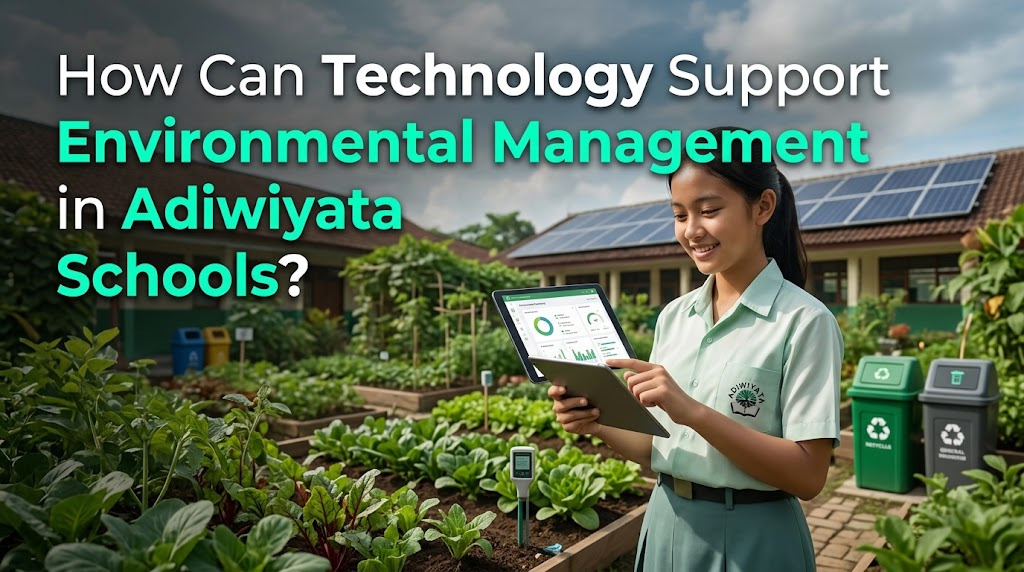
Technology has become an important part of modern education and can also support environmental management in schools. In an Adiwiyata School, technology can help students, teachers, and school staff monitor environmental activities and share information more effectively. Digital tools can be used for education, documentation, waste management, energy monitoring, and environmental campaigns. When used responsibly, technology can make environmental programs more organized and engaging. Therefore, technology for environmental management can strengthen the implementation of the Adiwiyata Program.
WHY IS TECHNOLOGY IMPORTANT FOR ENVIRONMENTAL MANAGEMENT?
Technology can make environmental information easier to collect, organize, and share. Schools can use computers, smartphones, digital platforms, and other suitable tools to document environmental activities. For example, students can record waste management projects, school gardening activities, or energy-saving campaigns through photos and videos. Digital records can help schools review their activities and identify areas that need improvement. This makes technology useful for supporting environmental management.
Technology can also make environmental education more interesting for students. Teachers can use presentations, educational videos, digital posters, and interactive materials to explain environmental topics. Students may become more interested when they can use familiar digital tools to learn about waste, conservation, and sustainability. However, technology should support real environmental action rather than replace practical activities. Combining digital learning with direct participation can create a stronger environmental education experience.
HOW CAN TECHNOLOGY SUPPORT WASTE MANAGEMENT?
Digital tools can help schools organize and monitor waste management activities. Students can use simple digital records to document the amount or type of waste collected in certain school areas. The information can then be discussed to identify ways to reduce unnecessary waste. Schools can also create digital campaigns that encourage students to separate, reuse, and recycle waste correctly. These activities can strengthen school waste management practices.
Technology can also support creative recycling projects. Students can search for safe ideas for reusing suitable materials and then develop their own projects under teacher supervision. They can document the process through photos, videos, or digital presentations. The results can be shared with other classes to encourage wider participation. In this way, technology can connect waste reduction, recycling, and environmental awareness.
HOW CAN TECHNOLOGY HELP SAVE WATER AND ENERGY?
Technology can help schools observe and manage the use of water and electricity. Where suitable monitoring equipment is available, schools can use digital systems or meters to observe resource consumption. The information can help identify unusual increases or areas where resources may be wasted. Schools can then use the results to develop better conservation practices. This can support more effective water conservation and energy conservation.
Even without advanced systems, schools can use simple digital reminders to encourage responsible resource use. Students can create posters, announcements, or short videos reminding everyone to close water taps and switch off unused electrical equipment. Digital calendars or school communication platforms can also be used to organize conservation activities. These simple approaches can make environmental messages easier to share. When combined with daily habits, technology can help strengthen a school's conservation culture.
HOW CAN STUDENTS USE TECHNOLOGY FOR ENVIRONMENTAL ACTIVITIES?
Students can use their digital skills to create useful environmental content. They can produce digital posters, short videos, articles, presentations, or social media campaigns about environmental protection. These activities allow students to combine creativity with environmental responsibility. Students can also work in teams to develop campaigns that promote waste reduction, cleanliness, or resource conservation. This can improve both digital skills and environmental awareness.
Students can also use technology to document changes in the school environment. For example, they can take photos of a school garden before and after maintenance or record the progress of a recycling project. Documentation can help students evaluate their activities and communicate the results to teachers and classmates. It can also encourage other students to participate in future projects. In this way, technology becomes a practical tool for student participation in environmental programs.
WHAT ROLE DO TEACHERS AND SCHOOL MANAGEMENT PLAY?
Teachers need to guide students so that technology is used for meaningful environmental purposes. They can provide clear assignments, explain how digital tools should be used, and check the accuracy of environmental information. Teachers can also encourage students to create digital content based on real activities rather than simply copying information from the internet. This approach can develop creativity, responsibility, and critical thinking. Teachers can therefore become important digital environmental education guides.
School management can support these efforts by providing suitable technology and establishing clear rules for responsible use. Schools should consider available resources, student needs, and privacy or safety requirements when using digital platforms. Technology should remain a supporting tool for environmental programs rather than becoming the main goal. Cooperation between management, teachers, staff, and students can make digital environmental initiatives more effective. With proper guidance, technology can strengthen the Adiwiyata School Program.
WHAT ARE THE BENEFITS OF USING TECHNOLOGY IN ADIWIYATA SCHOOLS?
Using technology can make environmental activities easier to document, communicate, and evaluate. Students can develop environmental knowledge while also practicing creativity, communication, teamwork, and digital skills. Schools can use digital information to review environmental programs and identify opportunities for improvement. Technology can also help environmental messages reach a wider school community. These benefits can support the development of a more environmentally friendly school.
However, technology should be used in a balanced way. Digital campaigns are most effective when they encourage students to take real action, such as reducing waste, caring for plants, saving water, or conserving energy. Schools should avoid depending only on digital activities while neglecting practical environmental work. The best approach is to combine technology with direct participation and consistent environmental habits. Through this balance, technology can become a valuable part of a sustainable school environment.
CONCLUSION
Technology can support environmental management in Adiwiyata Schools by helping with environmental education, waste management, conservation, documentation, communication, and evaluation. Students can use digital tools to create environmental campaigns, record activities, and share useful information with others. Teachers and school management can provide guidance and ensure that technology is used responsibly and effectively. The most important point is that technology should support real environmental action rather than replace it. When digital tools are combined with consistent participation, the Adiwiyata Program can become more organized, creative, and effective in building a sustainable and environmentally responsible school.
Tentang Penulis
Gusti Ayu Tita P
Penulis — Universitas STEKOM
Penulis aktif yang berfokus pada isu-isu akademik, teknologi pendidikan, dan pengembangan sumber daya manusia di lingkungan kampus.



