
How Can University Students Transform Their Mindset to Face the Workplace?
Gusti Ayu Tita P
10 Maret 2026
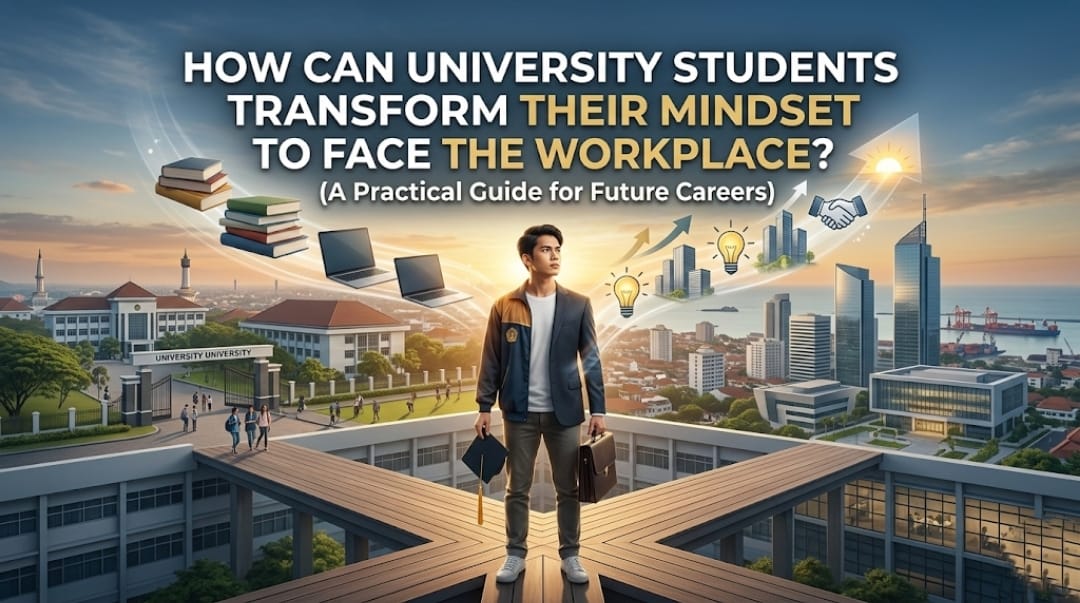
Transitioning from university life to the professional world can be a significant change for many students. During their academic years, students focus primarily on completing coursework, passing exams, and meeting academic requirements. However, the workplace often demands a broader set of skills, attitudes, and ways of thinking.
Because of this difference, transforming one’s mindset becomes an important step before entering the professional environment. Students who develop the right mindset are generally better prepared to adapt to workplace expectations and navigate the early stages of their careers.
UNDERSTANDING THE DIFFERENCE BETWEEN CAMPUS AND WORKPLACE
University environments are usually structured around learning and evaluation. Students receive guidance from lecturers, follow defined schedules, and complete assignments with clear instructions.
In contrast, the workplace often requires individuals to work more independently while collaborating with colleagues toward shared organizational goals. Employees are expected to manage responsibilities, communicate effectively, and solve problems in real situations.
Recognizing these differences helps students begin adjusting their mindset to better align with professional expectations.
DEVELOPING A GROWTH-ORIENTED MINDSET
A growth-oriented mindset encourages individuals to believe that skills and abilities can improve through effort and learning. Students who adopt this perspective are more willing to take on challenges and develop new competencies.
In the workplace, tasks and responsibilities may sometimes feel unfamiliar. Instead of feeling discouraged, individuals with a growth mindset treat these situations as opportunities to expand their knowledge and capabilities.
This approach encourages continuous improvement and helps professionals remain adaptable throughout their careers.
SEEKING PRACTICAL EXPERIENCES
One effective way for students to transform their mindset is by gaining practical experience before graduation. Activities such as internships, part-time work, volunteer programs, and campus organizations expose students to real-world situations.
These experiences allow students to apply theoretical knowledge in practical contexts. They also help individuals understand workplace dynamics, including teamwork, communication, and professional responsibility.
Practical experiences often provide valuable insights that cannot always be gained from classroom learning alone.
BUILDING PROFESSIONAL ATTITUDES
Mindset transformation also involves developing attitudes that support professional behavior. Responsibility, reliability, and accountability are qualities that employers often expect from their employees.
Students can begin practicing these attitudes by managing their time effectively, completing tasks with consistency, and maintaining clear communication with peers and mentors.
Developing professional attitudes early helps students build habits that will be valuable when they enter the workforce.
LEARNING TO HANDLE CHALLENGES AND FEEDBACK
The workplace often involves constructive feedback, performance evaluations, and occasional criticism. For many students, receiving feedback can feel uncomfortable if they are not used to it.
Transforming one’s mindset means learning to view feedback as a tool for improvement rather than a negative judgment. Students who can accept and use feedback effectively often improve faster and build stronger professional relationships.
This openness to feedback supports both personal development and career advancement.
PREPARING FOR CONTINUOUS LEARNING
Graduation does not mark the end of learning. In many industries, professionals must regularly update their knowledge to stay relevant in a rapidly changing environment.
Students who understand this reality tend to approach their careers with curiosity and willingness to learn. They remain open to training opportunities, new technologies, and different perspectives that can strengthen their abilities.
Continuous learning helps individuals maintain competitiveness in the evolving job market.
CONCLUSION
Transforming one’s mindset is an essential step for university students preparing to enter the workplace. By understanding the differences between academic life and professional environments, students can begin developing the attitudes and skills needed for career success.
Through practical experience, growth-oriented thinking, and openness to learning, students can build a mindset that supports adaptability and long-term professional development.
Tentang Penulis
Gusti Ayu Tita P
Penulis — Universitas STEKOM
Penulis aktif yang berfokus pada isu-isu akademik, teknologi pendidikan, dan pengembangan sumber daya manusia di lingkungan kampus.















