How Can You Avoid Major Traffic Bottlenecks During Homecoming Travel?
Gusti Ayu Tita P
10 Agustus 2026
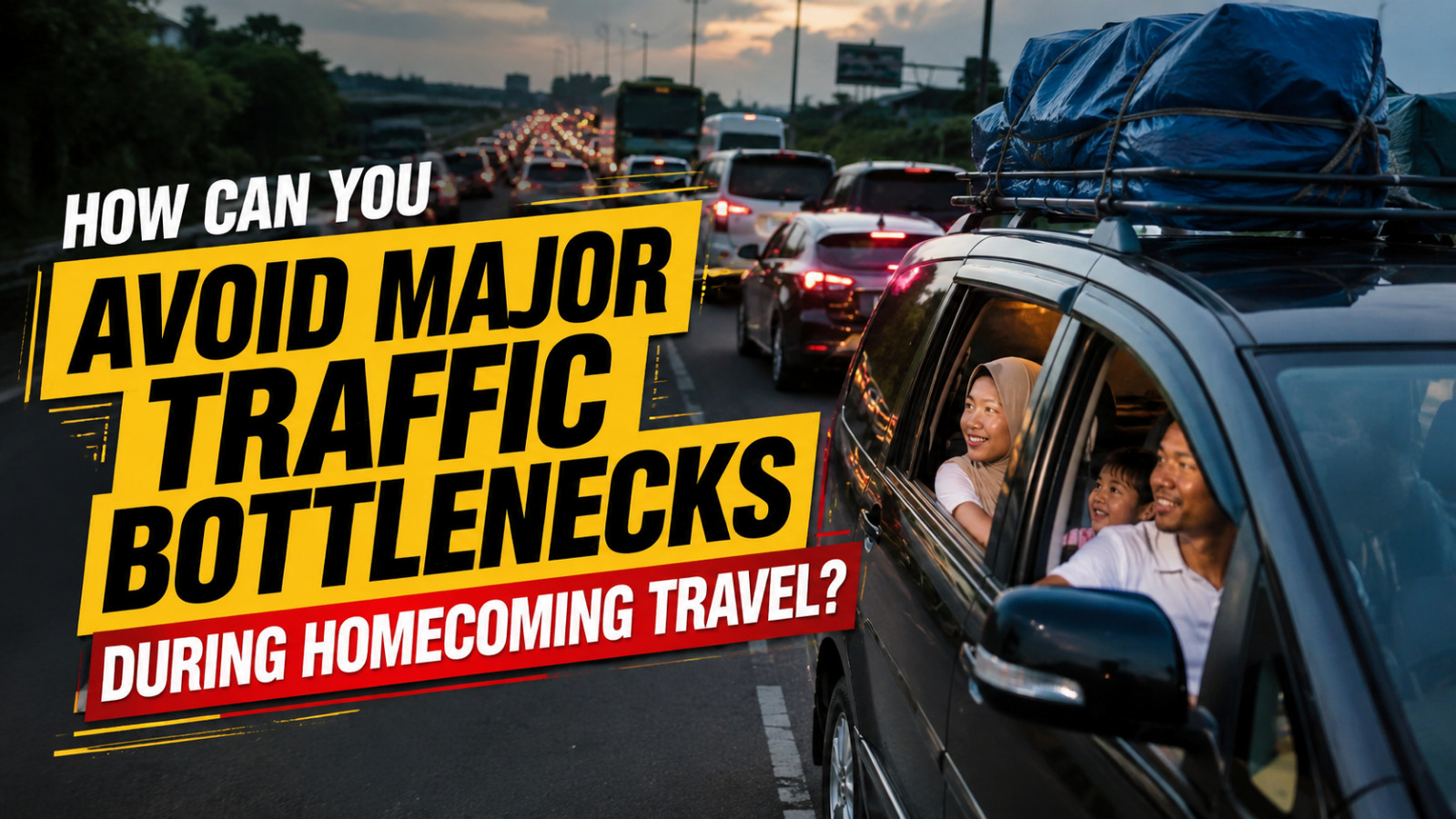
Traffic Bottlenecks are points on a road where vehicle movement becomes significantly slower because traffic demand is higher than the available road capacity. During the homecoming season, bottlenecks can appear on toll roads, highways, intersections, bridges, city entrances, and transportation hubs. A small disruption at one location can create a long queue behind it. This can make a journey much longer than expected. Understanding where and why bottlenecks occur helps travelers make better decisions.
Homecoming traffic is more challenging because many people travel during similar periods. Bottlenecks can also be caused by accidents, road construction, toll gates, crowded rest areas, vehicle breakdowns, or sudden changes in traffic flow. Travelers cannot control every road condition, but they can prepare for possible disruptions. Travel Planning is therefore essential before starting a long journey.
CHECK TRAFFIC INFORMATION BEFORE LEAVING
Checking reliable Traffic Information before departure is one of the easiest ways to reduce the risk of entering a major bottleneck. Travelers can monitor traffic conditions through navigation services and official transportation updates. Information about congestion, accidents, road closures, and traffic arrangements can help travelers select a better route. It is useful to check the entire journey rather than only the area around the starting point.
Traffic information should also be checked shortly before departure because conditions can change quickly. A route that appears clear several hours earlier may become congested later. Travelers should avoid making decisions based entirely on old information. Current information provides a better basis for choosing a departure time and route.
CHOOSE THE RIGHT DEPARTURE TIME
Departure timing has a strong influence on exposure to congestion. Many travelers leave at similar times because they follow holiday schedules or work arrangements. This can create intense traffic on major routes. Choosing a less crowded period may help travelers avoid some of the busiest conditions.
However, travelers should not choose an inconvenient time simply to avoid traffic. Driving late at night or very early in the morning may increase fatigue for some drivers. The chosen time should allow the driver to be sufficiently rested and alert. Travel Safety should always remain more important than saving a few hours.
PREPARE ALTERNATIVE ROUTES
Having Alternative Routes can help travelers respond when the main route becomes severely congested. Before departure, travelers can identify one or two possible alternatives. These routes should be evaluated based on road quality, distance, safety, and vehicle suitability.
A shorter route is not necessarily a better route. Some alternative roads may be narrow, poorly lit, or unsuitable for large vehicles. Travelers should avoid unfamiliar roads when conditions appear unsafe. The purpose of an alternative route is to provide a practical backup rather than simply finding the shortest possible distance.
AVOID KNOWN BOTTLENECK LOCATIONS
Travelers should identify locations that commonly experience congestion during the homecoming season. These may include major intersections, toll gates, city entrances, busy markets, narrow bridges, and popular rest areas. Knowing these locations allows travelers to prepare for possible delays.
If reliable information shows that a particular location is heavily congested, travelers can consider adjusting their departure time or route. However, they should follow official traffic instructions when temporary arrangements are in place. Ignoring road restrictions in an attempt to save time can create additional risks. Road Awareness is important throughout the journey.
USE REST AREAS WISELY
Rest areas are essential during long-distance homecoming travel, but they can also become temporary bottlenecks. Large numbers of vehicles may enter the same rest area during popular travel periods. This can make parking, fuel access, food services, and exits extremely crowded.
Travelers can reduce delays by planning rest stops before they reach the busiest areas. They may consider taking breaks earlier or later when appropriate. Drivers should never skip necessary rest simply because a particular rest area is crowded. A safe alternative stopping location should be considered when available.
MAINTAIN A SAFE DRIVING DISTANCE
Maintaining an appropriate following distance is important when traffic becomes heavy. Drivers who follow too closely have less time to react when the vehicle ahead slows down suddenly. Sudden braking can create a chain reaction that makes traffic flow less stable.
Smooth acceleration and braking can help reduce unnecessary disturbances in traffic. Drivers should remain patient and avoid aggressive lane changes. Safe Driving protects individual travelers while also supporting smoother traffic movement. Good driving behavior is particularly important in stop-and-go conditions.
AVOID UNNECESSARY STOPS
Unplanned stops can contribute to traffic problems, especially on narrow roads and busy highways. Drivers should avoid stopping on road shoulders unless there is a genuine emergency. Checking phones, eating, or organizing luggage should be done at a safe stopping location.
Families should prepare frequently needed items before starting the journey. Water, snacks, tissues, and children's supplies should be placed where they can be reached safely without creating distractions. Proper preparation can reduce the need for unnecessary stops. This helps travelers maintain a more consistent journey.
USE TECHNOLOGY RESPONSIBLY
Modern technology can help travelers monitor traffic conditions and identify possible delays. Navigation applications can provide estimated travel times and alternative route suggestions. However, travelers should remember that digital information may change and should be interpreted carefully.
Drivers should never operate a phone while the vehicle is moving. A passenger can monitor the navigation application and communicate important changes to the driver. If the driver is traveling alone, the vehicle should be stopped safely before interacting with the device. Responsible technology use supports better Traffic Management without creating new safety problems.
REMAIN FLEXIBLE DURING THE JOURNEY
Even careful planning cannot guarantee a congestion-free journey. Accidents, weather, road repairs, vehicle problems, and sudden increases in traffic can occur without warning. Travelers should therefore remain flexible when conditions change.
If the main route becomes severely congested, travelers can consider an appropriate alternative or adjust their travel schedule. They should avoid making rushed decisions based only on frustration. Remaining calm allows drivers to evaluate available options more effectively. Flexibility is an important part of successful Homecoming Travel.
CONCLUSION
Avoiding major Traffic Bottlenecks during homecoming travel requires preparation, awareness, and flexibility. Travelers should check Traffic Information, choose suitable departure times, prepare Alternative Routes, identify potential congestion points, and use rest areas wisely. They should also maintain safe driving behavior and avoid unnecessary stops.
No strategy can guarantee completely smooth traffic during a busy homecoming season. However, careful Travel Planning can reduce unnecessary delays and improve the overall travel experience. By staying informed, following traffic regulations, and making responsible decisions, travelers can reach their destinations more safely and comfortably.
Tentang Penulis
Gusti Ayu Tita P
Penulis — Universitas STEKOM
Penulis aktif yang berfokus pada isu-isu akademik, teknologi pendidikan, dan pengembangan sumber daya manusia di lingkungan kampus.