How Can You Become A Local Leader Trusted By The Community?
Gusti Ayu Tita P
12 Agustus 2026
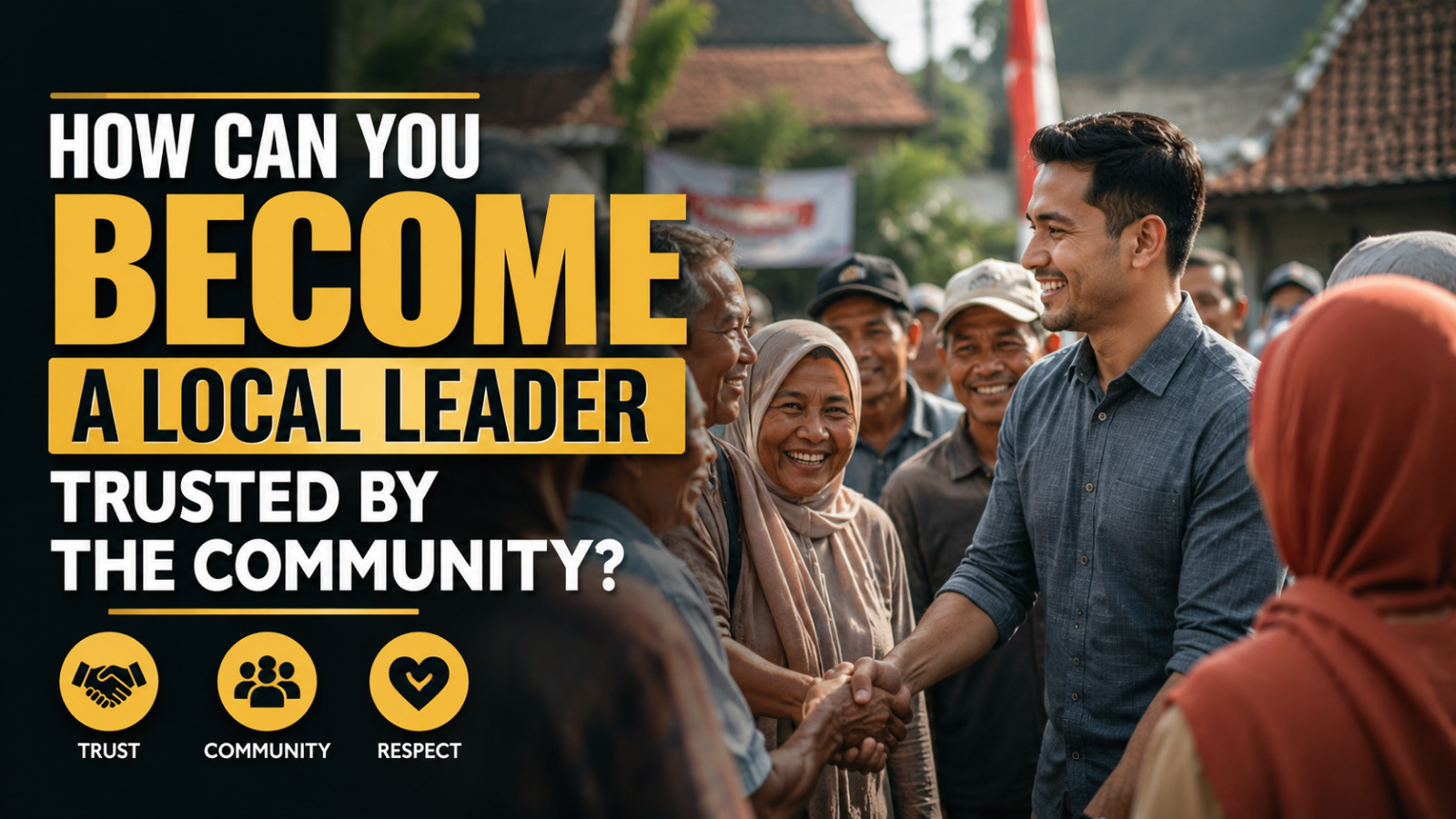
Becoming a trusted local leader requires more than having an official position. A leader must demonstrate responsibility, understand community needs, and consistently put public interests into consideration. Local Leadership becomes meaningful when people believe that their leader is willing to listen, communicate honestly, and work toward practical solutions.
Trust is not created instantly. It develops through everyday actions, transparent decisions, and the ability to keep reasonable commitments. Anyone who wants to become a trusted community leader should therefore develop strong personal values and leadership skills before seeking a formal position.
BUILD STRONG INTEGRITY
Integrity is one of the most important qualities of a trusted leader. A leader should make decisions based on ethical principles, applicable rules, and the interests of the community. Leadership Integrity also means being honest about achievements, limitations, and mistakes.
A leader should avoid using authority for personal advantage. Public responsibilities require careful management of resources and fair treatment of different groups. When people see that a leader consistently behaves responsibly, confidence can develop naturally. Integrity should therefore be demonstrated through actions rather than only through public statements.
LISTEN TO THE COMMUNITY
A trusted leader needs to understand the experiences of the people they represent. Community Listening allows leaders to learn about problems that may not appear in official reports. Conversations, public meetings, surveys, and community activities can provide valuable information.
Listening should not be limited to people who already agree with the leader. Different groups may have different priorities and opinions. A good leader should remain open to constructive criticism and use relevant feedback to improve decisions. This approach can make leadership more responsive and inclusive.
COMMUNICATE OPENLY
Good communication helps residents understand a leader's goals and decisions. A local leader should provide Open Communication about important plans, challenges, and progress. Information should be delivered in simple language so that people from different backgrounds can understand it.
Leaders should also avoid making promises that cannot realistically be fulfilled. If circumstances change, they should explain the reasons clearly and provide updated information. Honest communication can help maintain credibility even when a program does not proceed exactly as originally planned.
KEEP YOUR COMMITMENTS
Trust grows when leaders consistently fulfill reasonable commitments. A community leader should set realistic goals and make sure that promises are supported by clear plans. Responsible Leadership means understanding available resources before making public commitments.
If a commitment cannot be completed, the leader should explain the situation instead of ignoring it. Taking responsibility for delays or mistakes demonstrates maturity. Over time, consistent action is more powerful than impressive speeches because residents can evaluate leadership based on actual results.
INVOLVE THE COMMUNITY IN DECISIONS
Community members should have appropriate opportunities to participate in issues that affect their lives. Public Participation can help leaders understand local priorities and identify possible problems before implementing policies or programs. Participation may involve consultations, discussions, surveys, workshops, or other suitable mechanisms.
Involvement should be meaningful rather than merely symbolic. Leaders should explain how public feedback is considered and why certain decisions are ultimately made. Even when not every suggestion can be accepted, respectful consideration can help residents feel valued.
DEVELOP PROBLEM SOLVING SKILLS
Communities face many challenges, including infrastructure problems, economic difficulties, environmental concerns, and access to public services. A trusted leader needs strong Problem Solving abilities to understand the causes of problems and identify realistic solutions.
Effective problem solving involves gathering information, considering different perspectives, evaluating possible consequences, and selecting appropriate actions. Leaders should also monitor whether solutions actually work. If a policy does not produce the expected results, it should be reviewed and improved.
TREAT PEOPLE FAIRLY
Fairness is essential for maintaining community trust. A local leader should avoid favoritism and ensure that government or community opportunities are handled according to clear and appropriate criteria. Fair Leadership means respecting different backgrounds, opinions, and circumstances.
A leader does not have to agree with everyone. However, disagreement should be handled respectfully. Treating people fairly can reduce unnecessary conflict and create a stronger sense of community. It also demonstrates that leadership is intended to serve the wider public rather than a limited group.
CONCLUSION
Becoming a trusted local leader requires integrity, communication, active listening, fairness, responsibility, and strong problem-solving skills. Leadership should be demonstrated through consistent actions rather than words alone. People are more likely to trust leaders who listen carefully, communicate honestly, and take responsibility for their decisions.
Trust also needs to be maintained continuously. A leader who remains open to feedback, keeps realistic commitments, and prioritizes community interests can build stronger relationships with residents. Through responsible Local Leadership, individuals can contribute to a more cooperative, inclusive, and productive community.
Tentang Penulis
Gusti Ayu Tita P
Penulis — Universitas STEKOM
Penulis aktif yang berfokus pada isu-isu akademik, teknologi pendidikan, dan pengembangan sumber daya manusia di lingkungan kampus.