How Can You Deal With People Who Do Not Respect Your Personal Boundaries?
Gusti Ayu Tita P
11 September 2026
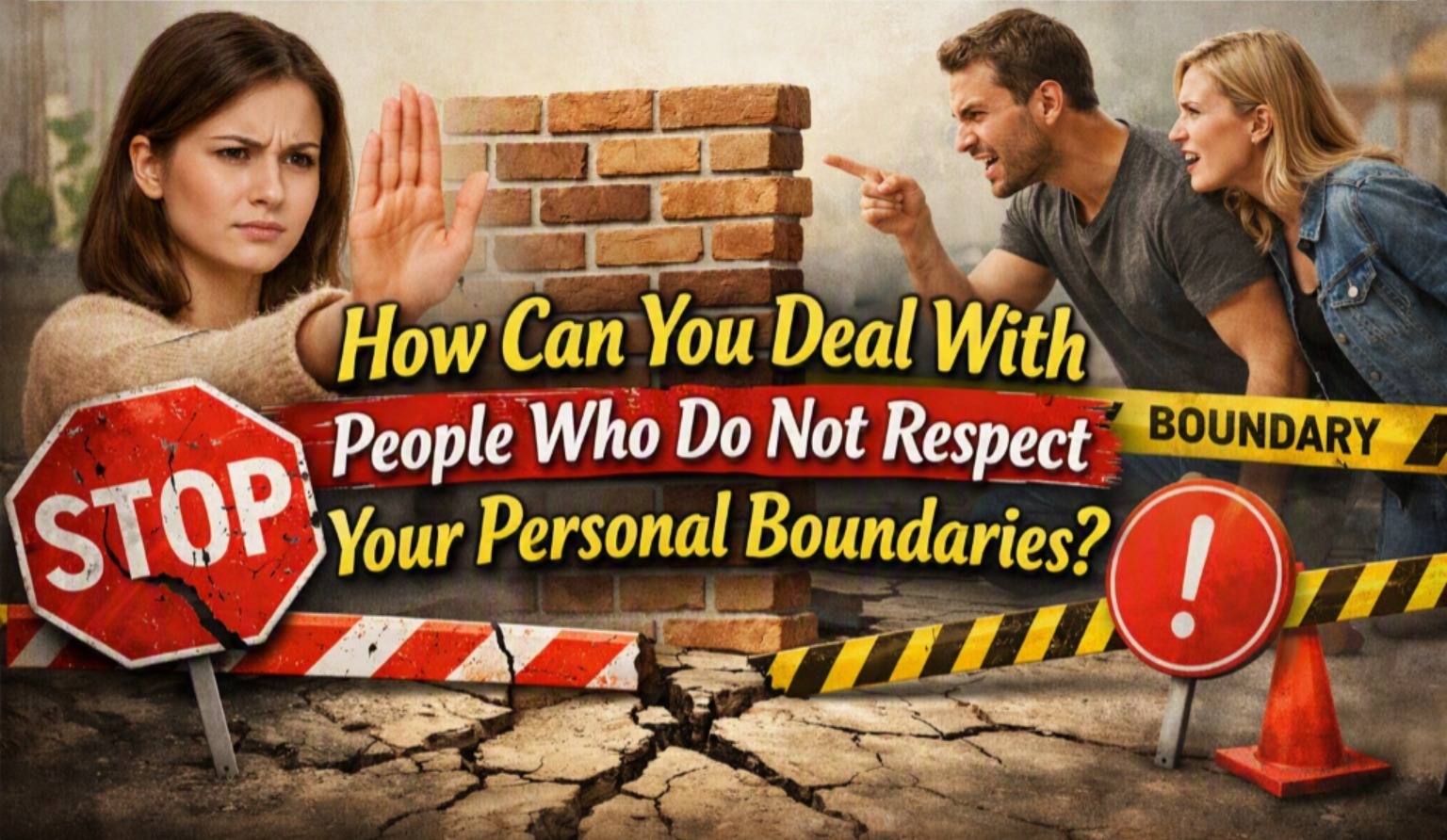
Personal boundaries are limits that define what you are comfortable accepting from other people. They help protect your time, emotions, privacy, energy, and personal space. However, some people may ignore these limits, even after you have clearly expressed them. Dealing with this situation can be difficult, especially when the person is a friend, family member, coworker, or partner. Learning how to respond calmly, firmly, and consistently can help you protect yourself without creating unnecessary conflict.
UNDERSTAND WHY PERSONAL BOUNDARIES MATTER
Personal boundaries are important because they help create healthy and respectful relationships. They allow you to communicate what you need, what makes you uncomfortable, and what behavior you cannot accept. Having boundaries does not mean you are selfish or unfriendly. Instead, healthy boundaries help both people understand their responsibilities and respect each other's needs. Without clear boundaries, you may feel stressed, uncomfortable, pressured, or emotionally exhausted.
It is also important to remember that boundaries are different for everyone. What feels acceptable to one person may feel uncomfortable to another. You have the right to decide how much personal information you want to share, how much time you can give, and how you want others to communicate with you. Respecting your own limits is an important part of maintaining emotional well-being. When you understand the value of your boundaries, it becomes easier to protect them.
IDENTIFY WHEN SOMEONE IS CROSSING YOUR BOUNDARIES
The first step is to recognize specific behaviors that make you uncomfortable. Someone may repeatedly ask personal questions, contact you outside reasonable hours, interrupt your private time, pressure you to do something, or ignore your request to stop. Other signs can include making decisions for you, using guilt to control you, or becoming angry when you say no. These behaviors may indicate that the person is not respecting your personal limits.
Try to focus on the behavior instead of immediately judging the person's character. Ask yourself what happened, how it made you feel, and which boundary was ignored. This can help you explain the problem more clearly. Being specific also makes it easier for the other person to understand what needs to change. Clear awareness gives you a stronger foundation for communicating your boundaries.
COMMUNICATE YOUR BOUNDARIES CLEARLY
When someone crosses your boundaries, communicate your expectations directly and respectfully. Avoid using unclear statements that may make your limits difficult to understand. Instead, explain what behavior you do not accept and what you need from the person. For example, you can say, I am not comfortable discussing this topic, so I would prefer to talk about something else. A clear statement can be more effective than expecting someone to understand your feelings without explanation.
You do not need to give a long explanation for every boundary you establish. A simple and firm response is enough when you are communicating a reasonable personal limit. Try to use calm language rather than insults, threats, or aggressive statements. Good communication focuses on your needs and expectations rather than attacking the other person. This approach can reduce unnecessary arguments while still making your position clear.
STAY CALM AND FIRM WHEN THEY PUSH BACK
Some people may react negatively when you begin setting boundaries. They may become defensive, make you feel guilty, or tell you that you are being too sensitive. Do not assume that their reaction means your boundary is unreasonable. Discomfort from another person does not automatically mean you have done something wrong. Stay focused on the behavior you are addressing and avoid being pulled into an unnecessary argument.
You can repeat your boundary without changing your message every time the person challenges you. This technique is sometimes called the broken record approach, where you calmly repeat the same clear statement. For example, you can say, I understand your opinion, but I am still not comfortable with that. Consistency shows that your boundary is serious and not simply a temporary reaction. Over time, people who are willing to respect you may learn to adjust their behavior.
SET CONSEQUENCES FOR REPEATED DISRESPECT
A boundary becomes more meaningful when you are prepared to take reasonable action when it is repeatedly ignored. A consequence should not be a threat or punishment designed to control someone. Instead, it should describe what you will do to protect yourself. For example, if someone repeatedly speaks to you disrespectfully, you may choose to end the conversation or leave the situation. This makes the boundary practical rather than simply verbal.
The consequence should be realistic, appropriate, and within your control. You cannot force another person to change, but you can decide how you will respond to their behavior. If a coworker repeatedly interrupts your work, you might limit unnecessary conversations or involve a supervisor when appropriate. If a friend repeatedly ignores your limits, you may reduce the amount of time you spend with them. Taking consistent action can help protect your emotional space and reinforce your boundaries.
DO NOT FEEL GUILTY FOR SAYING NO
Many people struggle with boundaries because they are afraid of disappointing others. They may believe that saying no makes them rude, uncaring, or difficult. In reality, saying no is a normal part of healthy communication. You can care about someone while still refusing a request that makes you uncomfortable or exceeds your limits. Your time, energy, privacy, and personal choices deserve consideration.
You also do not need to apologize excessively when you decline something. A polite response such as I cannot do that right now can be enough. If the person continues pressuring you, repeating your answer is often better than creating a long explanation. Remember that respecting others does not require you to ignore your own needs. Healthy relationships allow both people to say yes or no without fear of manipulation.
KNOW WHEN TO CREATE DISTANCE
Sometimes clear communication and repeated reminders are not enough. If someone consistently ignores your boundaries, manipulates you, insults you, or makes you feel unsafe, creating more distance may be necessary. Distance can mean reducing contact, limiting personal information, avoiding certain situations, or ending a relationship when appropriate. You should consider the person's behavior over time rather than focusing only on isolated incidents.
In situations involving harassment, intimidation, threats, or abuse, personal safety should come first. You may need support from trusted people, workplace authorities, school staff, professional services, or relevant local resources. You do not have to handle serious or threatening behavior completely alone. Protecting yourself is not an act of selfishness. It is an important part of maintaining personal safety and emotional well-being.
BUILD HEALTHIER RELATIONSHIPS THROUGH MUTUAL RESPECT
Healthy relationships require mutual respect, not one-sided compliance. A person who respects your boundaries may not always agree with them, but they should be willing to listen and consider your limits. You should also respect reasonable boundaries set by other people. This creates a relationship where both sides can communicate openly without constantly feeling pressured.
If someone makes an effort to understand and respect your boundaries, acknowledge that positive change. Healthy communication becomes easier when people know that their feelings and limits are taken seriously. At the same time, do not ignore repeated disrespect simply because you want to preserve a relationship. A healthy relationship should give you room to be yourself while respecting the needs of others.
CONCLUSION
Dealing with people who do not respect your personal boundaries requires clarity, confidence, consistency, and self-respect. Start by identifying the behavior that crosses your limits and communicate your expectations clearly. If the behavior continues, establish reasonable consequences and take action that protects your well-being. Avoid feeling guilty simply because someone dislikes your boundaries or reacts negatively to them. Most importantly, remember that setting boundaries is not about controlling other people but deciding what you will accept and how you will respond.
Healthy boundaries can improve the quality of your relationships and help you maintain a stronger sense of self. You cannot control whether another person respects your limits, but you can control the steps you take when those limits are ignored. Your boundaries deserve to be communicated and respected. When necessary, choosing distance from people who repeatedly disregard them can be a healthy and responsible decision.
Tentang Penulis
Gusti Ayu Tita P
Penulis — Universitas STEKOM
Penulis aktif yang berfokus pada isu-isu akademik, teknologi pendidikan, dan pengembangan sumber daya manusia di lingkungan kampus.