
How Can You Safely Navigate Challenging Hiking Trails?
Gusti Ayu Tita P
1 September 2026
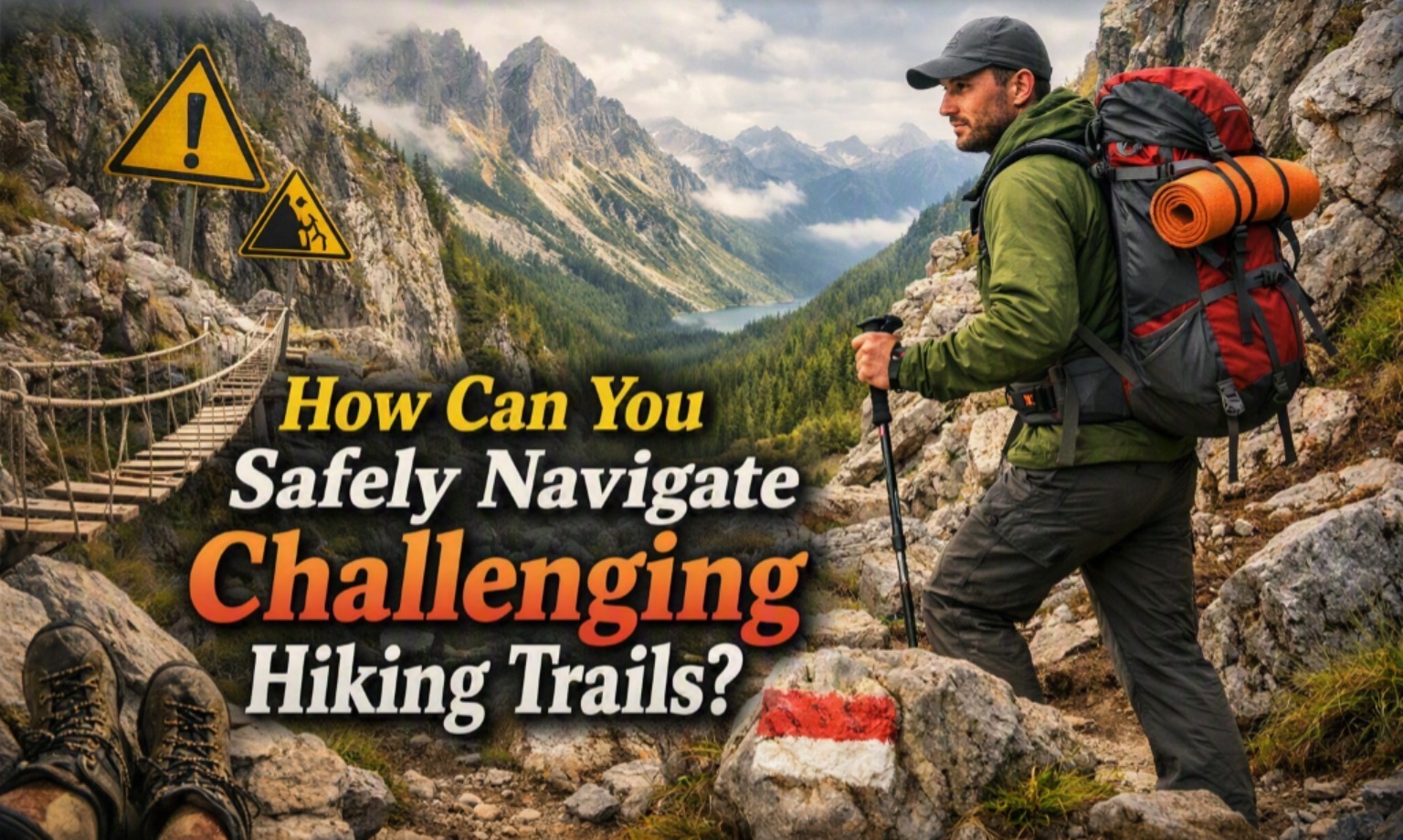
Hiking on challenging trails can be an exciting way to explore nature while testing your physical and mental abilities. However, difficult terrain also requires careful preparation, good judgment, and proper safety practices. Steep slopes, loose rocks, narrow paths, slippery surfaces, and sudden weather changes can increase the risk of accidents. By understanding the trail and preparing appropriately, hikers can reduce unnecessary risks and enjoy the journey more confidently.
UNDERSTAND THE TRAIL BEFORE STARTING
Before hiking, take time to research the trail conditions, distance, elevation gain, difficulty level, and estimated hiking time. Check recent information from park authorities, official trail managers, or reliable hiking communities because conditions can change after heavy rain, landslides, or other natural events. Pay attention to sections involving steep climbs, river crossings, exposed ridges, or loose terrain. Knowing what to expect helps you prepare both physically and mentally for the challenges ahead.
It is also important to check the weather forecast before departure and understand any local warnings or trail closures. Avoid starting a difficult hike when severe weather is expected, especially thunderstorms, heavy rain, strong winds, or extreme heat. Share your hiking plan with someone you trust, including your route and expected return time. Good planning can make it easier for others to respond if something goes wrong.
USE THE RIGHT HIKING EQUIPMENT
Proper equipment can make challenging trails considerably safer and more comfortable. Wear sturdy hiking footwear with good traction to reduce the risk of slipping on rocks, mud, or uneven ground. Carry enough water, nutritious food, a first aid kit, navigation tools, a flashlight or headlamp, extra clothing, and basic emergency supplies. The equipment should match the trail, weather, distance, and duration of the hike.
Avoid carrying unnecessary items because an excessively heavy backpack can increase fatigue and affect balance. Keep frequently used items within easy reach so you do not need to stop repeatedly or unpack your bag. A rain jacket and extra warm layer can also be valuable because mountain weather may change quickly. Always make sure your essential equipment is working properly before leaving.
MAINTAIN BALANCE ON STEEP TERRAIN
Steep sections require controlled movements rather than speed. Take shorter steps and keep your center of gravity stable when climbing or descending. Use trekking poles or available handholds when appropriate, but do not rely on unstable branches or loose rocks for support. When descending, slow down because loose surfaces can cause your feet to slide unexpectedly.
On narrow trails, stay focused on your footing and avoid unnecessary distractions. Keep a safe distance from other hikers, particularly on steep sections where falling rocks or sudden movements can create additional hazards. If you need to stop, move to a stable area away from the main path whenever possible. Staying patient and deliberate is usually safer than trying to finish a difficult section quickly.
STAY ALERT AROUND HAZARDOUS SECTIONS
Challenging trails may contain hazards such as loose rocks, slippery roots, unstable slopes, cliffs, and river crossings. Look ahead and assess the safest route before taking your next step. Never assume that a path is safe simply because another hiker has used it. If a section appears beyond your ability or has become significantly more dangerous, consider turning back.
River crossings deserve particular caution because water levels can rise rapidly after rainfall. Avoid crossing strong or deep currents when there is a safer alternative, and follow local guidance regarding designated crossing points. Near cliffs or exposed areas, remain well away from edges and avoid taking unnecessary risks for photographs. Recognizing when to stop or turn around is an important hiking skill, not a sign of failure.
NAVIGATE CAREFULLY AND STAY ON THE TRAIL
Navigation becomes especially important when trails are poorly marked or visibility is reduced by fog, rain, or darkness. Carry a map and a reliable navigation device, and learn how to use them before the hike. Do not depend entirely on a mobile phone because battery life, signal coverage, and weather conditions can limit its usefulness. Check your location periodically rather than waiting until you are completely unsure of the route.
Whenever possible, stay on designated trails to reduce the risk of getting lost and to protect the surrounding environment. If you realize that you have taken a wrong turn, stop and assess your location instead of continuing blindly. Retracing your last known route is often safer than creating a new path through unfamiliar terrain. If conditions become unsafe, prioritize reaching a secure location rather than maintaining your original schedule.
MANAGE FATIGUE AND KNOW YOUR LIMITS
Fatigue can reduce concentration, coordination, and decision-making ability, making difficult terrain more dangerous. Take regular breaks, drink water before becoming extremely thirsty, and eat enough food to maintain energy. Adjust your pace to the terrain and your physical condition rather than trying to match another hiker's speed. Pay attention to signs of excessive exhaustion, dizziness, weakness, or confusion.
Knowing your limits is essential for safe hiking. If you or someone in your group becomes unable to continue safely, stop and reassess the situation. Continuing despite serious fatigue can increase the likelihood of falls and other accidents. A successful hike is not necessarily reaching the summit but returning safely after making responsible decisions throughout the journey.
PREPARE FOR CHANGING WEATHER CONDITIONS
Mountain weather can change quickly, particularly at higher elevations. Before starting, check the forecast and prepare for conditions that may be colder, wetter, or windier than expected. Carry weather-appropriate clothing and rain protection, even when the weather appears favorable at the trailhead. If visibility deteriorates significantly, slow down and use your navigation tools carefully.
Thunderstorms require particular caution on exposed ridges, peaks, and open areas. If severe weather approaches, move toward a safer location and follow official warnings or instructions. Do not underestimate heavy rain because it can make rocks and soil slippery while increasing the danger of flooding or landslides. Changing your plan because of bad weather is often the safest decision.
CONCLUSION
Safely navigating a challenging hiking trail requires more than physical strength. Hikers need preparation, appropriate equipment, careful navigation, awareness of hazards, and good decision-making. Never feel pressured to continue simply because you have already invested time and effort in the hike. Turning around when conditions become unsafe can prevent a minor problem from becoming an emergency.
Whenever possible, hike with a suitable partner or group, especially on remote or technically difficult trails. Keep others informed about your route and expected return time, and follow local regulations and safety instructions. Most importantly, respect your own limitations and the natural environment. With responsible preparation and a calm approach, challenging trails can be explored more safely and confidently.
Tentang Penulis
Gusti Ayu Tita P
Penulis — Universitas STEKOM
Penulis aktif yang berfokus pada isu-isu akademik, teknologi pendidikan, dan pengembangan sumber daya manusia di lingkungan kampus.