How Character Education Helps Reduce Juvenile Delinquency?
Gusti Ayu Tita P
24 Juli 2026
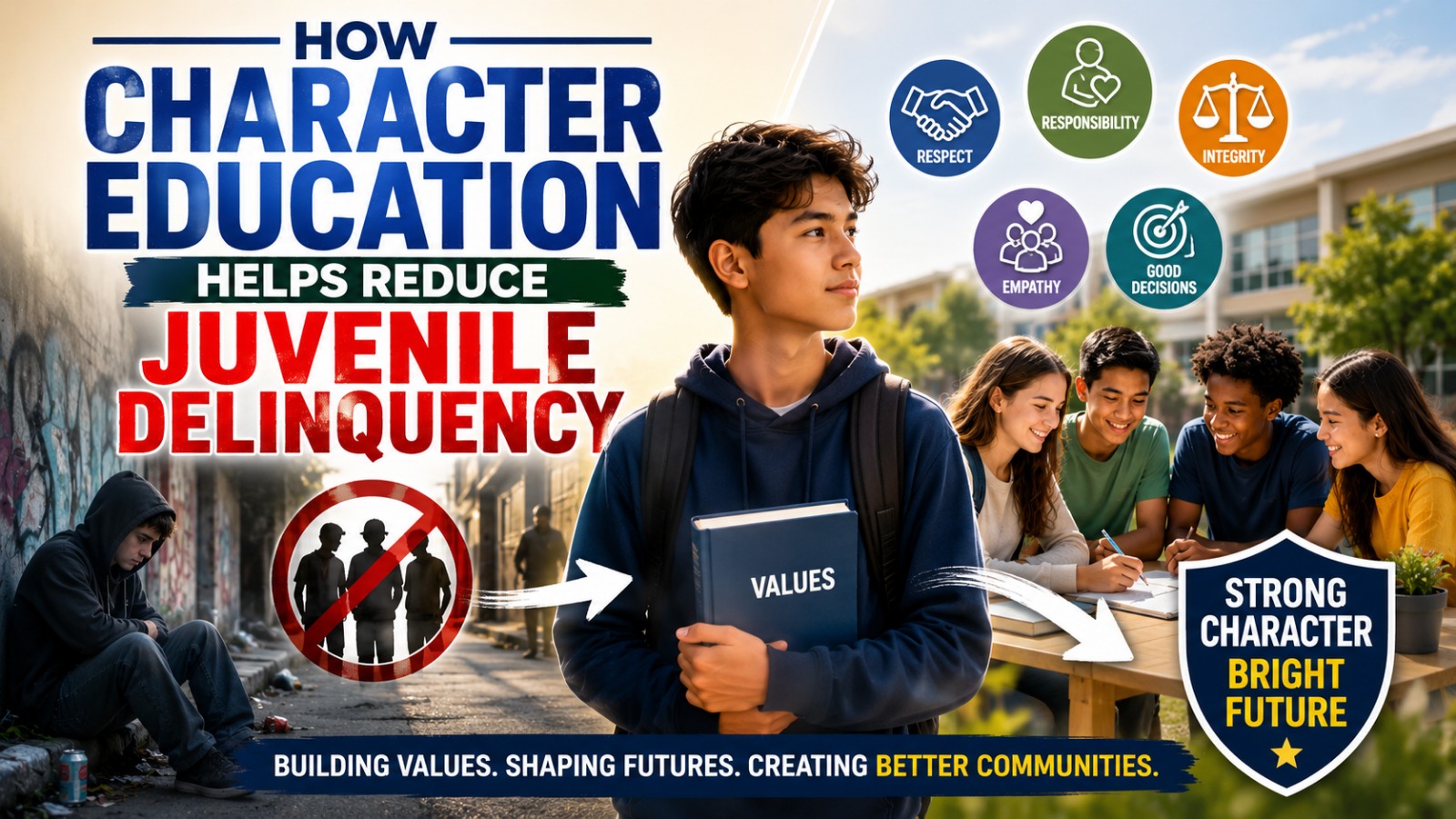
Juvenile delinquency has become a growing concern in many societies. Cases such as bullying, vandalism, substance abuse, violence, and cybercrime involving teenagers continue to rise in different regions. While many factors contribute to this issue, one effective long-term solution is character education. Teaching strong moral values and positive behavior from an early age can guide young people away from harmful actions.
Character education is not only about discipline. It helps students build responsibility, respect, honesty, and self-control. These qualities are essential in preventing juvenile delinquency and creating safer communities.
WHAT IS CHARACTER EDUCATION?
Character education is a learning process that focuses on developing ethical values, emotional intelligence, and positive habits. It teaches young people how to make wise decisions, treat others fairly, and take responsibility for their actions.
This type of education can be taught at school, at home, and through community programs. When children consistently receive positive guidance, they are more likely to grow into responsible adults.
UNDERSTANDING JUVENILE DELINQUENCY
Juvenile delinquency refers to illegal or antisocial behavior committed by minors. It can include fighting, theft, drug use, school truancy, gang activity, and online harassment.
Many teenagers become involved in delinquency due to peer pressure, lack of supervision, broken family relationships, or poor emotional control. Without proper guidance, risky behavior can become a pattern.
HOW CHARACTER EDUCATION REDUCES JUVENILE DELINQUENCY?
Character education provides teenagers with tools to handle pressure, emotions, and social challenges in healthier ways.
1. BUILDS SELF-DISCIPLINE
Young people who learn self-control are less likely to act impulsively. They can think before making harmful decisions.
2. TEACHES RESPECT FOR OTHERS
Respect helps students understand boundaries, rules, and the rights of other people. This reduces aggression and bullying.
3. IMPROVES DECISION-MAKING
Character education teaches students to consider consequences before acting. Better choices lower the risk of crime and misconduct.
4. STRENGTHENS EMPATHY
When teenagers understand the feelings of others, they are less likely to harm people emotionally or physically.
5. ENCOURAGES RESPONSIBILITY
Students who accept responsibility for their actions are more willing to correct mistakes and follow social rules.
THE ROLE OF SCHOOLS AND FAMILIES
Schools play a central role in shaping behavior because students spend much of their time there. Teachers can model honesty, fairness, and respect through daily interaction.
Families are equally important. Parents who communicate openly, set boundaries, and show positive examples help children develop stronger values. When schools and families work together, the results are often more effective.
CHALLENGES IN MODERN SOCIETY
Today’s teenagers face many influences, including social media pressure, violent content, and negative peer groups. These challenges make character education even more necessary.
Modern education should not focus only on academic success. Moral development and emotional skills are just as important for preparing youth for the future.
PRACTICAL WAYS TO APPLY CHARACTER EDUCATION
To reduce juvenile delinquency, character education can be applied through:
- Classroom discussions about ethics
- Anti-bullying campaigns
- Community service programs
- Conflict resolution training
- Parent involvement activities
- Positive reward systems
These steps help students practice values in real situations.
CONCLUSION
How character education helps reduce juvenile delinquency is clear through its impact on behavior, values, and decision-making. By teaching discipline, empathy, respect, and responsibility, young people become less likely to engage in harmful actions. Strong character education creates better students, stronger families, and safer communities for everyone.
Tentang Penulis
Gusti Ayu Tita P
Penulis — Universitas STEKOM
Penulis aktif yang berfokus pada isu-isu akademik, teknologi pendidikan, dan pengembangan sumber daya manusia di lingkungan kampus.