How Citizens Can Contribute Through Constructive Public Aspirations?
Gusti Ayu Tita P
13 Oktober 2026
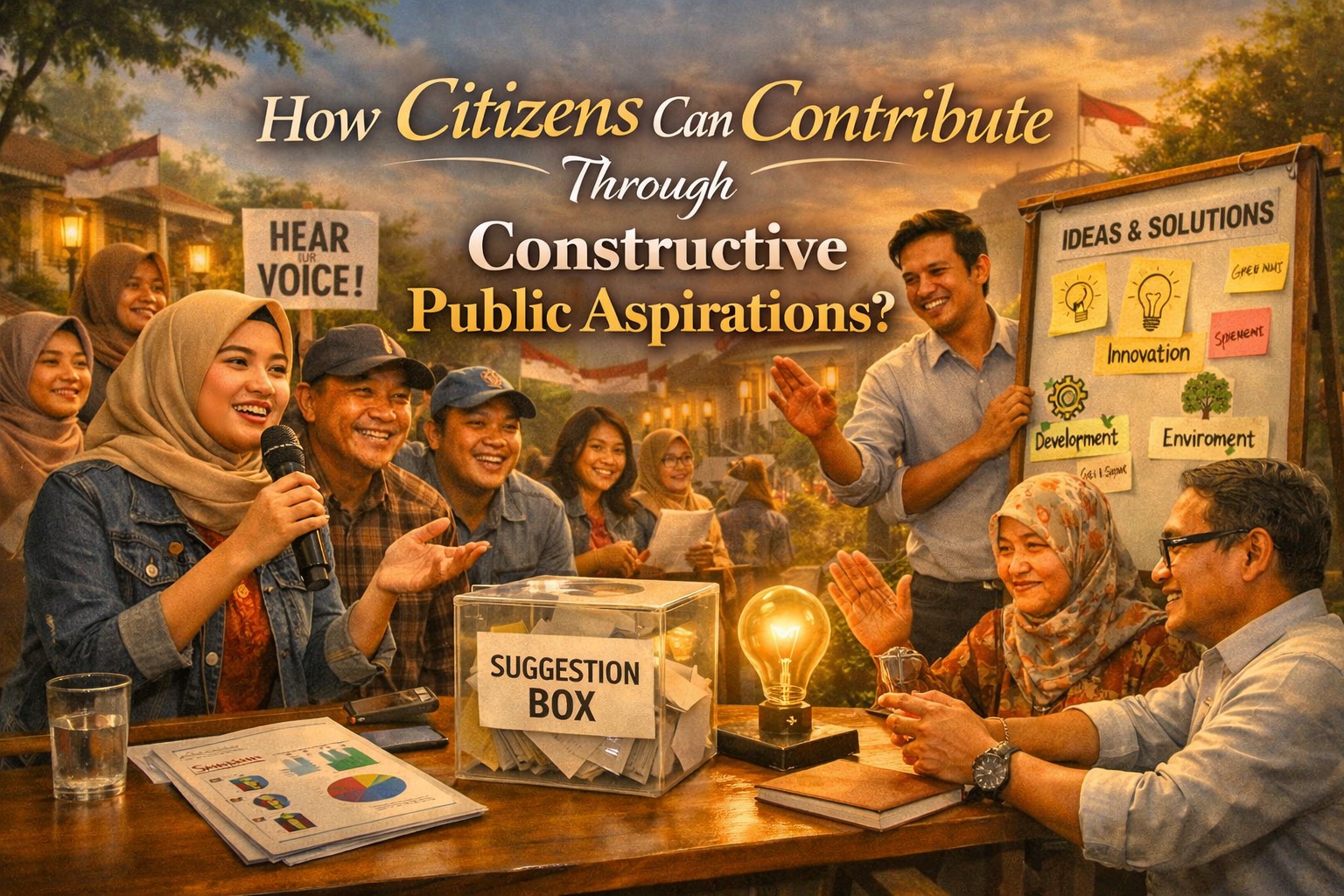
Public aspirations play a crucial role in building a democratic society where citizens actively participate in shaping policies and improving public services. Governments can make better decisions when they understand the real needs, concerns, and expectations of the people they serve. However, public aspirations become truly valuable when they are delivered in a constructive, respectful, and solution-oriented manner. Instead of focusing only on criticism, citizens who provide practical suggestions help create meaningful discussions that benefit everyone.
Constructive participation is no longer limited to attending public meetings. Today, people can share their ideas through digital platforms, community organizations, surveys, and government feedback systems. By expressing opinions responsibly, citizens contribute to good governance, stronger public trust, and sustainable development. Every voice matters when it is supported by facts, respect, and a genuine desire to improve society.
UNDERSTANDING CONSTRUCTIVE PUBLIC ASPIRATIONS
Constructive public aspirations refer to opinions, suggestions, feedback, or recommendations that aim to solve problems rather than simply complain about them. Citizens who provide constructive input focus on identifying issues while also proposing realistic solutions. This approach encourages cooperation between the government and the community instead of creating unnecessary conflict. It also helps policymakers better understand the priorities of different groups within society. As a result, public participation becomes more productive and beneficial.
Unlike emotional criticism without evidence, constructive feedback is supported by facts, logical reasoning, and respect for others. Citizens should communicate their concerns clearly and professionally while considering the broader impact on society. Listening to different perspectives also strengthens discussions and encourages mutual understanding. This process creates healthier democratic dialogue and promotes policies that reflect public needs. Ultimately, constructive aspirations strengthen relationships between governments and citizens.
WHY PUBLIC PARTICIPATION IS IMPORTANT
Public participation is one of the foundations of a healthy democracy. Governments cannot fully understand community challenges without hearing directly from the people affected by public policies. Citizens provide valuable insights based on their daily experiences, allowing authorities to identify issues that may otherwise go unnoticed. Their involvement also increases transparency and accountability within public institutions. These benefits contribute to more effective governance.
Active participation also strengthens a sense of shared responsibility among citizens. Rather than expecting governments to solve every issue independently, communities become partners in finding practical solutions. This collaborative mindset encourages innovation and improves trust between public institutions and society. It also promotes civic awareness and motivates more people to become involved in community development. Strong participation creates stronger democratic systems.
EFFECTIVE WAYS TO SHARE PUBLIC ASPIRATIONS
There are many responsible ways for citizens to express their public aspirations. Participating in community meetings, public consultations, local forums, and government surveys allows individuals to communicate their ideas directly. Many governments also provide official websites, online complaint systems, and digital platforms where citizens can submit feedback efficiently. These channels make participation easier and more accessible for everyone. Choosing official communication methods helps ensure that feedback reaches the appropriate authorities.
Social media can also become a valuable communication tool when used responsibly. Citizens should verify information before sharing opinions and avoid spreading misinformation or hate speech. Presenting evidence, examples, and constructive recommendations makes feedback more persuasive and credible. Respectful communication encourages productive conversations instead of unnecessary arguments. Responsible digital engagement supports healthier public discussions.
CHARACTERISTICS OF CONSTRUCTIVE PUBLIC FEEDBACK
Effective public feedback is always clear, respectful, and solution-oriented. Citizens should explain the problem accurately while offering practical recommendations that decision-makers can realistically implement. Supporting arguments with reliable information increases credibility and improves the quality of discussions. Well-organized feedback is easier for policymakers to evaluate and respond to effectively. Clear communication often leads to better outcomes.
Constructive aspirations also consider the interests of the wider community rather than focusing solely on personal concerns. Citizens should avoid offensive language and instead promote respectful dialogue. Being open to different opinions demonstrates maturity and strengthens democratic participation. Collaboration between various stakeholders often produces more balanced solutions. Respectful communication encourages long-term cooperation.
THE ROLE OF DIGITAL TECHNOLOGY IN PUBLIC PARTICIPATION
Modern digital technology has significantly expanded opportunities for civic engagement. Citizens can now participate through online petitions, official government portals, mobile applications, and virtual public discussions. These digital tools increase accessibility, especially for individuals living in remote areas or those unable to attend physical meetings. Technology allows governments to collect public feedback more efficiently and analyze community needs more accurately. Digital innovation continues to transform public participation.
However, responsible technology use remains essential. Citizens should always verify information before sharing it and avoid contributing to misinformation campaigns. Digital literacy helps people distinguish between reliable and unreliable sources. Ethical online behavior supports productive public conversations and reduces unnecessary conflict. Responsible technology strengthens democratic participation and public trust.
BENEFITS OF CONSTRUCTIVE PUBLIC ASPIRATIONS
Constructive public aspirations generate positive outcomes for both governments and society. Policymakers receive valuable insights that improve decision-making and public service quality. Communities also feel more respected when their opinions are considered during policy development. Increased participation strengthens trust between citizens and public institutions. This trust is essential for long-term national progress.
In addition, constructive engagement promotes stronger civic responsibility and encourages continuous collaboration. Citizens become active contributors rather than passive observers of government activities. Public discussions become more solution-focused and less confrontational. Better communication leads to policies that reflect real community needs. Ultimately, constructive aspirations support sustainable social and economic development.
CONCLUSION
Constructive public aspirations are an essential element of a healthy democracy because they encourage meaningful cooperation between citizens and governments. By communicating respectfully, providing evidence-based recommendations, and focusing on practical solutions, citizens help improve public participation, good governance, and community well-being. Modern digital technology has created more opportunities than ever for people to express their ideas responsibly through official channels and public discussions. When every citizen contributes thoughtfully, democratic institutions become stronger, public policies become more responsive, and society moves closer toward sustainable progress that benefits everyone.
Tentang Penulis
Gusti Ayu Tita P
Penulis — Universitas STEKOM
Penulis aktif yang berfokus pada isu-isu akademik, teknologi pendidikan, dan pengembangan sumber daya manusia di lingkungan kampus.