How Civil Servants Maintain Work Life Balance
Gusti Ayu Tita P
23 Juli 2026
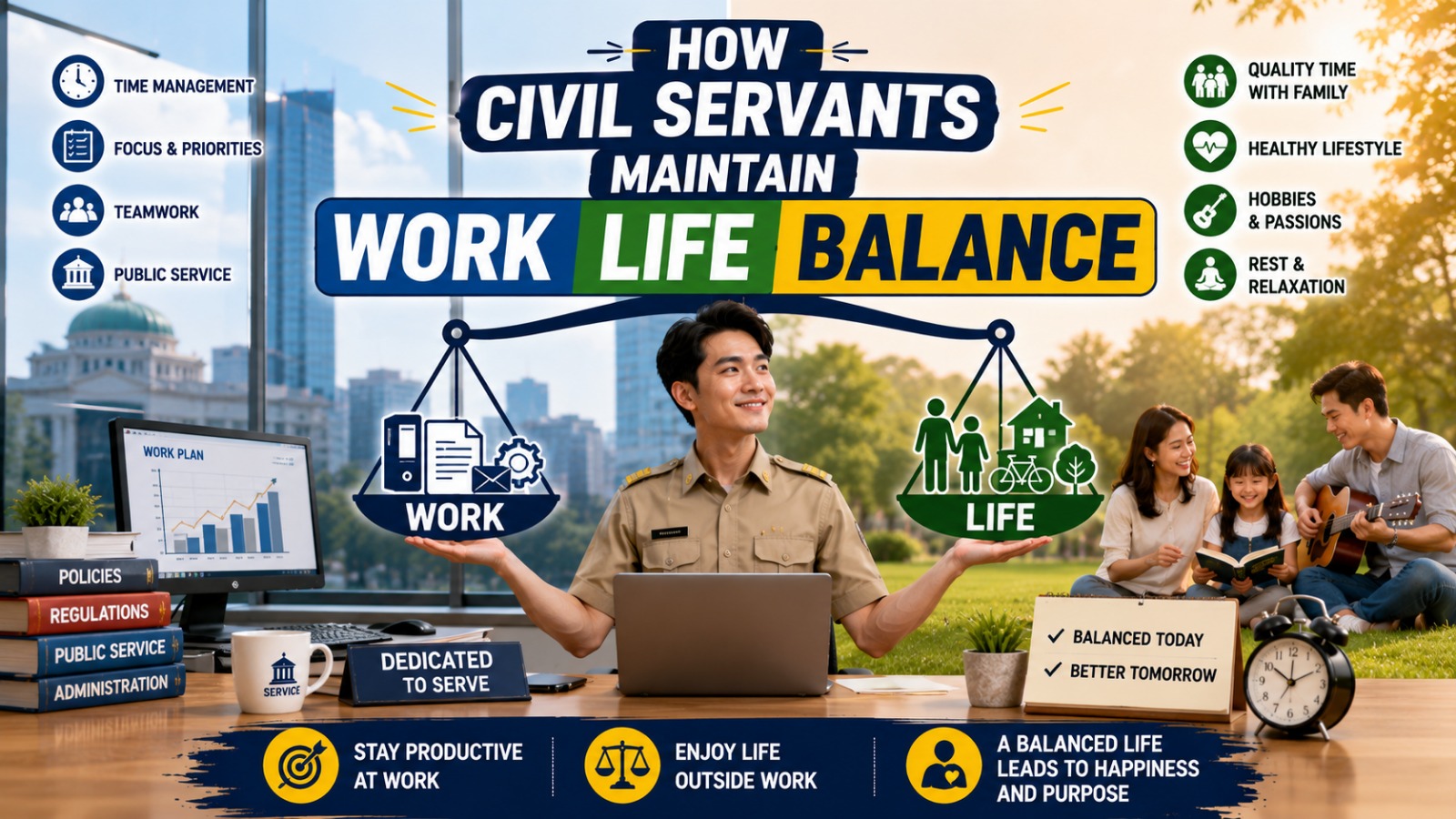
Maintaining work life balance has become increasingly important in today’s fast-paced professional environment. Civil servants often face demanding responsibilities, public service obligations, administrative workloads, and tight deadlines. Without proper balance, these pressures can affect productivity, mental health, and overall quality of life.
A healthy work life balance allows civil servants to remain productive while still having enough time for family, rest, hobbies, and personal development. By managing time effectively and maintaining healthy routines, civil servants can achieve better performance both professionally and personally.
UNDERSTANDING WORK LIFE BALANCE
Work life balance refers to the ability to divide time and energy between work responsibilities and personal life in a healthy and productive way.
For civil servants, work life balance is important because it helps:
- Reduce stress
- Improve mental health
- Increase productivity
- Strengthen family relationships
- Maintain physical well-being
Balanced employees are generally more motivated, focused, and satisfied with their careers.
MANAGING TIME EFFECTIVELY
Time management is one of the most important skills for maintaining work life balance. Civil servants often handle multiple responsibilities, so organizing schedules properly becomes essential.
Effective time management can include:
- Creating daily schedules
- Setting work priorities
- Avoiding procrastination
- Managing deadlines carefully
- Separating work time from personal time
Good time management helps employees complete tasks efficiently without sacrificing personal activities.
SETTING CLEAR WORK PRIORITIES
Not all tasks have the same level of urgency. Civil servants who understand how to prioritize work can avoid unnecessary stress and workload pressure.
Prioritizing tasks allows employees to:
- Focus on important responsibilities
- Finish urgent tasks first
- Improve work efficiency
- Reduce overtime work
- Prevent burnout
Learning to prioritize properly helps maintain a healthier balance between professional and personal life.
MAINTAINING HEALTHY COMMUNICATION
Communication plays a major role in workplace balance. Civil servants should communicate clearly with supervisors, coworkers, and family members regarding schedules, responsibilities, and limitations.
Healthy communication can help:
- Prevent misunderstandings
- Improve teamwork
- Reduce workplace conflict
- Build supportive relationships
- Manage expectations effectively
Strong communication skills create a more positive and less stressful working environment.
AVOIDING EXCESSIVE WORKLOAD
Taking too much work can negatively affect mental and physical health. Civil servants should understand their limits and avoid accepting responsibilities beyond their capacity whenever possible.
Some ways to manage workload include:
- Delegating tasks when appropriate
- Asking for support when needed
- Taking regular breaks
- Avoiding unnecessary overtime
- Organizing tasks efficiently
Maintaining realistic workloads helps employees stay productive without becoming exhausted.
MAKING TIME FOR FAMILY AND PERSONAL LIFE
Family and personal relationships are essential parts of a balanced life. Civil servants should make time for family activities, relaxation, and hobbies outside work.
Personal activities may include:
- Spending time with family
- Exercising regularly
- Traveling
- Reading books
- Pursuing hobbies
These activities help reduce stress and improve emotional well-being.
MAINTAINING PHYSICAL AND MENTAL HEALTH
Good health is an important foundation for work life balance. Civil servants who maintain healthy lifestyles are usually more energetic and focused at work.
Healthy habits include:
- Eating nutritious food
- Exercising regularly
- Getting enough sleep
- Managing stress properly
- Taking time to rest
Mental health is equally important because excessive stress can affect productivity and personal happiness.
UTILIZING TECHNOLOGY WISELY
Digital technology helps civil servants work more efficiently, but excessive use can also blur the boundaries between work and personal life.
To maintain balance, employees should:
- Limit unnecessary work communication after office hours
- Use productivity tools effectively
- Avoid excessive screen time
- Organize digital tasks properly
- Take breaks from technology
Wise technology use can improve efficiency while protecting personal time.
DEVELOPING POSITIVE WORKPLACE CULTURE
Supportive workplace environments contribute greatly to work life balance. Government institutions that encourage teamwork, flexibility, and employee well-being usually have healthier work cultures.
Positive workplace culture includes:
- Mutual respect
- Team collaboration
- Fair workload distribution
- Supportive leadership
- Open communication
A positive environment helps employees feel more comfortable and motivated.
CONTINUOUS SELF-DEVELOPMENT
Civil servants should also focus on personal growth and career development without neglecting their well-being.
Self-development activities may include:
- Attending training programs
- Learning new skills
- Improving communication abilities
- Building leadership skills
- Expanding professional knowledge
Continuous improvement helps employees feel more confident and fulfilled in their careers.
CONCLUSION
Maintaining work life balance is essential for civil servants to remain productive, healthy, and motivated. Through effective time management, healthy communication, balanced workloads, and proper self-care, civil servants can achieve better professional performance while still enjoying personal life.
A balanced lifestyle not only improves employee well-being but also supports higher quality public services and stronger workplace relationships.
Tentang Penulis
Gusti Ayu Tita P
Penulis — Universitas STEKOM
Penulis aktif yang berfokus pada isu-isu akademik, teknologi pendidikan, dan pengembangan sumber daya manusia di lingkungan kampus.