
How Consistent Report Card Grades Can Help Students Pass SNBP?
Gusti Ayu Tita P
14 Agustus 2026
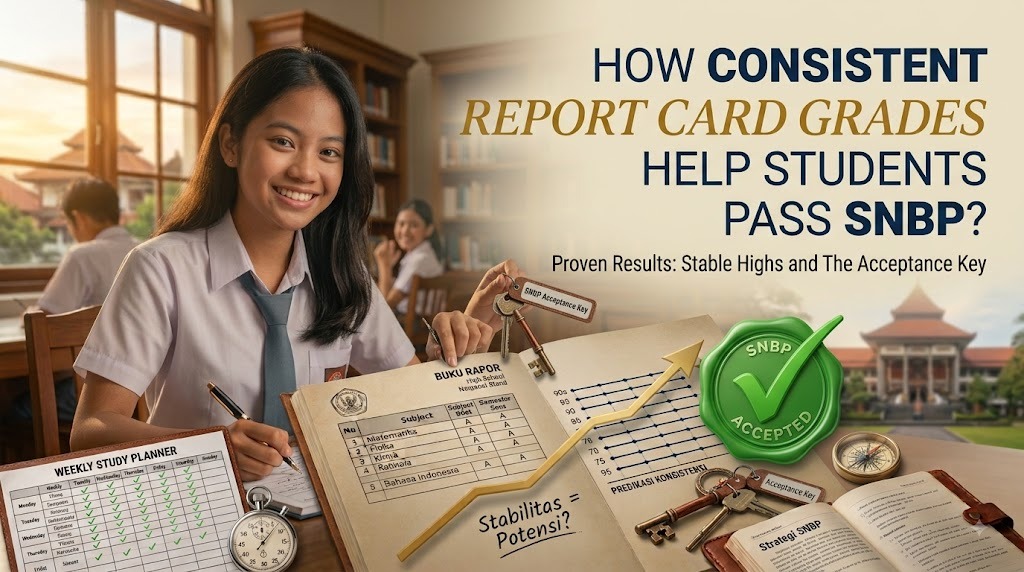
For Indonesian high school students, consistent report card grades can become an important part of preparing for SNBP. The Seleksi Nasional Berdasarkan Prestasi is an achievement based university admission pathway with rules and assessment mechanisms that may differ between admission years. Students should understand that preparing for SNBP is a long term process rather than something that can be solved through a sudden improvement before registration. Stable academic performance can demonstrate sustained effort, discipline, and commitment to learning. However, consistent grades alone cannot guarantee acceptance because SNBP selection remains competitive.
UNDERSTANDING THE ROLE OF REPORT CARD GRADES
Report card grades provide an academic record that shows how a student performs during high school. In the SNBP process, academic information is assessed according to the official rules for the relevant admission year. Students should therefore pay attention to their performance throughout the semesters that are included in the selection requirements. A strong result in one semester may be helpful, but maintaining good performance over time can create a more consistent academic profile. This is why students should treat every semester as part of their long term preparation.
Students also need to understand that SNBP is not simply determined by one average score. The selection process can consider different components according to current regulations, including school and study program related factors. Official SNPMB information should always be the main reference when students check eligibility, procedures, and requirements. Rules from previous years should not automatically be assumed to apply to the current admission cycle. Understanding the process accurately helps students develop realistic expectations.
WHY CONSISTENCY CAN STRENGTHEN ACADEMIC PERFORMANCE
Consistent grades can show that students are capable of maintaining stable academic performance. Students do not need to receive exactly the same score in every subject because differences in difficulty and individual strengths are normal. What matters is avoiding repeated major declines while continuing to improve where necessary. A stable record can reflect discipline, responsibility, and sustained learning effort. These qualities can also prepare students for the demands of higher education.
Consistency usually comes from habits rather than luck. Students who review lessons regularly, complete assignments responsibly, and prepare for assessments in advance may find it easier to maintain their performance. Good academic habits can reduce the risk of sudden declines caused by poor preparation. These habits should be developed gradually throughout high school. The goal is not to achieve perfection but to create sustainable academic progress.
IDENTIFYING THE CAUSES OF GRADE CHANGES
Academic grades can naturally increase or decrease from one assessment to another. A single lower grade does not automatically mean that a student has a weak academic profile. However, repeated declines should be examined carefully. Students can review their assignments, tests, attendance patterns, and study routines to understand what may be affecting their results. Identifying the cause early allows students to take action before the problem becomes more difficult to manage.
Several factors can influence grades, including ineffective study methods, poor time management, difficult subjects, lack of preparation, or excessive distractions. Students should focus on the factors they can control and develop practical solutions. For example, students struggling with a particular subject can increase practice time or ask teachers for additional explanations. Early academic improvement can help prevent temporary difficulties from becoming long term problems.
BUILDING A CONSISTENT STUDY ROUTINE
A regular study routine can help students maintain stable academic performance. Students can review lessons after school instead of waiting until examination periods. Assignments should be completed before deadlines whenever possible to avoid unnecessary pressure. A weekly schedule can divide time between difficult subjects, regular review, rest, and personal activities. A simple schedule that students can follow consistently is more useful than an unrealistic timetable.
Students should also adjust their routines according to their learning needs. Difficult subjects may require more practice, while stronger subjects still need occasional review. Short and focused study sessions can be repeated throughout the week. Consistency is more important than studying for extremely long hours. Over time, regular effort can make learning more manageable and support more stable grades.
IMPROVING WEAK SUBJECTS STEP BY STEP
Students should identify weak subjects as early as possible. A low score can provide useful information about which topics need additional attention. Instead of becoming discouraged, students can create a realistic improvement target for the next assessment. Difficult topics can be divided into smaller sections to make them easier to understand. Gradual improvement can be more sustainable than attempting to raise every grade dramatically at once.
Students should not hesitate to ask for support. Teachers, classmates, study groups, and reliable educational resources can provide additional explanations. Students can also practice similar questions repeatedly until they become more familiar with the concepts. Progress should be evaluated regularly to determine whether the chosen strategy is working. Consistent practice combined with appropriate support can gradually strengthen academic performance.
BALANCING ACADEMIC AND OTHER ACTIVITIES
Students may participate in organizations, competitions, volunteering, projects, or other activities while preparing for SNBP. These activities can help develop skills and achievements outside regular classroom learning. However, too many commitments can reduce the time available for academic preparation. Students should choose activities that match their interests and can be managed responsibly. Maintaining a reasonable balance is important for long term performance.
Students should also understand that the role of achievements in SNBP depends on the current official regulations. Collecting certificates alone should not become the main goal. Meaningful participation, skill development, and personal growth are more valuable than simply having a long activity list. Students should maintain their academic responsibilities while exploring other opportunities. This balanced approach can support both academic and personal development.
CHOOSING A TARGET STUDY PROGRAM CAREFULLY
Students should consider their academic strengths when choosing a target study program. Different programs may have different levels of competition and academic expectations. Students should consider their interests, strong subjects, career goals, and previous academic performance. Choosing a program only because it is popular may not always be the most suitable decision. Careful research can help students make a more realistic choice.
Students should use current information from official university and SNPMB sources when evaluating their options. Previous admission data can provide context but cannot guarantee future selection results. Teachers and school counselors can also provide useful guidance when students are uncertain about their choices. Self awareness and accurate information can support better decisions. Ultimately, students should choose programs that align with their abilities and long term goals.
MAINTAINING HEALTHY DAILY HABITS
Stable academic performance is easier to maintain when students have a healthy daily routine. Adequate sleep can support concentration, memory, and learning. Regular meals, physical activity, and sufficient breaks can also help students maintain energy. Studying continuously without proper rest may reduce concentration and productivity. A balanced lifestyle can therefore support sustainable academic preparation.
Students should also manage academic pressure responsibly. Comparing grades with classmates can create unnecessary stress and reduce motivation. Instead, students can focus on their own progress and set realistic targets. Healthy routines and emotional balance can help students maintain motivation throughout the school year. These habits can benefit students during university and future professional life as well.
FOLLOWING OFFICIAL SNBP INFORMATION
Students should always follow current official SNPMB information when preparing for SNBP. Requirements, schedules, procedures, and selection mechanisms can change between admission years. Information from social media or previous applicants may provide perspectives but should not replace official announcements. Students should also follow instructions from their schools during the application process. Accurate information can help prevent avoidable administrative problems.
Students should be cautious about claims that a specific grade or strategy guarantees SNBP acceptance. There is no simple formula that can ensure admission to a particular university or study program. Verification is essential when students make important admission decisions. If they are uncertain about a requirement, they should check official information or consult their school. Good preparation combines consistent academic performance with accurate knowledge of the selection process.
CONCLUSION
Consistent report card grades can help students prepare for SNBP by demonstrating steady academic performance and sustained learning effort. Students can support this consistency through regular study routines, effective learning strategies, early assessment preparation, and gradual improvement in weak subjects. Time management and healthy daily habits are equally important because academic performance depends on sustainable routines. Students should also balance their studies with meaningful activities without allowing other commitments to interfere with their academic responsibilities.
However, students should remember that consistent grades do not guarantee SNBP admission. SNBP is competitive and follows official rules that may change from one admission year to another. Students should focus on steady improvement, choose target study programs carefully, and verify all important information through official SNPMB sources. By preparing consistently throughout high school, students can build a stronger academic foundation and approach the admission process with greater confidence. These habits can also support their success after entering higher education.
Tentang Penulis
Gusti Ayu Tita P
Penulis — Universitas STEKOM
Penulis aktif yang berfokus pada isu-isu akademik, teknologi pendidikan, dan pengembangan sumber daya manusia di lingkungan kampus.



