
How Content Creators Can Use AI Animation to Make More Engaging Videos
Gusti Ayu Tita P
31 Agustus 2026
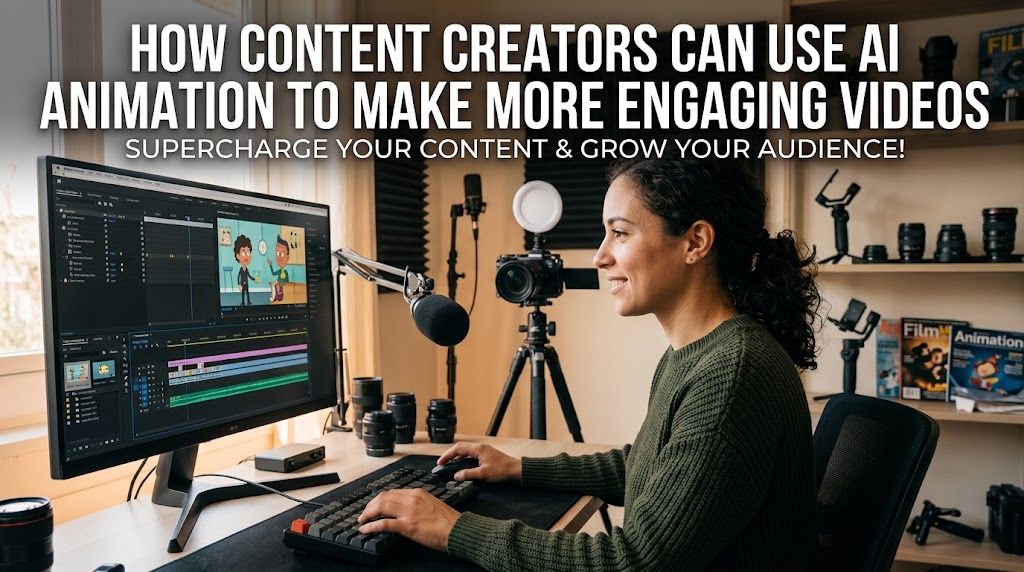
AI animation is becoming an increasingly useful technology for content creators who want to produce attractive videos more efficiently. Traditional animation often requires specialized skills, detailed planning, and considerable production time. With AI animation tools, creators can generate visual concepts, animate images, develop characters, and create short video sequences with fewer manual steps.
This does not mean that AI can replace the entire creative process. Content creators still need to develop ideas, write stories, choose visual styles, edit footage, and understand their audiences. The main advantage is that AI video generation can assist with repetitive or technically demanding tasks, giving creators more time to focus on creativity and storytelling.
USING AI TO TURN IDEAS INTO VISUAL CONTENT
One of the most useful applications of AI animation for content creators is turning simple ideas into visual scenes. A creator can start with a written concept and describe the desired character, environment, action, lighting, and camera movement. An AI system can then generate a visual interpretation of that concept that can be used as part of a larger video.
This process is particularly useful during the early stages of production. Creators can test several concepts before deciding which one works best. Instead of spending a large amount of time producing an idea that may not work, they can use AI-generated animation to experiment quickly and refine their creative direction.
CREATING MORE ENGAGING CHARACTERS
Characters can make videos easier to recognize and remember. Creators can use AI to develop original animated characters with specific appearances, personalities, clothing, and movement styles. A recurring character can then appear across multiple videos, helping create a consistent identity for a social media account or YouTube channel.
The key challenge is maintaining character consistency. AI may change a character's facial features, hairstyle, clothing, or body proportions between different generations. Using reference images, consistent prompts, and detailed character descriptions can help reduce these unwanted changes and create a more recognizable character.
TURNING PHOTOS INTO ANIMATED VIDEOS
Creators who already have photographs or illustrations can use image to video AI to add movement to static visual content. A photograph can be transformed with subtle camera movement, environmental effects, or character motion. This can be useful for travel content, storytelling, marketing, educational projects, and social media posts.
For example, a creator could animate a landscape photograph by adding moving clouds and a slow camera push. An illustrated character could be given simple movements such as turning the head or waving. The goal is not necessarily to make every part of the image move, but to use controlled animation to make the original visual more dynamic.
USING AI ANIMATION FOR STORYTELLING
Good videos need more than attractive visuals. Storytelling gives the audience a reason to continue watching and helps connect different scenes together. Creators can use AI animation to visualize fictional worlds, character journeys, educational explanations, historical concepts, or imaginary situations.
Before generating scenes, it is useful to create a simple story structure. Start with the main idea, introduce a situation or problem, develop the story, and finish with a clear conclusion. Breaking the story into smaller scenes allows creators to generate each part separately and combine them during editing.
COMBINING AI ANIMATION WITH VIDEO EDITING
AI-generated clips are often most effective when combined with conventional video editing. Creators can cut unnecessary sections, arrange scenes, add transitions, synchronize music, insert subtitles, and record voice-over. These editing steps can transform individual AI-generated clips into a coherent video.
Human editing is also important for correcting AI-generated mistakes. A clip may contain an unnatural movement, inconsistent object, or visual artifact that should not appear in the final video. Reviewing every scene before publication helps ensure that AI-generated content meets the creator's quality standards.
USING AI ANIMATION FOR SOCIAL MEDIA CONTENT
Social media platforms require creators to produce content that can capture attention quickly. AI animation for social media can help creators create dynamic openings, animated characters, visual transformations, and short storytelling sequences. These elements can make a video visually different from a simple static post.
Creators can adapt the same concept for different platforms. A longer YouTube video might contain several detailed scenes, while a shorter version can be edited into a TikTok, Instagram Reel, or YouTube Short. This allows creators to repurpose content without necessarily producing every version from the beginning.
USING AI ANIMATION FOR EDUCATIONAL VIDEOS
AI animation can also make educational content more visual and easier to understand. Complex ideas can sometimes be explained more effectively through animated diagrams, characters, simulations, or visual storytelling. This can be useful for creators who produce tutorials, learning content, technology explanations, or informational videos.
However, visual quality should not replace factual accuracy. Creators should verify important information before publishing educational content. AI-generated visuals can be used to support an explanation, but the information itself should be carefully checked.
USING AI ANIMATION FOR BRAND AND MARKETING CONTENT
Businesses and creators can use AI animation for marketing to develop promotional videos, product demonstrations, advertisements, and branded storytelling. Animated visuals can make a product explanation more dynamic and help communicate ideas in a short amount of time. AI can also make it easier to create several creative concepts before selecting one for production.
Brand consistency remains important. Colors, typography, messaging, product appearance, and visual style should match the brand's identity. Creators should also check the commercial usage rights and licensing conditions of the AI tools and assets used in the project.
HOW TO WRITE BETTER AI ANIMATION PROMPTS
The quality of an AI-generated animation can be influenced significantly by the quality of the prompt. A useful AI animation prompt should describe the main subject, action, environment, camera movement, lighting, and visual style. Instead of saying "create an animated person," a creator can describe the person's appearance, activity, location, mood, and desired camera movement.
It is also helpful to improve prompts gradually. Generate an initial version, identify what is wrong, and modify only the necessary details. Saving successful prompts can create a personal library that makes future AI video creation faster and more consistent.
COMMON MISTAKES CONTENT CREATORS SHOULD AVOID
One common mistake is using AI simply because it is popular. A video does not automatically become engaging because it contains AI-generated animation. The technology should have a clear purpose and should improve the way the story, information, or entertainment is delivered.
Another mistake is publishing AI-generated footage without checking it carefully. Common issues can include distorted hands, unnatural movement, inconsistent characters, flickering objects, incorrect details, and visual artifacts. Creators should review the content and edit problematic sections before publication.
Creators should also consider copyright, licensing, privacy, and transparency. Using someone else's photograph or recognizable identity without appropriate rights can create problems. Responsible use of AI is therefore an important part of professional digital content creation.
TIPS FOR MAKING AI ANIMATION VIDEOS MORE ENGAGING
Start with a strong concept that provides value to the intended audience. Use the first part of the video to introduce an interesting question, visual situation, problem, or promise. After that, maintain a clear pace so viewers understand why they should continue watching.
Creators should also combine visual storytelling, sound, narration, subtitles, and editing instead of relying only on generated animation. Experiment with different visual styles while maintaining a recognizable identity. Most importantly, focus on originality because audiences are more likely to remember content that offers a distinctive idea or perspective.
CONCLUSION
AI animation gives content creators new ways to produce engaging videos by simplifying parts of the visual production process. Creators can use AI to develop characters, animate photographs, visualize ideas, create storytelling scenes, and produce social media or marketing content. When combined with traditional editing, these capabilities can make the production process more flexible.
However, successful videos still depend on human creativity, storytelling, editing, accuracy, and audience understanding. AI should support the creator's vision rather than replace it. By using effective AI animation tools, strong prompts, original ideas, consistent characters, and careful post-production, content creators can produce videos that are more dynamic, memorable, and valuable to their audiences.
Tentang Penulis
Gusti Ayu Tita P
Penulis — Universitas STEKOM
Penulis aktif yang berfokus pada isu-isu akademik, teknologi pendidikan, dan pengembangan sumber daya manusia di lingkungan kampus.















