How Do Airports Work To Support Smooth Flight Operations?
Gusti Ayu Tita P
11 Agustus 2026
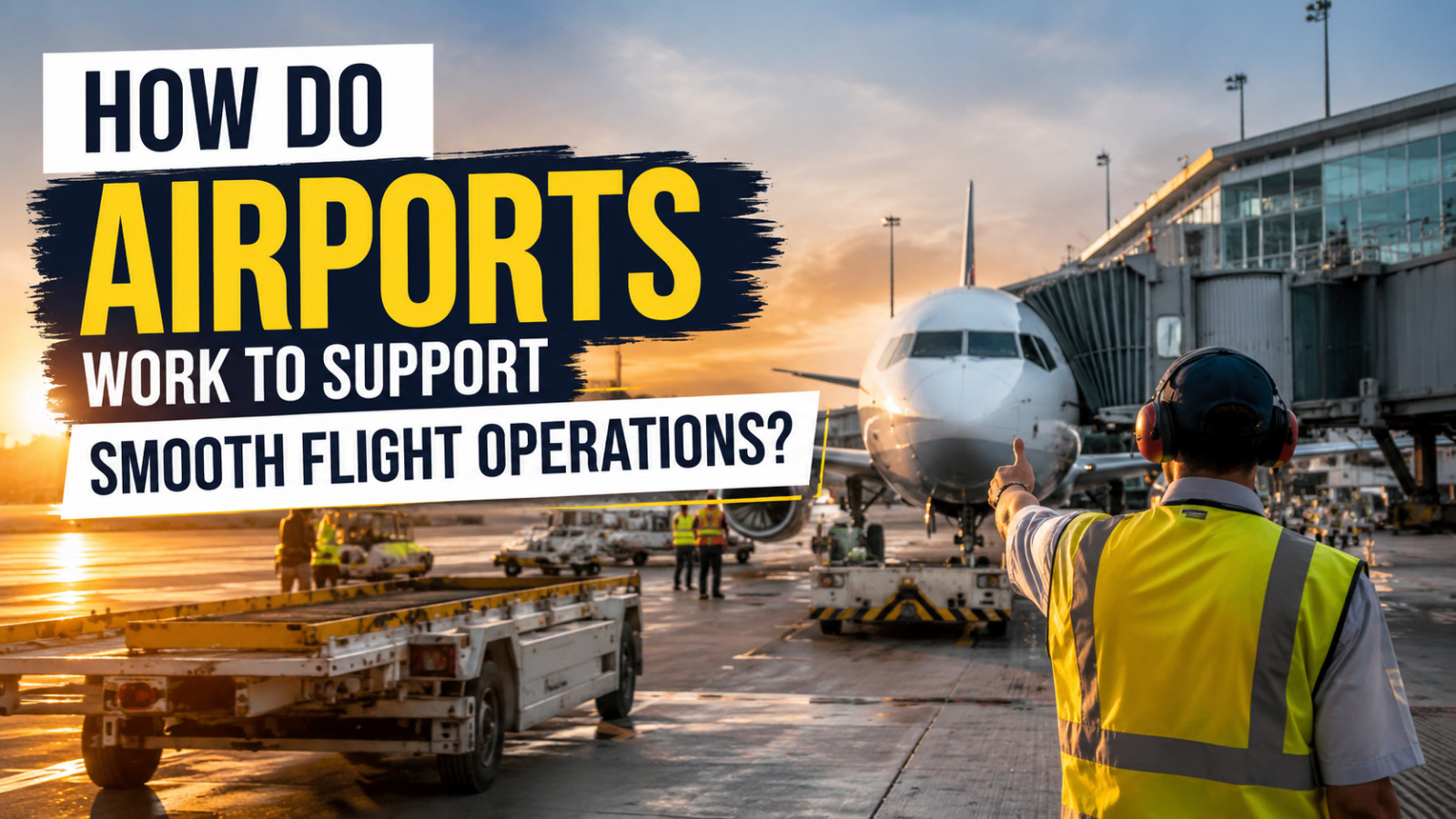
Airports are important parts of the aviation system because they connect passengers, aircraft, cargo, and various aviation services. A smooth flight does not depend only on pilots and airlines, but also on many airport operations that take place before and after every flight. From passenger check-in to aircraft departure, each process requires careful coordination. Airport Operations must work efficiently to reduce delays and maintain safety. Understanding how airports work can help passengers appreciate the complex system behind every flight.
THE ROLE OF AIRPORTS IN FLIGHT OPERATIONS
An airport provides the facilities and services needed for aircraft to arrive, depart, and operate safely. These facilities include runways, taxiways, terminals, aircraft parking areas, control towers, and passenger facilities. Each area has a specific function and must operate according to established aviation procedures. Airports also coordinate with airlines, ground service providers, security teams, and air traffic control personnel.
The airport's role begins before passengers board the aircraft. Staff prepare the terminal, baggage systems, gates, and aircraft service areas for scheduled flights. After an aircraft arrives, ground crews quickly prepare it for its next operation. Effective coordination between different airport departments is essential for maintaining smooth flight operations.
PASSENGER AND BAGGAGE HANDLING
Passenger Services are an important part of airport operations. Passengers usually complete check-in, baggage drop-off, security screening, and boarding before entering the aircraft. Airport and airline staff help passengers understand procedures and provide information about gates, schedules, and other travel requirements.
At the same time, baggage must be processed and transported to the correct aircraft. Modern airports use baggage handling systems to sort and move luggage efficiently. Ground staff also make sure baggage is loaded and unloaded according to operational procedures. Efficient passenger and baggage handling can reduce delays and improve the overall travel experience.
AIRCRAFT GROUND OPERATIONS
Once an aircraft arrives at an airport, many activities must be completed before it can depart again. Ground Operations may include aircraft cleaning, catering, refueling, baggage handling, passenger boarding, and technical inspections. Different teams often perform these tasks within a limited amount of time.
Coordination is particularly important because one delayed activity can affect the aircraft's departure schedule. Ground crews communicate with airline staff, pilots, airport teams, and other service providers. Safety must remain the priority even when teams are working under time pressure. Well-organized ground operations help aircraft leave the airport safely and on schedule.
AIR TRAFFIC CONTROL AND RUNWAY MANAGEMENT
Air Traffic Control plays a critical role in managing aircraft movements around an airport. Air traffic controllers provide instructions and information to pilots regarding aircraft movements, takeoff, landing, and other aspects of controlled airspace. Their work helps maintain appropriate separation between aircraft and supports safe traffic flow.
Runways and taxiways must also be carefully managed. Aircraft use taxiways to move between parking areas, terminals, and runways. During busy periods, airports may manage many aircraft movements within a limited area. Effective air traffic management helps maintain both safety and operational efficiency.
AIRPORT SECURITY AND TECHNOLOGY
Airport security protects passengers, employees, aircraft, and airport facilities. Airport Security includes passenger screening, baggage screening, access control, and other protective measures. These procedures are designed to identify prohibited items and reduce security risks while allowing legitimate travelers to move through the airport.
Technology also plays an increasingly important role in airport operations. Digital check-in, automated baggage systems, electronic boarding passes, biometric technology, and real-time flight information can improve efficiency. Airports can use technology to process passengers more effectively and provide updated information about flight operations. Modern technology helps airports manage large numbers of passengers while improving convenience and operational efficiency.
CONCLUSION
Airports support smooth flight operations through a combination of passenger services, baggage handling, ground operations, air traffic control, security, and technology. Every department has a specific responsibility, but all of them must work together to keep flights safe and efficient. Even a short passenger journey involves many coordinated processes behind the scenes. Good airport management can reduce operational problems and improve the passenger experience. By understanding Airport Operations, travelers can better appreciate how airports help make modern air transportation safe, organized, and reliable.
Tentang Penulis
Gusti Ayu Tita P
Penulis — Universitas STEKOM
Penulis aktif yang berfokus pada isu-isu akademik, teknologi pendidikan, dan pengembangan sumber daya manusia di lingkungan kampus.