How Do Fingerprints Help Improve Personal Data Security?
Gusti Ayu Tita P
14 September 2026
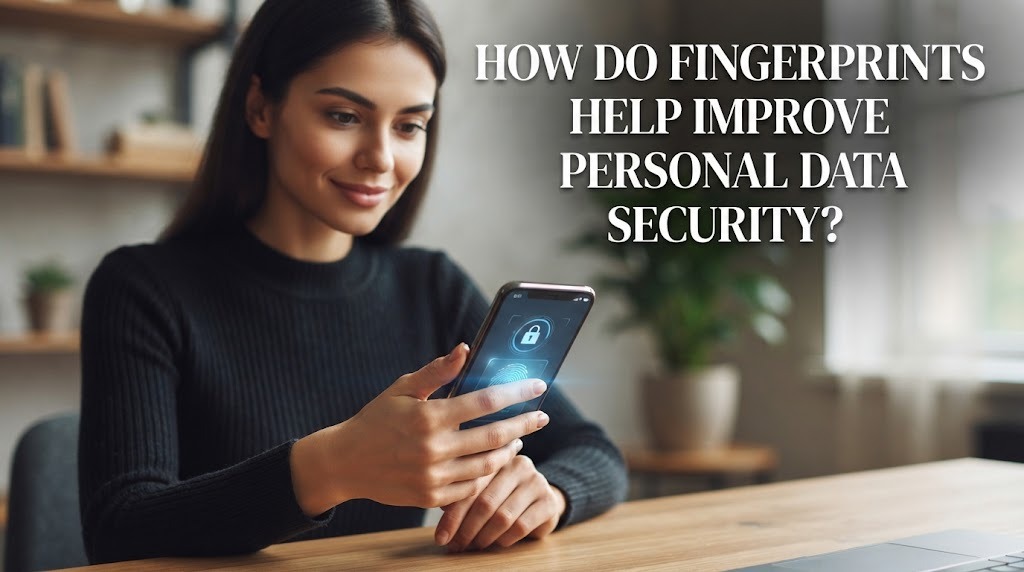
Fingerprints are increasingly used to protect personal data in digital devices and security systems. Every person has a distinctive fingerprint pattern, making it useful as a biometric authentication method. Instead of relying only on passwords, users can verify their identity through a fingerprint scanner. This can make access to certain devices and services more convenient. However, fingerprint technology must be supported by strong data protection to provide effective security.
BIOMETRIC AUTHENTICATION FOR PERSONAL DATA
Fingerprint technology can help protect personal data by confirming that the person accessing a device or system is an authorized user. The scanner captures the fingerprint and compares its characteristics with previously registered biometric information. When the system detects a sufficient match, it allows the requested action to continue. This process can help prevent unauthorized users from accessing protected information. Biometric authentication is therefore useful as an additional layer of digital security.
Unlike a password, a fingerprint is a physical characteristic of the user. This makes it difficult for someone to simply guess the authentication information. However, fingerprints should not be considered completely risk-free. Strong security depends on the quality of the biometric system and how the stored data is protected.
PROTECTION AGAINST UNAUTHORIZED ACCESS
Fingerprints can reduce the risk of unauthorized access to devices containing important information. Smartphones and computers may use fingerprint authentication before allowing users to open the device. This can protect photos, documents, messages, applications, and other private information from casual unauthorized access. Businesses can also use fingerprint systems to restrict access to specific computers or areas.
Fingerprint authentication can be particularly useful when a device is lost or temporarily accessed by another person. A person who does not have a registered fingerprint may be unable to pass the biometric check. Nevertheless, many systems still provide passwords or PINs as backup methods. Users should therefore protect these alternative credentials as carefully as their biometric access.
SECURE HANDLING OF BIOMETRIC DATA
Fingerprint information needs careful protection because it is a form of sensitive personal data. Unlike a password, a person's physical fingerprint cannot simply be replaced if biometric information is exposed. For this reason, organizations should use appropriate security measures when collecting, storing, and processing fingerprint data. Access to biometric information should be limited to authorized systems and personnel.
Modern biometric systems can use a biometric template rather than treating the fingerprint as an ordinary photograph. The template represents selected characteristics used for matching. Secure storage and encryption can help reduce the risk of unauthorized access. Organizations should also follow applicable privacy and data protection requirements when handling biometric information.
COMBINATION WITH OTHER SECURITY METHODS
Fingerprint authentication can become more effective when combined with other security methods. A device may require a fingerprint together with a PIN, password, or security key for certain sensitive actions. Using more than one authentication factor can provide stronger protection than depending on a single method. This approach is especially useful for accounts and systems containing highly valuable information.
Different security methods can also provide backup when fingerprint scanning does not work. For example, a user may have difficulty scanning a finger because of moisture, dirt, or a temporary injury. A secure alternative authentication method allows authorized users to regain access without weakening the overall system. Combining technologies helps create a more flexible security strategy.
PRIVACY AND RESPONSIBLE USE
Improving data security is not only about preventing unauthorized access. It also involves respecting user privacy and ensuring that biometric information is collected for a clear and appropriate purpose. Organizations should explain how fingerprint data is used when required and avoid unnecessary collection. Biometric records should not be accessible to people who do not need them for legitimate purposes.
Users should also understand what happens when they register a fingerprint on a device or system. They should use trusted devices and avoid sharing authentication credentials with other people. Organizations should regularly review their security procedures to identify potential weaknesses. Responsible management helps ensure that fingerprint technology provides security without creating unnecessary privacy risks.
CONCLUSION
Fingerprints can improve personal data security by providing a convenient form of biometric authentication. They can help prevent unauthorized access to devices, applications, workplaces, and digital information. However, fingerprint technology is most effective when biometric data is securely stored and combined with other security measures. Privacy should also remain an important consideration when collecting and processing fingerprint information. With responsible implementation, fingerprint technology can provide an additional layer of protection for personal data.
Tentang Penulis
Gusti Ayu Tita P
Penulis — Universitas STEKOM
Penulis aktif yang berfokus pada isu-isu akademik, teknologi pendidikan, dan pengembangan sumber daya manusia di lingkungan kampus.