How Do Hope And Data Influence Your Real Chances In SNBP?
Gusti Ayu Tita P
24 Agustus 2026
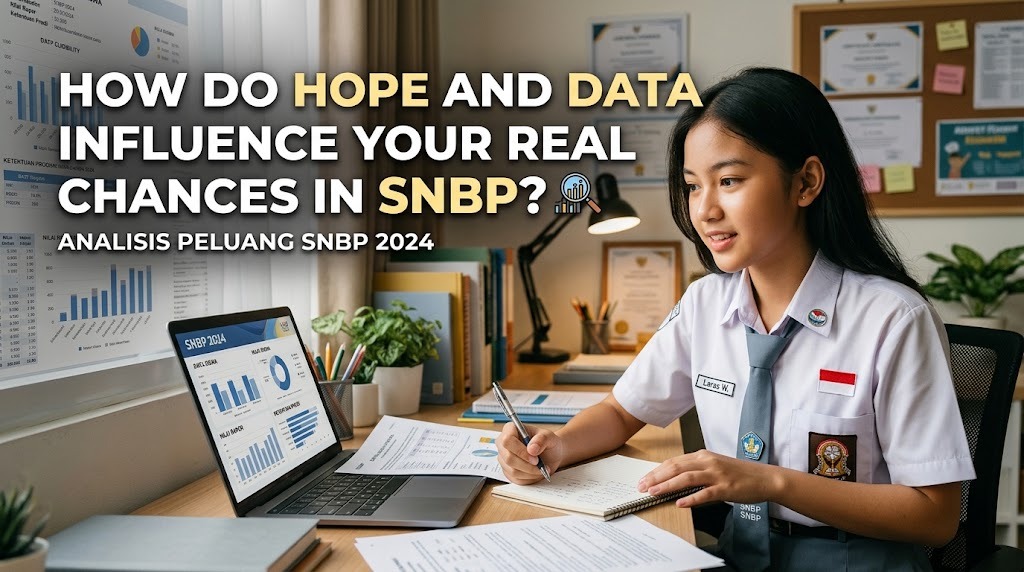
The Seleksi Nasional Berdasarkan Prestasi (SNBP) is one of the pathways used for admission to Indonesian public universities. For many students, choosing a study program through SNBP involves a combination of hope, confidence, and careful consideration of available data. Hope can encourage students to aim for their desired university, while data can help them understand how realistic their choices are. Therefore, students should not rely only on optimism when determining their SNBP choices. A balanced approach between ambition and objective information can lead to wiser decisions.
UNDERSTANDING THE ROLE OF HOPE IN SNBP
Hope plays an important role in motivating students to pursue their preferred university or study program. A student who believes in their potential may be more confident when selecting a competitive program. Positive expectations can also encourage students to stay focused and make better academic preparations. However, hope alone cannot guarantee admission because SNBP selection considers various academic and other achievement-related factors. Students need to combine optimism with a realistic understanding of their qualifications.
Having a dream university is not a problem, even when the competition is high. In fact, ambitious goals can help students recognize the level of achievement they want to reach. The important thing is to avoid assuming that strong hope automatically means a high probability of acceptance. Confidence should be accompanied by realistic evaluation so students can make decisions based on both aspirations and available evidence.
WHY DATA MATTERS IN ESTIMATING SNBP CHANCES
Data can help students evaluate their position more objectively before choosing a study program. Relevant information may include academic performance, eligible student status, school records, achievements, and information about the competitiveness of a particular program. Students can also examine official information about SNBP rules and selection mechanisms rather than relying on rumors from social media. Data does not provide an exact prediction of acceptance, but it can help students understand the factors that may influence their chances.
Students should also be careful when interpreting historical admission data. A study program that was highly competitive in previous years may have different conditions in another selection period. Likewise, a student's academic profile cannot simply be compared with another student's profile without considering differences in school background and other selection factors. Therefore, data should be used as a reference rather than an absolute guarantee.
BALANCING AMBITION WITH REALISTIC CHOICES
Choosing an SNBP program requires a balance between personal ambition and realistic assessment. Students can certainly place their dream program among their choices, but they should first understand the level of competition and their own academic profile. It is useful to evaluate whether their grades, achievements, and other relevant factors are reasonably aligned with the program they want. This approach allows students to remain ambitious without making decisions based entirely on emotion.
A realistic strategy does not mean giving up on a dream. Instead, it means understanding the risks associated with every choice. Students should gather reliable information and discuss their options with teachers, counselors, or parents when necessary. Good decision making combines confidence with careful analysis, allowing students to pursue opportunities while understanding that SNBP results cannot be guaranteed.
AVOIDING THE TRAP OF ONLINE PREDICTIONS
The internet contains many discussions about SNBP, including unofficial predictions, estimated passing grades, and personal experiences from previous applicants. Such information can provide general insight, but it should not automatically be treated as official data. Every student's situation can be different, and the selection process may involve factors that are not visible from public discussions. Students should therefore prioritize official SNPMB information when checking requirements and selection policies.
Comparing yourself too closely with other applicants can also create unnecessary anxiety. Someone with similar grades may receive a different result because their academic background, achievements, school profile, or chosen program can differ. Instead of focusing entirely on other people's predictions, students should concentrate on information that is relevant to their own situation. Reliable sources are more valuable than viral assumptions when making SNBP decisions.
HOW TO MAKE A SMARTER SNBP STRATEGY
A smarter strategy begins by identifying the study programs that genuinely match the student's interests and abilities. After that, students can collect relevant information about the universities and programs they are considering. They should review their academic performance and achievements honestly instead of choosing solely because a program is popular. This process can help students create choices that are both aspirational and carefully considered.
Students should also prepare mentally for different possible outcomes. A strong strategy is not about finding a method that guarantees acceptance, because no strategy can promise that result. Instead, the goal is to make the best possible decision using reliable information and personal evaluation. Hope keeps students motivated, while data helps them remain realistic.
HOPE AND DATA SHOULD WORK TOGETHER
Hope and data are not opposing forces in the SNBP process. Hope provides motivation, while data provides perspective. Students need hope so they are willing to pursue opportunities, but they also need reliable information to avoid unrealistic expectations. Combining both can make the decision-making process more balanced and thoughtful.
Ultimately, a student's real chances in SNBP cannot be determined from hope or one piece of data alone. The result depends on the applicable selection rules and the overall assessment used in the admission process. Therefore, students should stay optimistic while carefully reviewing official information and their own academic profile. The best approach is to dream confidently, analyze carefully, and prepare for every possible outcome.
Tentang Penulis
Gusti Ayu Tita P
Penulis — Universitas STEKOM
Penulis aktif yang berfokus pada isu-isu akademik, teknologi pendidikan, dan pengembangan sumber daya manusia di lingkungan kampus.