How Does Customs Support Export Growth for Local Businesses?
Gusti Ayu Tita P
8 Agustus 2026
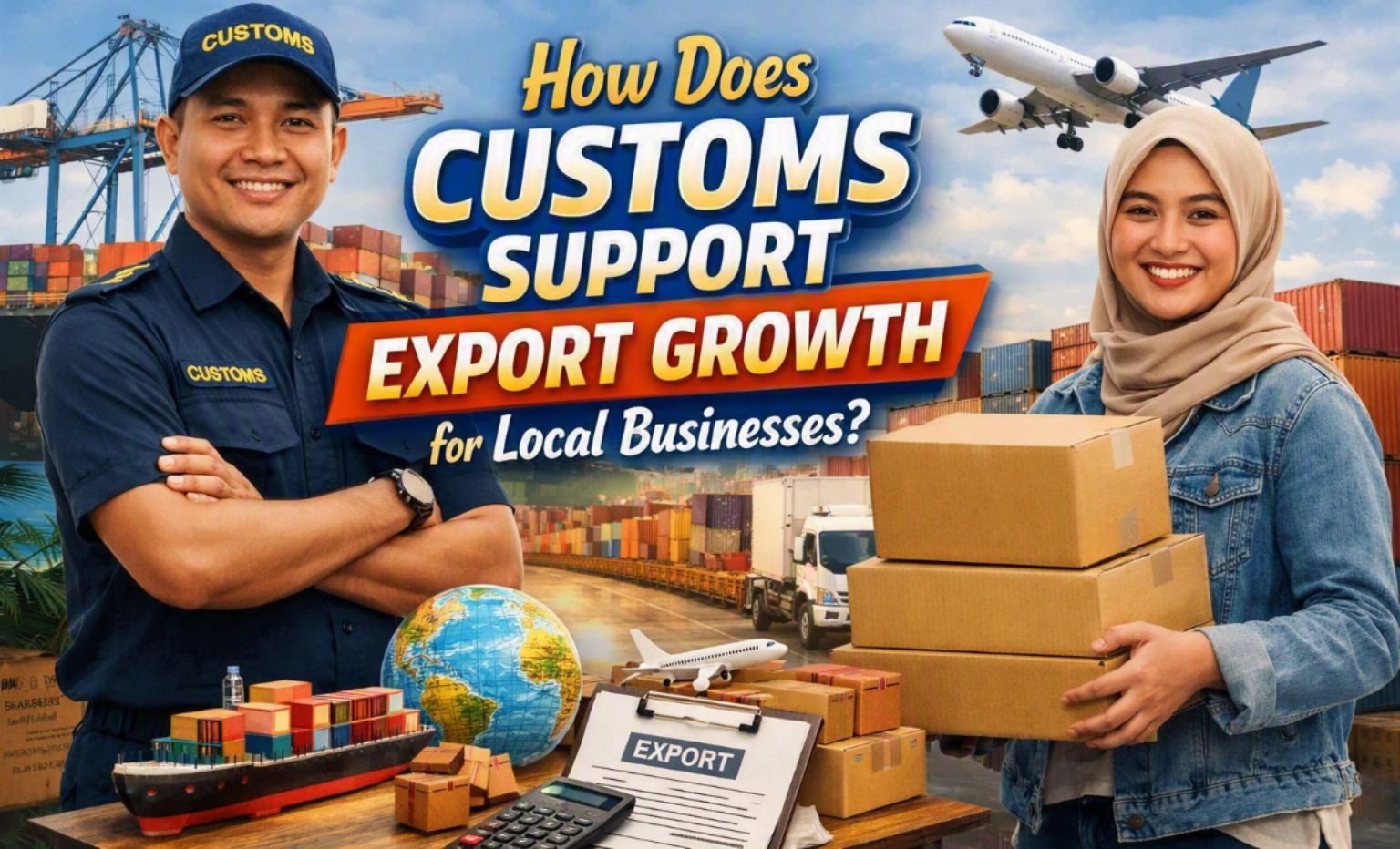
International trade gives local businesses an opportunity to reach customers beyond their domestic market. However, exporting products can involve customs procedures, documentation, regulations, and border controls that may be difficult for new exporters to understand. Customs plays an important role in making international trade more organized while ensuring that goods comply with national laws. By providing clear procedures and facilitating legitimate trade, customs can help local businesses become more confident in entering global markets.
SIMPLIFYING EXPORT PROCEDURES
One of the most important ways customs supports local businesses is by simplifying export procedures. Exporters generally need to prepare documents containing information about the goods, their value, origin, and destination. Efficient customs systems can reduce unnecessary delays by allowing businesses to submit information through electronic customs platforms. This makes the export process more organized and helps businesses save time.
Simplified procedures are especially useful for small and medium enterprises that may have limited staff and international trade experience. When requirements are clearly explained, businesses can reduce mistakes in their export declarations. Faster processing also helps exporters manage delivery schedules more effectively. As a result, customs modernization can make international trade more accessible to local businesses.
PROVIDING TRADE FACILITATION
Customs supports export growth through trade facilitation, which focuses on making legitimate cross border trade faster and more predictable. Modern customs authorities increasingly use digital systems, risk management, and coordinated inspections to avoid unnecessary physical checks. These approaches allow customs officers to focus more attention on shipments that present higher risks. At the same time, compliant exporters can benefit from smoother processing.
Trade facilitation can improve the competitiveness of local businesses in international markets. Faster customs clearance can reduce waiting times and help exporters deliver products according to agreed schedules. Lower administrative burdens can also make exporting more practical for smaller companies. This is important because predictable logistics are a key part of successful international trade.
HELPING BUSINESSES UNDERSTAND EXPORT REQUIREMENTS
Exporters need to understand customs regulations before sending products overseas. Customs authorities can provide information, guidelines, online services, and educational programs that help businesses understand their responsibilities. These resources may explain documentation requirements, tariff classification, customs declarations, and other procedures. Clear information allows businesses to prepare shipments more accurately.
For local businesses that are new to exporting, access to reliable information can make a major difference. Understanding the rules helps companies avoid errors, delays, and potential penalties. It can also improve their ability to plan international sales and logistics. When businesses understand customs requirements, they can participate in global trade with greater confidence.
SUPPORTING SMALL AND MEDIUM BUSINESSES
Small and medium enterprises often face greater challenges when entering international markets because they may have limited financial and administrative resources. Customs can support these businesses by developing simplified procedures and digital services that reduce unnecessary administrative work. Some customs administrations also provide dedicated information and assistance for smaller exporters. These measures can help businesses understand and comply with export requirements.
Better access to customs services can encourage more local businesses to explore international markets. When exporting becomes easier to understand, companies can focus more on product quality, customers, marketing, and business expansion. This can contribute to stronger participation by SMEs in international trade. Over time, successful exporters may increase production and create additional economic opportunities in their communities.
REDUCING EXPORT DELAYS AND COSTS
Delays at borders can affect delivery schedules and increase logistics expenses. Customs contributes to smoother exports by using risk based inspections and electronic processing to manage shipments efficiently. When documents are complete and accurate, shipments may move through customs more smoothly. This can help exporters maintain reliable delivery times for international customers.
Reducing unnecessary administrative delays can also improve business efficiency. Exporters can better coordinate transportation, warehouses, production schedules, and customer orders. Lower trade related costs can make locally produced goods more competitive in foreign markets. Therefore, efficient customs procedures can indirectly support the long term growth of exporting businesses.
STRENGTHENING COMPLIANCE AND TRUST
Customs does not only facilitate trade; it also ensures that exported goods comply with applicable laws and regulations. Proper customs controls help prevent illegal trade, inaccurate declarations, and other violations that could damage the integrity of international commerce. Businesses that consistently follow customs requirements can build a stronger record of compliance. This can create greater trust between exporters, customs authorities, logistics providers, and international trading partners.
A strong compliance record can also help businesses manage international operations more effectively. Companies become more familiar with documentation, classification, valuation, and other customs responsibilities. Good compliance practices reduce the risk of unexpected problems during future shipments. This creates a more stable foundation for long term export growth.
USING DIGITAL TECHNOLOGY TO SUPPORT EXPORTERS
Digital technology has become an important part of modern customs administration. Electronic declarations, online payment systems, automated risk assessment, and digital document processing can make customs procedures faster and more transparent. These systems reduce the need for repetitive paperwork and allow businesses to submit information remotely. Digital services can be particularly helpful for smaller companies that need efficient ways to manage their export activities.
Technology can also improve communication between businesses and customs authorities. Exporters can receive information about procedures and shipment requirements through online platforms. Better data sharing can help customs identify risks while allowing compliant shipments to move more efficiently. As digital customs systems continue to develop, they can provide an important foundation for more competitive and efficient exports.
CREATING OPPORTUNITIES FOR GLOBAL MARKET EXPANSION
Efficient customs procedures can help local businesses move from domestic operations toward international markets. When companies understand export requirements and experience predictable customs processes, they may become more willing to seek international buyers and business partners. This can open opportunities in new markets and increase demand for locally produced goods. Export growth can also encourage businesses to improve their products and services to meet international expectations.
However, customs is only one part of successful exporting. Businesses still need to understand foreign market demand, product standards, pricing, logistics, and customer preferences. Customs facilitation works best when combined with strong business planning and export readiness. Together, these factors can help local businesses build sustainable positions in global markets.
CONCLUSION
Customs plays a significant role in supporting export growth for local businesses by making international trade more efficient, transparent, and predictable. Through simplified procedures, digital services, trade facilitation, guidance, and risk based controls, customs can reduce unnecessary barriers for legitimate exporters. These improvements are particularly valuable for small and medium businesses that may have limited resources and experience in international trade.
A modern and business friendly customs system can help local companies compete more effectively in foreign markets. By complying with customs requirements and taking advantage of available digital services, exporters can reduce delays and improve operational efficiency. Efficient customs administration, combined with strong business preparation, can create better opportunities for local businesses to expand internationally.
Tentang Penulis
Gusti Ayu Tita P
Penulis — Universitas STEKOM
Penulis aktif yang berfokus pada isu-isu akademik, teknologi pendidikan, dan pengembangan sumber daya manusia di lingkungan kampus.