How Does Environmental Support Influence Student Business Success?
Gusti Ayu Tita P
24 Agustus 2026
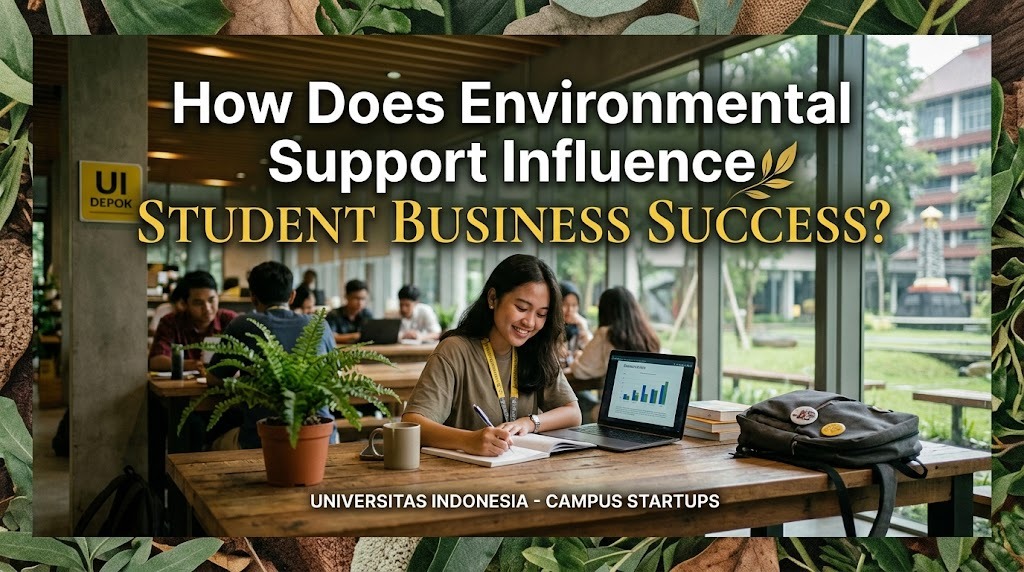
Starting a business while studying can provide valuable experience for students. However, running a business is not always easy because students must balance academic responsibilities with business activities. In this situation, environmental support can make a meaningful difference. Support from family, friends, universities, mentors, and the surrounding community can provide students with resources, encouragement, knowledge, and useful connections. Therefore, understanding how environmental support influences student business success is important for students who want to develop both their education and entrepreneurial abilities.
THE IMPORTANCE OF UNIVERSITY SUPPORT
Universities can provide resources that students may not easily access independently. Entrepreneurship programs, business competitions, workshops, incubators, and student organizations can introduce students to useful knowledge and professional networks. Universities can also provide opportunities for students to test business ideas in a structured environment. Educational institutions can connect academic learning with practical entrepreneurship.
University support can also help students understand important business concepts. Students may learn about marketing, financial management, customer research, business planning, and digital promotion. These skills can reduce common mistakes made by inexperienced entrepreneurs. Access to structured learning can improve the quality of student business decisions.
MENTORS CAN PROVIDE PRACTICAL GUIDANCE
Business mentors can help students understand challenges that are difficult to learn from theory alone. An experienced mentor may provide advice about customers, pricing, marketing, operations, or business growth. Mentors can also identify weaknesses in a student's business plan and suggest possible improvements. Practical guidance can help students make more informed decisions.
Mentorship is particularly valuable because student entrepreneurs may have limited business experience. Instead of making every mistake independently, students can learn from lessons that experienced entrepreneurs have already encountered. However, students should still evaluate advice carefully and adapt it to their own situation. Good mentorship supports decision making without removing the student's responsibility.
FINANCIAL SUPPORT AND BUSINESS RESOURCES
Access to financial resources can influence how quickly a student can develop a business. Students may need money for materials, equipment, packaging, transportation, marketing, or digital tools. However, financial support should be managed carefully because access to money alone does not guarantee business success. Effective financial planning is essential even when students receive external support.
Other resources can be equally important. Internet access, workspace, equipment, business software, and learning materials can help students operate more efficiently. Universities or communities may provide some of these resources through entrepreneurship programs. Business resources can reduce barriers that prevent students from turning ideas into practical activities.
THE ROLE OF DIGITAL ENVIRONMENT
The digital environment has created new opportunities for student entrepreneurs. Social media, online marketplaces, digital payment systems, and content platforms can help students reach customers without requiring a traditional physical store. Students can also use digital tools to promote products and communicate with customers. A supportive digital environment can make entrepreneurship more accessible to young people.
However, digital opportunities also create challenges. Students need to understand online marketing, customer privacy, competition, content creation, and responsible business practices. Simply creating a social media account does not guarantee sales. Digital tools become more effective when students understand how to use them strategically.
COMMUNITY SUPPORT CAN CREATE BUSINESS OPPORTUNITIES
The surrounding community can become an important market for student businesses. Local communities may provide opportunities through events, bazaars, exhibitions, or collaborative projects. Students can use these activities to introduce products and understand customer preferences. Community participation can provide valuable real world business experience.
Community support can also create connections between student entrepreneurs and other business owners. Local entrepreneurs may introduce students to suppliers, customers, or potential collaborators. These relationships can gradually expand a student's business network. A strong local network can create opportunities that are difficult to find through individual effort.
SUPPORT CAN STRENGTHEN STUDENT CONFIDENCE
Starting a business requires students to make decisions despite uncertainty. Support from people around them can increase their confidence to try new approaches. When students receive constructive feedback, they can understand that mistakes are part of the learning process. Confidence can encourage students to take reasonable risks and continue improving.
However, support should not create excessive dependence. Students still need to learn how to make decisions, solve problems, and take responsibility for business outcomes. The best support helps students become increasingly independent. Good environmental support should build capability rather than dependence.
ENVIRONMENTAL SUPPORT AND BUSINESS RESILIENCE
Every business can experience challenges such as low sales, customer complaints, changing trends, or financial difficulties. Students may find these challenges especially demanding because they also have academic responsibilities. A supportive environment can provide advice and encouragement during difficult periods. Support can help students recover from setbacks and continue learning.
Resilience develops when students learn how to respond to problems rather than simply avoid them. Mentors, friends, family, and educational institutions can provide different perspectives when difficulties arise. Nevertheless, students must remain responsible for evaluating solutions and taking action. Support becomes most valuable when it helps students develop stronger problem solving abilities.
BALANCING BUSINESS AND ACADEMIC RESPONSIBILITIES
Environmental support can also help students maintain balance between business and education. Family members and friends may encourage students to prioritize important academic deadlines. Universities can provide flexible entrepreneurship activities that allow students to gain experience without neglecting their studies. Good time management remains essential even in a supportive environment.
Students should create realistic schedules for studying, operating their businesses, resting, and maintaining personal relationships. Trying to manage every task simultaneously can reduce productivity. Supportive people can provide reminders and advice, but students must ultimately organize their own priorities. Balance is important for sustainable student entrepreneurship.
CONCLUSION
Environmental support can significantly influence student business success by providing encouragement, knowledge, resources, networks, and practical guidance. Family can provide emotional support, friends can offer feedback, universities can provide entrepreneurial resources, and mentors can share practical experience. The community and digital environment can also create opportunities for students to reach customers and develop their businesses.
However, support is not a substitute for effort and responsibility. Students still need business skills, financial discipline, time management, adaptability, creativity, and consistent learning. The strongest support system is one that helps students become more capable and independent. When students receive the right support while actively developing their own abilities, they have a stronger foundation for building a sustainable business while completing their education.
Tentang Penulis
Gusti Ayu Tita P
Penulis — Universitas STEKOM
Penulis aktif yang berfokus pada isu-isu akademik, teknologi pendidikan, dan pengembangan sumber daya manusia di lingkungan kampus.