How Does Fingerprint Technology Support Office Security?
Gusti Ayu Tita P
14 September 2026
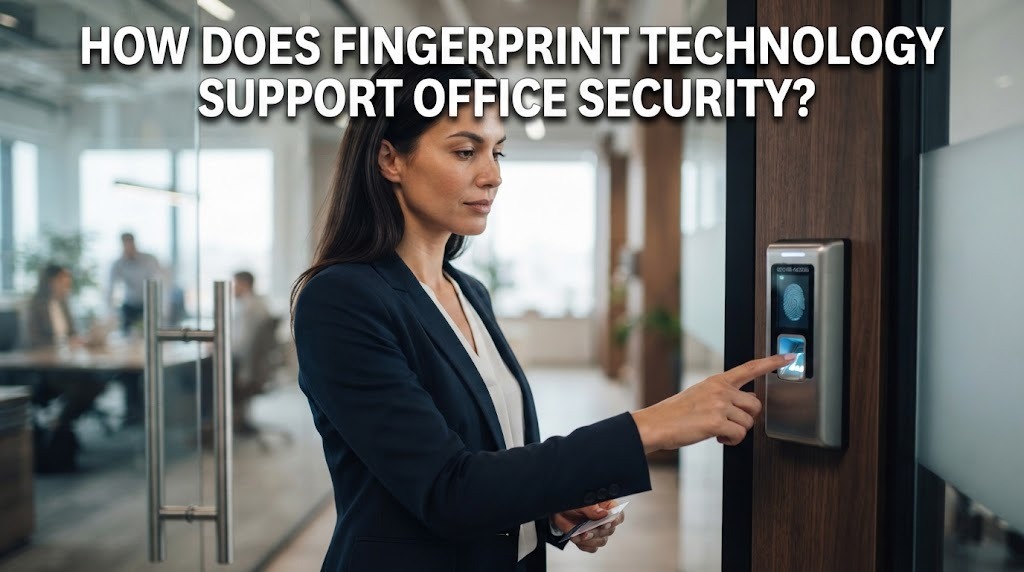
Office security is an important part of protecting employees, equipment, documents, and company information. As workplaces become increasingly digital, companies need reliable methods to control access and verify employee identities. Fingerprint Technology provides a biometric solution that uses unique fingerprint patterns for identification. This technology can help offices manage access more efficiently than some traditional methods. When properly implemented, fingerprint systems can become an important part of a modern office security strategy.
BIOMETRIC IDENTIFICATION IN THE OFFICE
Fingerprint technology identifies employees by analyzing the unique patterns found on their fingertips. Before using the system, authorized employees register their fingerprints in a secure database. When a person scans their finger, the system compares the captured pattern with the registered information. If the fingerprint matches, the system can confirm the person's identity.
This process provides direct identity verification because the system relies on a physical characteristic of the individual. Employees do not need to share passwords or depend entirely on access cards. The method can also make identity checks faster during daily office activities. This makes fingerprint identification useful for offices that require controlled access.
CONTROLLED ACCESS TO RESTRICTED AREAS
Some areas in an office contain confidential documents, valuable equipment, or sensitive business information. Companies can install fingerprint scanners at entrances to these restricted areas. Only employees whose fingerprints are registered and authorized can gain access through the system. This helps organizations control who can enter specific rooms or facilities.
Fingerprint Access Control can provide an additional layer of protection for important areas. It can reduce the risk of unauthorized people using borrowed cards or shared access credentials. Companies can also assign different access permissions according to employee roles. This allows security procedures to become more structured and manageable.
PROTECTION OF OFFICE ASSETS
Offices contain computers, servers, storage devices, documents, and other valuable assets that require protection. Fingerprint systems can help limit access to rooms where these assets are stored. Employees can be required to verify their identity before entering certain areas. This reduces unnecessary access and helps companies monitor authorized users.
Using biometric security can support better protection of valuable resources. If an access system records entry information, authorized staff may also be able to review when access occurred. This information can support internal security monitoring when problems arise. However, fingerprint access should be combined with physical security and appropriate workplace procedures.
FASTER AND MORE CONVENIENT SECURITY
Traditional security methods may require employees to carry cards, remember passwords, or wait for manual identity checks. Fingerprint scanners can make the verification process faster because employees only need to place their registered finger on the sensor. The system can process the fingerprint and provide an access result within a short time. This can make security procedures more convenient during busy working hours.
Fast authentication is especially useful in offices with many employees. It can reduce queues at controlled entrances and simplify access procedures. At the same time, employees can continue their activities without complicated verification steps. Convenience and security can therefore work together when fingerprint systems are properly configured.
SECURE MANAGEMENT OF BIOMETRIC DATA
Fingerprint technology also requires careful management of biometric information. Companies should protect stored fingerprint data from unauthorized access and misuse. Access to the biometric database should be limited to authorized personnel with appropriate responsibilities. Security systems should also be maintained and updated to reduce potential technical risks.
Employee privacy should remain an important consideration when implementing fingerprint security. Companies should clearly explain the purpose of collecting and using biometric data. Proper policies can help employees understand how their information is handled. Responsible data management allows fingerprint technology to improve office security without ignoring privacy concerns.
CONCLUSION
Fingerprint technology supports office security by improving identity verification, controlling access, and protecting restricted areas. It can also provide faster authentication and reduce dependence on physical cards or shared passwords. Companies can use fingerprint scanners to create a more organized and efficient security system. However, biometric data must be protected through appropriate security policies and responsible management. With proper implementation, fingerprint technology can strengthen office security while providing convenient access for authorized employees.
Tentang Penulis
Gusti Ayu Tita P
Penulis — Universitas STEKOM
Penulis aktif yang berfokus pada isu-isu akademik, teknologi pendidikan, dan pengembangan sumber daya manusia di lingkungan kampus.