
How Does Student Symbolic Capital Shape Social Status in Educational Sociology?
Gusti Ayu Tita P
26 Agustus 2026
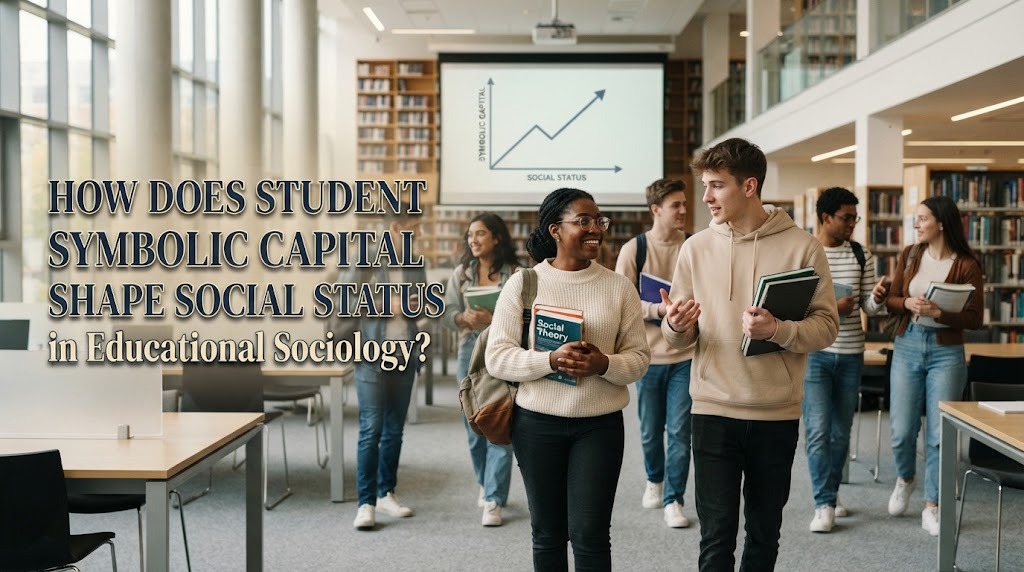
In educational sociology, students do not enter classrooms with exactly the same social resources. Their knowledge, communication styles, achievements, cultural experiences, and social connections can influence how they are perceived by others. These resources can become forms of symbolic capital when they are recognized and valued within an educational environment. Symbolic capital can affect a student's reputation, confidence, opportunities, and social position. Understanding this concept helps explain why social status in education is influenced by more than academic grades alone.
UNDERSTANDING STUDENT SYMBOLIC CAPITAL
Student symbolic capital refers to qualities, achievements, knowledge, or characteristics that receive social recognition within an educational setting. The concept is closely associated with sociologist Pierre Bourdieu, who explained how different forms of capital can influence social relationships and opportunities. For students, symbolic capital may include academic awards, leadership experience, communication ability, or recognition from teachers and peers. These qualities become meaningful when other people consider them valuable. Therefore, symbolic capital depends not only on what a student possesses but also on how society recognizes it.
Symbolic capital can develop from other forms of capital. For example, cultural knowledge can become symbolic capital when classmates recognize a student as knowledgeable or sophisticated. Social connections may become symbolic capital when a student's network gives them a respected position within a campus community. Recognition transforms certain resources into social value. This process is important for understanding differences in student status.
LANGUAGE AND APPEARANCE AS SOCIAL SIGNALS
Language style can become a visible signal of social background and educational experience. Formal vocabulary, confidence in speaking, and the ability to adapt communication to different situations may influence how students are perceived. Similarly, clothing, gadgets, and other visible possessions can sometimes communicate lifestyle or economic background. These signals may contribute to perceptions of social status, even though they do not necessarily represent a person's true abilities.
Educational sociology encourages us to examine these perceptions critically. A polished appearance does not guarantee intelligence, and fluent communication does not always indicate superior knowledge. Likewise, owning an expensive device does not prove academic or professional competence. Social symbols can create impressions that are incomplete or misleading. Students should therefore be evaluated through broader evidence of their abilities and contributions.
HOW SYMBOLIC CAPITAL CREATES SOCIAL DIFFERENCES
Symbolic capital can create differences because recognition is not distributed equally. Students with greater access to educational resources, supportive networks, or cultural experiences may have more opportunities to gain recognition. Once recognized, their status can provide additional opportunities to participate, lead, or connect with influential groups. Recognition can therefore reinforce existing social advantages.
This process does not mean that social status is permanently fixed. Students can develop new skills, gain experience, and build relationships throughout their education. Educational institutions can also create opportunities for students from different backgrounds to demonstrate their abilities. Fair opportunities can help reduce the influence of unequal starting conditions.
SYMBOLIC CAPITAL AND SOCIAL MOBILITY
Education is often expected to provide opportunities for social mobility. Students can gain knowledge, qualifications, skills, and experiences that may improve their future opportunities. When these achievements receive recognition, they can become forms of symbolic capital. A scholarship, leadership position, professional certificate, or successful project may strengthen a student's reputation and future prospects. Educational recognition can therefore contribute to personal and professional mobility.
Nevertheless, access to opportunities may differ between students. Some students have greater financial resources, stronger networks, or more exposure to extracurricular activities. These differences can affect how easily they accumulate recognized achievements. Understanding symbolic capital helps explain why educational outcomes can be influenced by social conditions as well as individual effort.
BUILDING HEALTHY SOCIAL RECOGNITION IN EDUCATION
Educational institutions can encourage healthier forms of social recognition by valuing diverse abilities. Students should be recognized not only for grades but also for creativity, teamwork, leadership, problem-solving, responsibility, and community contributions. This broader approach allows more students to demonstrate their strengths. Recognition becomes more meaningful when it reflects genuine contribution rather than social privilege alone.
Students can also build symbolic capital through positive actions. Participating in meaningful projects, helping others, developing expertise, and maintaining professional behavior can strengthen their reputation. The goal should not be to appear superior but to create trust and credibility through consistent actions. Over time, authentic contributions can become a stronger foundation for social status than temporary displays of wealth or popularity.
CONCLUSION
Student symbolic capital plays an important role in shaping social status within educational sociology. Academic achievements, cultural knowledge, communication skills, social networks, leadership, and other recognized qualities can influence how students are perceived. However, symbolic capital is socially constructed, meaning its value depends on what a particular educational community considers important. Unequal access to resources can also influence who has greater opportunities to gain recognition. By creating inclusive environments and valuing diverse forms of achievement, educational institutions can help ensure that social status reflects meaningful contributions rather than unequal privilege alone.
Tentang Penulis
Gusti Ayu Tita P
Penulis — Universitas STEKOM
Penulis aktif yang berfokus pada isu-isu akademik, teknologi pendidikan, dan pengembangan sumber daya manusia di lingkungan kampus.