
How Does Technology Help Detect Genetic Disorders?
Gusti Ayu Tita P
22 September 2026
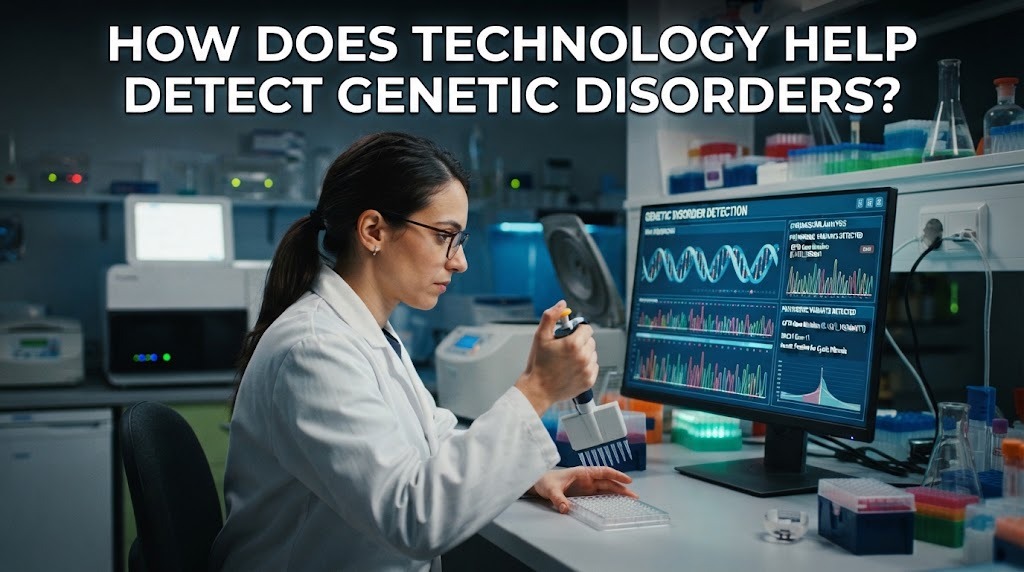
Technology has changed the way healthcare professionals identify and understand genetic disorders. Modern tools can examine DNA, genes, and chromosomes to find changes that may be associated with certain conditions. These technologies can support earlier diagnosis and provide more information about a person's genetic health. As genetic technology continues to develop, testing can become more precise and accessible.
HOW DOES GENETIC TESTING USE TECHNOLOGY?
Genetic testing uses laboratory technology to examine a person's DNA for specific genetic changes. Depending on the test, healthcare professionals may analyze a single gene, several genes, chromosomes, or larger parts of the genome. The sample can come from sources such as blood or saliva. The laboratory then uses specialized methods to identify genetic variations.
Modern genetic testing can provide information that may help explain certain symptoms or confirm a suspected genetic disorder. However, not every genetic change causes disease. Test results therefore need to be interpreted together with a person's medical history and other clinical information.
HOW CAN DNA SEQUENCING DETECT GENETIC CHANGES?
DNA sequencing is an important technology for examining the order of genetic material. It can identify changes in DNA that may be associated with a genetic disorder. Next generation sequencing allows laboratories to examine many genes at the same time, making it useful for conditions that may involve multiple possible genes.
Some sequencing approaches focus on specific groups of genes, while others examine much larger portions of the genome. This technology can help healthcare professionals investigate conditions that are difficult to diagnose using traditional methods. The results still require careful interpretation because some genetic changes have uncertain medical significance.
CAN TECHNOLOGY DETECT CHROMOSOME ABNORMALITIES?
Technology can also help identify changes involving chromosomes, including changes in chromosome number or structure. Tests such as chromosome analysis can examine chromosomes under laboratory conditions. Other technologies can provide more detailed information about specific chromosome regions.
These methods may help detect conditions associated with extra, missing, or structurally altered chromosome material. For example, certain chromosomal conditions can be identified through laboratory testing after a healthcare professional considers the person's symptoms or other findings. Different tests provide different levels of detail, so the appropriate method depends on the clinical question.
HOW DOES GENOMIC TECHNOLOGY SUPPORT EARLY DETECTION?
Genomic technology can sometimes help identify a genetic condition before symptoms become obvious. Early genetic detection may be particularly useful when a condition benefits from monitoring or treatment that can begin at an earlier stage. Genetic screening can also be used in specific situations to identify people who may have an increased risk of certain inherited conditions.
However, early detection does not mean that every genetic condition can be prevented or treated. Some genetic disorders currently have limited treatment options. Genetic information is therefore most useful when it is combined with appropriate medical evaluation and follow-up.
WHAT ROLE DOES ARTIFICIAL INTELLIGENCE PLAY IN GENETIC TESTING?
Artificial intelligence and advanced computer systems can help researchers and laboratories process large amounts of genomic data. Genetic sequencing can produce enormous quantities of information, making computational tools useful for identifying patterns and prioritizing genetic variants for further investigation. These systems can support specialists when analyzing complex test results.
AI does not replace medical professionals in interpreting genetic information. A genetic variant may have different meanings depending on the person's symptoms, family history, and other biological factors. Human expertise remains important when determining whether a genetic finding is medically relevant.
WHAT ARE THE BENEFITS AND LIMITATIONS OF GENETIC TECHNOLOGY?
Modern genetic technology can provide valuable information for diagnosis, risk assessment, and family counseling. It may help identify the cause of unexplained symptoms, clarify an existing diagnosis, or determine whether a particular genetic change is present. Genetic information can also help healthcare professionals understand potential risks among family members.
Despite these benefits, genetic testing has limitations. Some tests may not detect every type of genetic change, while other results may be difficult to interpret. There can also be uncertain findings that require additional research or medical evaluation. For these reasons, genetic test results should be discussed with qualified healthcare professionals when appropriate.
CONCLUSION
Technology plays an important role in detecting genetic disorders by allowing healthcare professionals to examine DNA, genes, and chromosomes in greater detail. DNA sequencing, chromosome analysis, genomic testing, and computational tools can provide valuable information for diagnosis and risk assessment. New technologies may also support earlier identification of certain genetic conditions. However, genetic testing has limitations and does not always provide a definitive answer. Proper medical interpretation remains essential for understanding what genetic test results mean.
Tentang Penulis
Gusti Ayu Tita P
Penulis — Universitas STEKOM
Penulis aktif yang berfokus pada isu-isu akademik, teknologi pendidikan, dan pengembangan sumber daya manusia di lingkungan kampus.



