How Gamification Makes Learning Management Systems More Effective
Gusti Ayu Tita P
29 Juli 2026
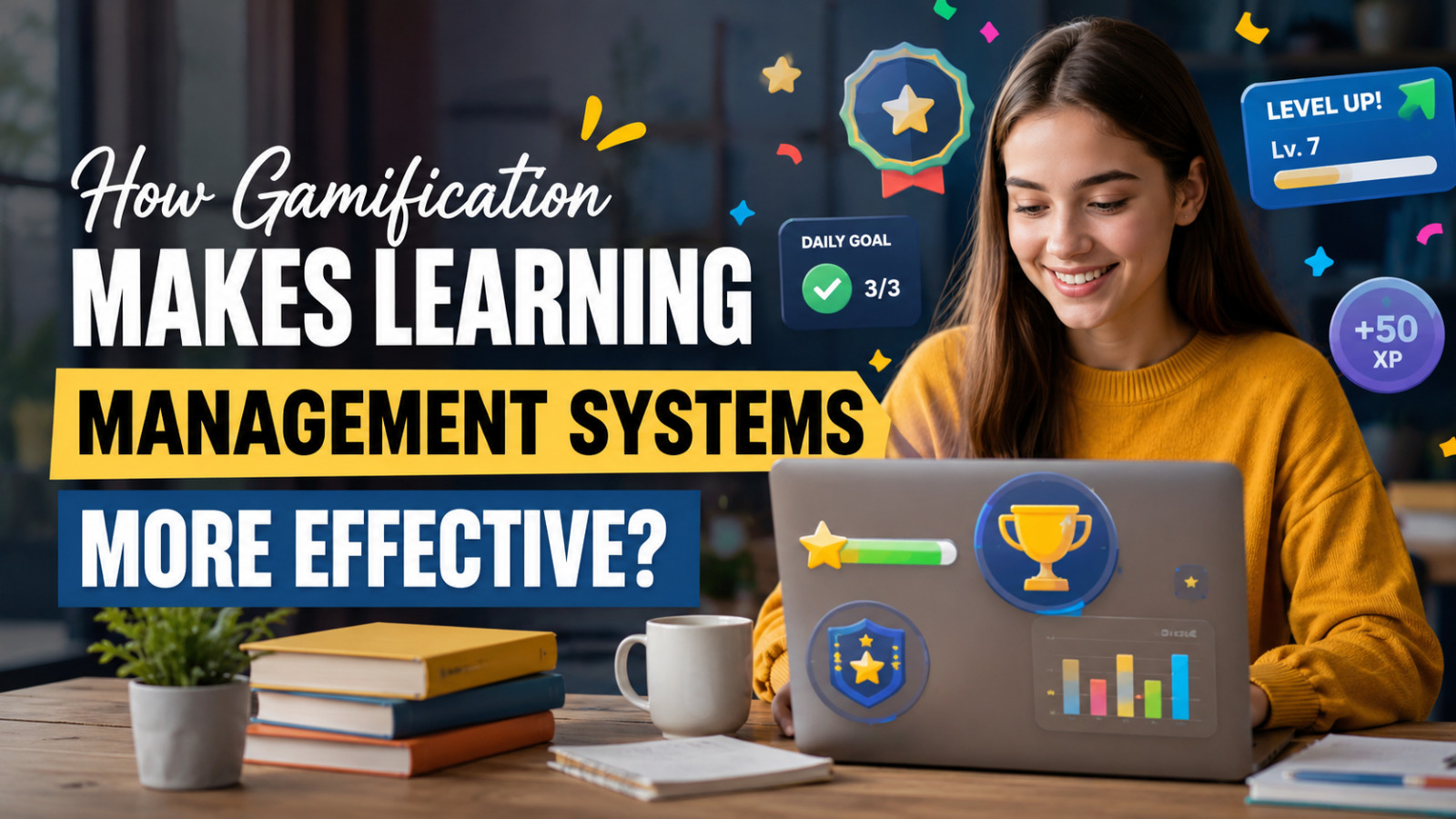
Learning Management Systems (LMS) have become an essential part of modern education and corporate training. However, many learners lose interest when courses feel repetitive or lack interaction. This is where gamification becomes a powerful solution. By adding game-like elements into online learning, organizations can create engaging experiences that motivate learners to complete courses and achieve better outcomes.
Gamification is not about turning learning into a video game. Instead, it uses features such as points, badges, leaderboards, progress tracking, and rewards to encourage participation. When these elements are integrated into an LMS, learners become more motivated, focused, and willing to continue learning.
WHAT IS GAMIFICATION IN A LEARNING MANAGEMENT SYSTEM?
Gamification is the process of applying game mechanics to educational activities without changing the learning objectives. It transforms ordinary lessons into interactive experiences that make learning more enjoyable. Learners earn points, unlock achievements, and receive rewards as they complete lessons or pass quizzes. These simple features encourage continuous participation while maintaining the educational purpose of the course.
A well-designed gamified LMS also provides instant feedback. Instead of waiting until the end of a course, learners immediately know their progress and areas for improvement. This continuous feedback helps build confidence while keeping learners motivated to achieve the next milestone.
WHY GAMIFICATION IMPROVES LEARNING ENGAGEMENT
One of the biggest challenges in online education is maintaining learner engagement. Traditional online courses often become monotonous because they rely heavily on reading materials and videos. Gamification introduces exciting challenges that encourage learners to actively participate instead of passively consuming information. This creates a more enjoyable and memorable learning experience.
The feeling of accomplishment plays a major role in learner motivation. Every completed lesson, earned badge, or unlocked achievement provides a sense of progress. These small rewards encourage learners to continue until they finish the entire course, resulting in higher completion rates and improved learning outcomes.
KEY GAMIFICATION FEATURES THAT MAKE LMS MORE EFFECTIVE
Several gamification features significantly improve the effectiveness of a Learning Management System. Points reward learners for completing lessons, quizzes, or assignments. Badges recognize achievements and encourage learners to reach new milestones. Leaderboards create healthy competition that motivates participants to improve their performance.
Another valuable feature is the progress bar, which visually shows how much of the course has been completed. Certificates provide formal recognition after successful course completion, while daily challenges encourage consistent learning habits. Together, these features create an engaging environment that supports continuous learning.
BENEFITS OF GAMIFICATION FOR STUDENTS AND EMPLOYEES
Students benefit from gamification because it makes learning more enjoyable and less stressful. Interactive activities increase concentration while helping learners retain information more effectively. The combination of rewards and measurable progress also builds confidence, making students more willing to complete difficult learning materials.
For businesses, gamified LMS platforms improve employee training programs. Employees become more engaged during onboarding, compliance training, and professional development courses. Companies often experience better knowledge retention, higher productivity, and improved training completion rates, making gamification a valuable investment.
BEST PRACTICES FOR IMPLEMENTING GAMIFICATION
Successful gamification begins with clearly defined learning objectives. Every game element should support educational goals instead of distracting learners. Organizations should choose meaningful rewards that encourage progress while maintaining a balance between entertainment and education.
Regularly reviewing learner performance is equally important. Analytics help identify which gamification features are effective and which require improvement. Gathering learner feedback also ensures the LMS continues to provide engaging experiences that meet user expectations while supporting long-term learning success.
COMMON MISTAKES TO AVOID
Although gamification offers many benefits, poor implementation can reduce its effectiveness. Adding too many game elements may overwhelm learners and shift attention away from actual learning objectives. A successful LMS keeps gamification simple, relevant, and aligned with course content.
Another common mistake is relying solely on competition. While leaderboards motivate some learners, others may become discouraged if they consistently rank lower. Combining collaboration, personal achievements, and individual progress tracking creates a more inclusive learning environment that benefits everyone.
CONCLUSION
Gamification has transformed Learning Management Systems into more engaging, motivating, and effective learning platforms. By incorporating points, badges, leaderboards, progress tracking, and rewards, organizations can improve learner engagement while increasing course completion rates and knowledge retention. Whether used in schools, universities, or corporate training, gamification creates a positive learning experience that encourages continuous improvement and long-term success.
Tentang Penulis
Gusti Ayu Tita P
Penulis — Universitas STEKOM
Penulis aktif yang berfokus pada isu-isu akademik, teknologi pendidikan, dan pengembangan sumber daya manusia di lingkungan kampus.