
How Is Technology Used In FIVB Volleyball Competitions?
Gusti Ayu Tita P
29 September 2026
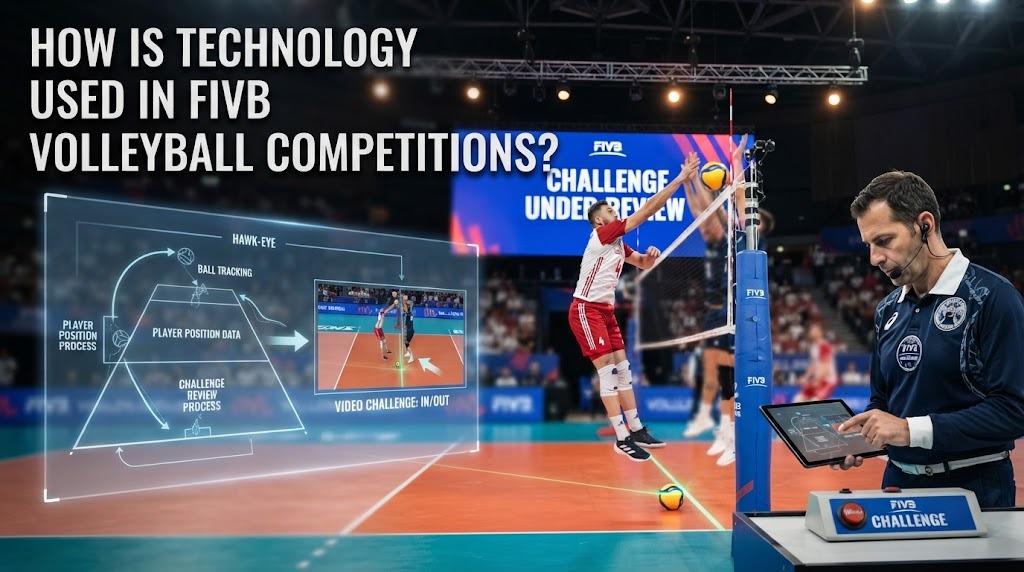
Technology has become an important part of modern FIVB volleyball competitions. It helps referees make more accurate decisions, provides better match information, and improves the viewing experience for fans. FIVB has introduced several technologies, including the Video Challenge System, automated ball tracking, electronic scoring, and advanced video solutions. These technologies are used to support the competition while keeping the focus on the athletes and the game. (FIVB)
USING THE VIDEO CHALLENGE SYSTEM
The Video Challenge System is one of the most important technologies used in FIVB competitions. It allows teams to request a video review when they believe an important action may have been judged incorrectly. Depending on the system being used, reviews can examine situations such as ball in or out, block touches, and net faults. This gives referees additional visual evidence when making important decisions. (FIVB)
The system is designed to improve the accuracy and fairness of officiating. Under the 2025 regulations, teams can normally request up to two challenges per set, with the challenge retained when the review confirms the team's decision or produces inconclusive evidence. A Challenge Referee supervises the review process when the Video Challenge System is in use at FIVB World and Official Competitions. (FIVB)
USING VIDEO TECHNOLOGY FOR REFEREE DECISIONS
FIVB also works with advanced video technology to help officials analyse fast actions during matches. High-quality video allows referees to review specific moments from different angles. This can be particularly useful when a fault happens very quickly and is difficult to see in real time. The technology therefore works as an additional tool rather than replacing the role of the referees. (FIVB)
FIVB has highlighted the use of Hawk-Eye video officiating and Bolt6 automatic ball-tracking technology at major international competitions. These systems are intended to improve decision-making and provide greater precision. Their use also supports the integrity of important matches by giving officials better technical information when reviewing disputed actions. (FIVB)
TRACKING THE BALL AND ITS POSITION
Automatic ball-tracking technology is another example of how technology is changing volleyball competitions. The system can provide detailed information about the movement and position of the ball. This type of technology can support officials when determining whether a ball has landed inside or outside the court boundaries. It can also provide useful visual information for broadcasts and spectators. (FIVB)
In some competitions, automated ball In Out technology can affect how challenges are handled. FIVB regulations explain that when an automated system is being used, certain ball in or out challenges are automatically presented instead of being requested in the traditional way. This helps make decisions faster while providing clear visual evidence for the officials and audience. (FIVB)
USING ELECTRONIC SCORING AND STATISTICS
Technology is also used to record match scores and statistics during FIVB competitions. Electronic scoring systems can help competition officials record points, player information, substitutions, and other match details. These digital records make it easier to manage large international events. They also provide useful information for teams, broadcasters, media, and fans.
FIVB competition requirements include technology such as VolleyStation for E-scoresheet and statistics at certain events. Digital statistics can help show important information about team and player performance. This allows audiences to understand matches beyond simply looking at the final score. (FIVB)
IMPROVING SPORTS BROADCASTS
Technology also makes FIVB competitions easier to watch around the world. Advanced cameras, video systems, graphics, and replay technology allow broadcasters to show important moments more clearly. Fans can see disputed actions again and follow the development of a match through additional visual information. This creates a more engaging experience for people watching outside the stadium. (FIVB)
FIVB has also connected technology with its wider goal of improving the fan experience. Better video quality and integrated replay systems can make matches easier to understand and more exciting to follow. Technology therefore supports not only referees and athletes but also viewers who follow international volleyball through television and digital platforms. (FIVB)
SUPPORTING FASTER MATCH DECISIONS
One benefit of technology is that it can help officials reach decisions more efficiently. Video systems can quickly locate important moments and provide specific evidence for review. FIVB's regulations include a bookmark system that helps the Challenge Referee identify actions that may need to be reviewed. This can reduce unnecessary delays during the match. (FIVB)
FIVB has continued testing ways to make video reviews faster. In its 2026 rule tests, FIVB introduced a mid-rally challenge bookmark concept designed to allow teams to identify a potentially challengeable action while the rally is happening. The approach is intended to help the review process work more efficiently while maintaining the accuracy of decisions. (FIVB)
USING REMOTE TECHNOLOGY IN COMPETITIONS
Technology is also being used to change how some competition operations are managed. For the 2026 Volleyball Nations League, FIVB and Volleyball World introduced a remote Video Challenge System hub. Instead of having all challenge officials and technical personnel travel to every VNL venue, selected functions can be operated remotely from a central hub. (FIVB)
The remote system is designed to improve operational efficiency and sustainability while maintaining high officiating standards. FIVB reported that the pilot was expected to reduce air-travel emissions by more than 51 percent compared with the previous operating model. VNL 2026 is being used as a pilot to evaluate and further develop this approach for possible future competitions. (FIVB)
TECHNOLOGY AND THE FUTURE OF VOLLEYBALL
FIVB continues to explore new technology through its Game Technology and Innovation Commission. The commission examines ways technology can improve officiating, competition operations, and the experience of fans. This shows that technology is not only being used for video reviews but is becoming part of the wider development of international volleyball. (FIVB)
FIVB also tests certain technological and regulatory innovations before deciding whether they should be used more widely. In 2026, for example, rule and procedure tests included changes involving video challenge procedures. This approach allows FIVB to evaluate how new systems work during real competitions before considering broader implementation. (FIVB)
CONCLUSION
Technology plays an important role in FIVB volleyball competitions by supporting referees, athletes, organizers, broadcasters, and fans. The Video Challenge System, automatic ball tracking, electronic scoring, advanced video, and remote officiating solutions all help improve different parts of the competition. These technologies can provide more accurate information, support faster decisions, and create a better viewing experience. As technology continues to develop, FIVB is also testing new solutions to make international volleyball more accurate, efficient, and engaging. (FIVB)
Tentang Penulis
Gusti Ayu Tita P
Penulis — Universitas STEKOM
Penulis aktif yang berfokus pada isu-isu akademik, teknologi pendidikan, dan pengembangan sumber daya manusia di lingkungan kampus.



