
How Local Leaders Strengthen Government Services?
Gusti Ayu Tita P
12 Agustus 2026
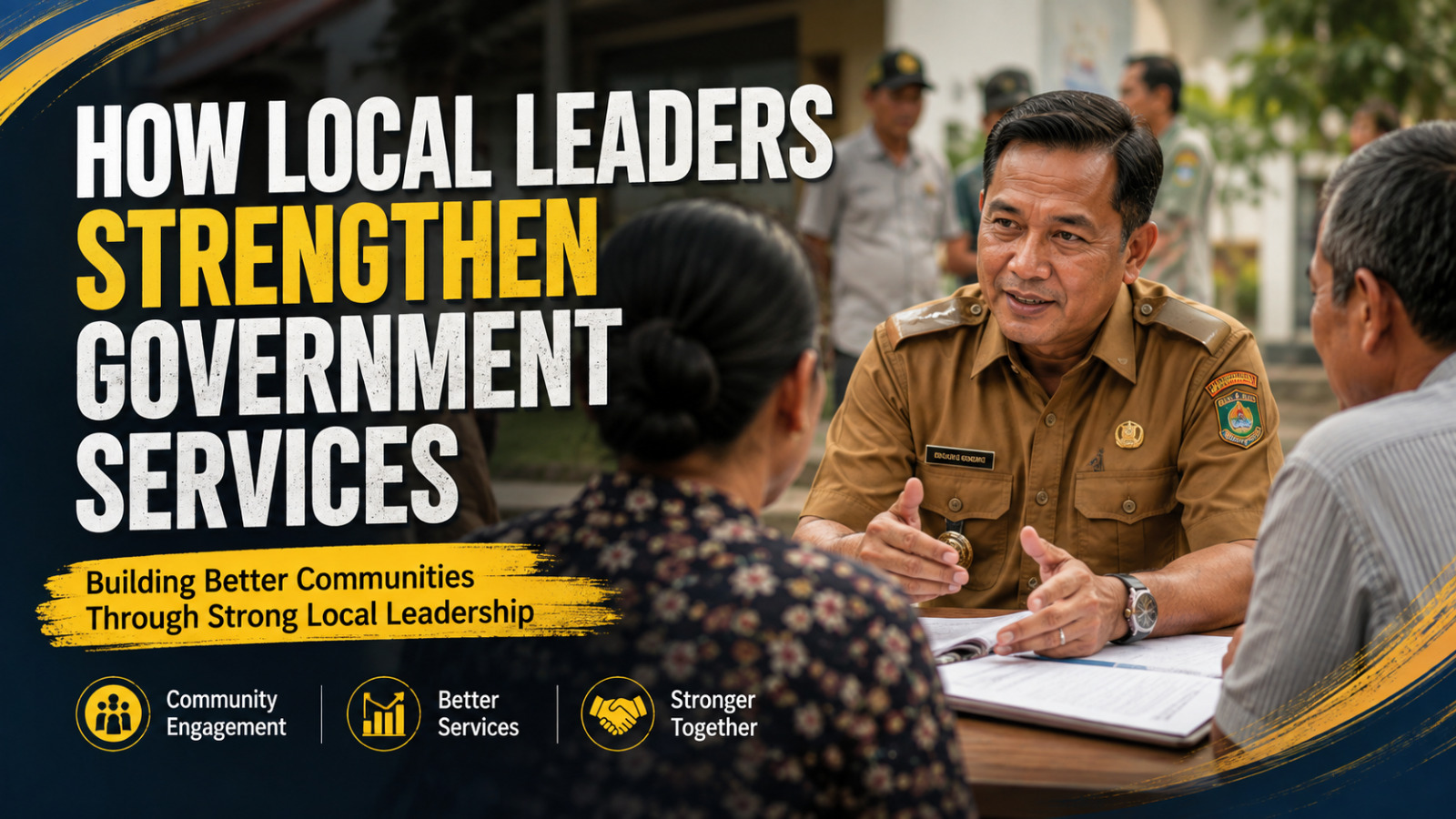
Local government plays an important role in ensuring that people receive accessible, reliable, and responsive public services. Local leaders are responsible for connecting government policies with the real needs of communities. Through effective coordination, communication, and supervision, they can help make government services more efficient and inclusive.
UNDERSTANDING THE ROLE OF LOCAL LEADERS
Local leaders serve as an important link between government institutions and local communities. They help translate government policies and development programs into actions that can be implemented at the local level. Their responsibilities may include coordinating public services, supporting development activities, and responding to community concerns.
A strong local leader does not work alone. Coordination with government officials, community organizations, village authorities, and residents is essential to ensure that programs meet local needs. By maintaining good communication, local leaders can identify problems earlier and help find practical solutions.
IMPROVING ACCESS TO PUBLIC SERVICES
One of the most important ways local leaders strengthen government services is by helping residents access essential services. These can include administrative services, health programs, education support, social assistance, and public infrastructure. Leaders can monitor whether these services are reaching the people who need them.
They can also encourage government offices to provide services that are simple, transparent, and responsive. When procedures are clearly communicated, residents can understand where to go and what documents they need. This can reduce confusion, unnecessary delays, and barriers to accessing public services.
STRENGTHENING COORDINATION BETWEEN GOVERNMENT OFFICES
Government programs often involve several departments or institutions. Without proper coordination, responsibilities can overlap or important tasks can be overlooked. Local leaders can help create better cooperation between government offices so that programs are implemented more effectively.
Regular meetings, information sharing, and clear division of responsibilities can improve coordination. Local leaders can also communicate community needs to higher levels of government. This helps ensure that local problems receive appropriate government attention and support.
RESPONDING TO COMMUNITY NEEDS
Effective local leadership begins with understanding what residents actually need. Local leaders can listen to community members through public meetings, consultations, surveys, and direct communication. These activities provide valuable information about problems affecting daily life.
Community feedback can then be used to improve government programs and services. For example, residents may report problems involving roads, sanitation, administrative procedures, or access to public facilities. By responding to these concerns, local leaders can make government services more relevant and community oriented.
SUPPORTING TRANSPARENT AND ACCOUNTABLE GOVERNANCE
Transparency is essential for building public trust. Local leaders can strengthen government services by ensuring that information about programs, procedures, and public activities is communicated clearly. Residents should understand how government services work and where they can submit complaints or suggestions.
Accountability is equally important. Local leaders should monitor the implementation of programs and encourage officials to perform their responsibilities properly. Transparent decision making and responsible public administration can create stronger relationships between government institutions and the communities they serve.
USING TECHNOLOGY TO IMPROVE SERVICES
Technology provides new opportunities for local governments to improve public services. Digital platforms can make it easier for residents to obtain information, submit administrative requests, or communicate complaints. Local leaders can encourage the use of appropriate digital services when they can make government processes faster and more convenient.
However, digital transformation should not exclude people who have limited access to technology. Local leaders should ensure that traditional service channels remain available when necessary. A balanced approach can create more inclusive public services for different groups within the community.
BUILDING COMMUNITY PARTICIPATION
Government services become stronger when residents actively participate in local development. Local leaders can encourage participation by creating opportunities for people to share ideas, discuss problems, and contribute to community programs. Participation can also help residents understand government priorities and responsibilities.
Strong community participation can improve the quality of government decisions. Residents often have direct knowledge of local conditions that may not be visible to government officials. By listening to this knowledge, local leaders can support more practical and sustainable solutions.
STRENGTHENING EMERGENCY AND PUBLIC RESPONSE
Local leaders also have an important role during emergencies and unexpected situations. They can help coordinate communication between residents, government agencies, emergency services, and community organizations. Effective coordination is especially important during natural disasters, public health emergencies, or other local crises.
Clear information can prevent confusion and help residents respond appropriately. Local leaders can also support preparedness activities before emergencies occur. By developing communication channels and coordination mechanisms, they can help communities become more prepared and resilient.
CONCLUSION
Local leaders have a significant role in strengthening government services and improving the relationship between government and communities. Through better coordination, transparent administration, community participation, technology, and responsive leadership, they can help make public services more accessible and effective. Their ability to understand local needs also allows government programs to become more relevant to residents.
Ultimately, effective local leadership depends on cooperation between government institutions and the community. When local leaders listen to residents, coordinate resources, and promote accountability, they can contribute to better governance and stronger communities.
Tentang Penulis
Gusti Ayu Tita P
Penulis — Universitas STEKOM
Penulis aktif yang berfokus pada isu-isu akademik, teknologi pendidikan, dan pengembangan sumber daya manusia di lingkungan kampus.