
How Long Does It Take to Resolve a Land Dispute?
Gusti Ayu Tita P
2 September 2026
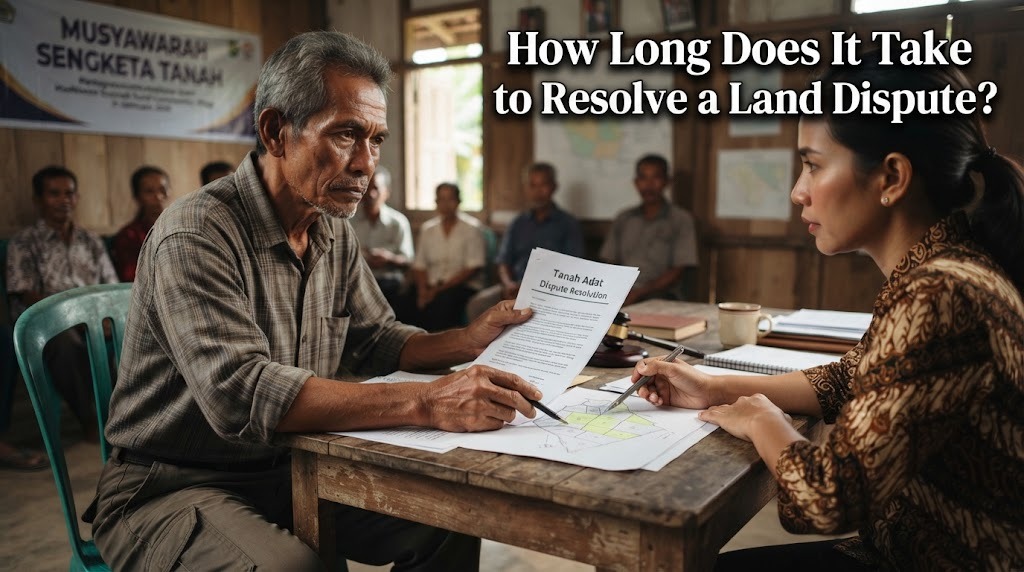
A land dispute can take different amounts of time depending on the cause of the conflict, the evidence available, the number of parties involved, and the resolution method chosen. Some disputes can be settled within weeks through negotiation, while complicated cases may take months or even years through formal legal proceedings. There is no single timeline that applies to every land dispute. Understanding the factors involved can help property owners prepare more realistically.
RESOLUTION THROUGH NEGOTIATION
Negotiation is often the fastest way to resolve a land dispute when both parties are willing to communicate. The parties can discuss ownership claims, boundaries, compensation, or other issues directly. A simple dispute may be resolved within days or several weeks if the facts are clear and both sides are cooperative.
Any agreement should be documented properly to avoid future misunderstandings. Written agreements can provide clearer evidence of what each party has accepted. If negotiations fail, the parties can consider mediation or another formal resolution process.
MEDIATION PROCESS
Mediation involves a neutral third party who helps the disputing parties find a mutually acceptable solution. The duration depends on the complexity of the dispute, the number of parties, and their willingness to compromise. Some cases may require only a few meetings, while more complicated disputes can take longer.
Mediation can be more efficient than litigation because it focuses on reaching an agreement rather than obtaining a court judgment. However, mediation cannot guarantee a settlement. If the parties cannot agree, the dispute may continue through other legal channels.
COURT PROCEEDINGS
Resolving a land dispute through court generally takes longer than negotiation or mediation. The process may involve filing a claim, hearings, examination of documents and witnesses, presentation of evidence, and a court decision. The complexity of the case can significantly affect the duration.
The process may become even longer if one of the parties uses available legal remedies after the first court decision. Appeals or further proceedings can extend the dispute beyond the initial trial. Therefore, parties should not assume that a land case will always be completed within a fixed number of months.
FACTORS THAT AFFECT THE TIMELINE
Several factors can influence how long a land dispute takes to resolve. One major factor is the completeness and strength of ownership documents, such as land certificates, purchase agreements, inheritance documents, and payment records. Cases involving conflicting or incomplete documents generally require more careful examination.
The number of parties involved can also affect the timeline. Disputes involving multiple owners, heirs, neighboring landowners, or competing claims may require additional investigation. Physical land conditions, unclear boundaries, and the need for surveys or site inspections can also make the process more complicated.
THE ROLE OF LAND DOCUMENTS
Clear and consistent land documents can make the dispute easier to analyze. Relevant records may include ownership certificates, transfer documents, tax records, inheritance documents, maps, and evidence of possession. These documents help establish the history and legal position of the property.
If the documents contain conflicting information, additional verification may be necessary. The parties may need to obtain information from the relevant land authority or seek professional legal assistance. Good documentation can reduce unnecessary delays and help clarify the actual dispute.
HOW TO MAKE THE PROCESS MORE EFFICIENT
Although no method can guarantee a specific resolution time, several steps can make the process more efficient. Collect and organize all relevant documents before beginning negotiations or legal proceedings. Clearly identify the main issue and avoid unnecessary arguments that do not directly relate to the dispute.
Choosing the appropriate resolution method is also important. A dispute that can realistically be settled through negotiation or mediation may not need lengthy litigation. When legal proceedings become necessary, working with a qualified legal professional can help ensure that documents and procedural requirements are properly prepared.
WHEN SHOULD YOU SEEK LEGAL HELP?
Professional legal assistance should be considered when the dispute involves complicated ownership claims, inheritance, overlapping certificates, multiple parties, or significant financial interests. A lawyer can help evaluate the available evidence and explain possible legal options. This can prevent mistakes that may make the dispute more difficult to resolve.
Legal advice can also help determine whether negotiation, mediation, or court proceedings are more appropriate. The earlier important legal issues are identified, the easier it may be to develop an effective strategy. However, the exact approach depends on the facts and applicable laws in the relevant jurisdiction.
CONCLUSION
How long it takes to resolve a land dispute depends on the complexity of the case and the resolution method used. Negotiation can sometimes settle a dispute within days or weeks, while mediation may take several meetings. Court proceedings generally require more time and can become longer if appeals or other legal remedies are pursued.
The best way to avoid unnecessary delays is to prepare complete evidence, verify land documents, communicate clearly, and choose an appropriate resolution method. When the dispute is complex, professional legal assistance can help protect property rights and ensure that the process follows the applicable legal procedures.
Tentang Penulis
Gusti Ayu Tita P
Penulis — Universitas STEKOM
Penulis aktif yang berfokus pada isu-isu akademik, teknologi pendidikan, dan pengembangan sumber daya manusia di lingkungan kampus.